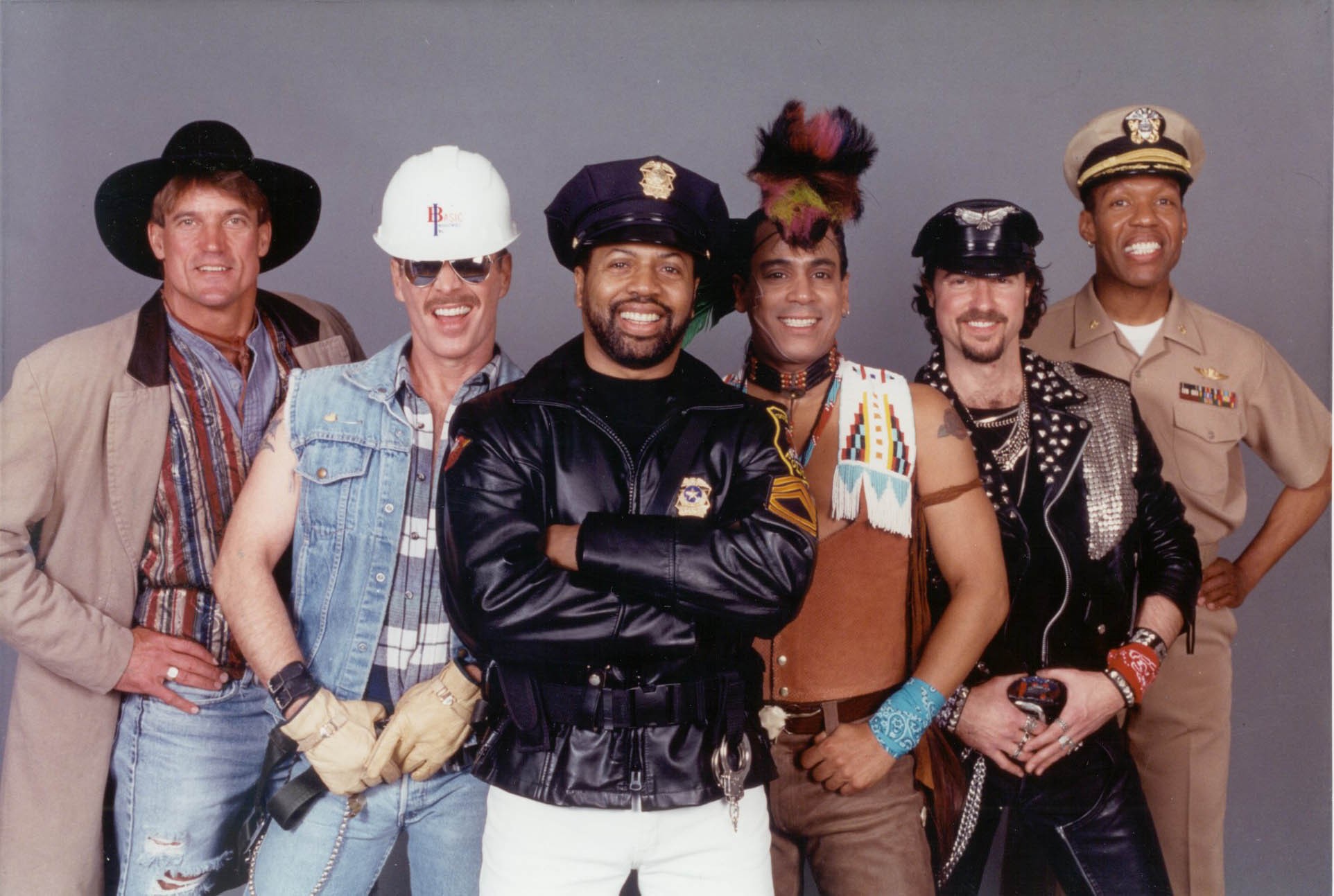
You know the outfits. You know the arm movements for "Y.M.C.A." halfway through a wedding reception. But if you actually try to pin down who is in the Village People, things get complicated fast. It isn’t just a band; it’s basically a fifty-year-old concept piece that has swapped parts like a vintage Cadillac.
Most people think of the "classic" lineup from the late 1970s. You had the Cop, the Native American, the Cowboy, the Construction Worker, the Soldier, and the Leatherman. But here is the kicker: the group was originally just Victor Willis. French producer Jacques Morali had some demos, Willis sang them, and then they realized they needed a visual to sell the "macho" disco fantasy. They literally put out an ad in a trade paper looking for "macho types" who could dance and had a beard.
It worked.
The Original Faces of the Disco Era
When the group exploded between 1977 and 1979, the lineup solidified into the version that conquered the charts. Victor Willis was the undisputed leader as the Cop. He wasn't just the voice; he wrote the lyrics to most of the hits. If you hear "In the Navy" or "Macho Man," that powerhouse baritone is Willis.
Then you had Felipe Rose, the Native American character. Rose was actually discovered by Morali dancing in a club in New York wearing his regalia. He stayed with the group for decades, becoming one of its most recognizable fixtures. Beside him stood Alex Briley, the Soldier. Interestingly, Briley started out in jeans and a t-shirt before the military theme took over.
Glenn Hughes was the Leatherman (the biker), often seen with a massive mustache and enough chrome to blind a spectator. David Hodo was the Construction Worker, and Randy Jones was the Cowboy. This group was lightning in a bottle. They weren't just singers; they were symbols of a specific era of Greenwich Village street culture that was being packaged for the masses.
The Great Split and the Replacement Era
By 1979, the wheels were starting to wobble. Victor Willis left the group right as they were filming the infamous movie Can't Stop the Music. This is where the answer to who is in the Village People gets messy. Willis was replaced by Ray Simpson, the brother of Valerie Simpson (of Ashford & Simpson fame). Simpson took over the Cop role and actually stayed for over 30 years.
If you saw the Village People on TV in the 80s or 90s, you were likely watching Ray Simpson, not Victor Willis.
The lineup didn't stop shifting there. Jeff Olson eventually stepped in as the Cowboy. Eric Anzalone took over the Leatherman role after Glenn Hughes passed away from lung cancer in 2001. For a long time, the group operated as a legacy act, touring the world with a mix of original members like Rose, Briley, and Hodo, alongside these "new" guys who had nonetheless been in the band for twenty years themselves.
The Legal Wars and the Return of the King
Fast forward to the 2010s. Things got litigious. Victor Willis, after years away, fought a landmark legal battle to reclaim the rights to his songs under the Copyright Act of 1976. He won.
This changed everything. By 2017, Willis was back in the group, but he didn't join the existing touring members. Instead, he basically cleaned house. He took over the brand and hired a completely new backing cast. This created a massive rift in the fanbase. For a while, there were "The Village People" (led by Willis) and then the other guys who had spent decades in the costumes but no longer had the legal right to use the name.
The current 2026 lineup is firmly under Willis’s control. He still wears the badge. He’s joined by a rotating cast of talented singers and dancers who fill the iconic slots:
- Isaac Calpito (Construction Worker)
- James Kwong (Soldier)
- Chad Freeman (Cowboy)
- J.J. Lippold (Leatherman)
- Nicholas S. Jenkins (Native American)
Honestly, it’s a bit like the Ship of Theseus. If you replace every plank on a boat, is it still the same boat? To Willis, the voice and the songs are what matter. To fans who grew up watching the 90s lineup, the loss of guys like Felipe Rose felt like the end of an era.
Why the Characters Matter More Than the Names
The brilliance of the Village People was that the "who" was always secondary to the "what." Jacques Morali didn't set out to create a Beatles-style brotherhood. He created archetypes.
The characters allowed the band to survive the death of disco. When the "Disco Sucks" movement burned records at Comiskey Park, the Village People survived because they had become kitsch icons. You could swap a Construction Worker, and as long as he had the hard hat and the vest, the audience was happy.
It’s also worth noting the subtext. The group was a massive wink to the gay leather subculture of New York City, hidden in plain sight. Most of the suburban kids singing "Y.M.C.A." didn't realize they were celebrating a specific queer safe space. That duality—being both a family-friendly party band and a provocative piece of performance art—is why we still care about who is behind the mask today.
Reality Check: The Legacy of Glenn Hughes and Others
We can't talk about the membership without mentioning the tragedies. Glenn Hughes, the original Leatherman, was so dedicated to the bit that he was buried in his leather outfit. That’s commitment.
Then there’s the Native American role. Felipe Rose’s departure was particularly stinging for long-time fans because he represented the group’s visual heart. He’s since pursued a solo career, leaning into his heritage and his own musical style.
When you look at the timeline, the Village People is more of a fraternity than a band. Dozens of men have worn these costumes. Some stayed for a week; some stayed for forty years.
How to Identify Which Version You’re Seeing
If you are looking at old footage or a concert flyer today, use these quick markers to figure out the era:
- Check the Cop: If he’s got a powerful, soulful rasp and looks like the guy from the 78' posters, it’s Victor Willis. If he looks a bit more "Broadway" and smooth, it’s likely Ray Simpson.
- Look for the Mustache: Glenn Hughes had the quintessential "Biker" stache. Later replacements like Eric Anzalone brought a slightly different, more modern energy to the Leatherman.
- The Year Matters: Anything post-2017 is the Victor Willis "Reclamation" era. Anything from 1980 to 2016 is likely the Simpson-led legacy era.
How to Engage with the Village People Legacy Today
If you want to experience the group properly in 2026, don't just stick to the Greatest Hits. Dive into the deep cuts of the Cruisin' and Go West albums. The production quality by Morali and the arrangements by Horace Ott are actually much more sophisticated than people give them credit for.
Listen to "Liberation" or "Fire Island." You’ll hear a band that was doing much more than just novelty songs. They were documenting a very specific, very fleeting moment in American urban history.
To really understand the group, watch the 1980 film Can't Stop the Music. Is it a "good" movie? No, it’s a disaster. But it’s a fascinating historical document of the exact moment the disco bubble burst. It features the Ray Simpson lineup and captures the chaotic energy of a band trying to figure out what they were supposed to be once the party ended.
Stay updated on the current touring schedule through the official Willis-led site. While the faces change, the requirement for a Village Person remains the same: you’ve got to have the voice, you’ve got to have the moves, and you’ve got to be able to wear twenty pounds of leather or fringe under hot stage lights without passing out.