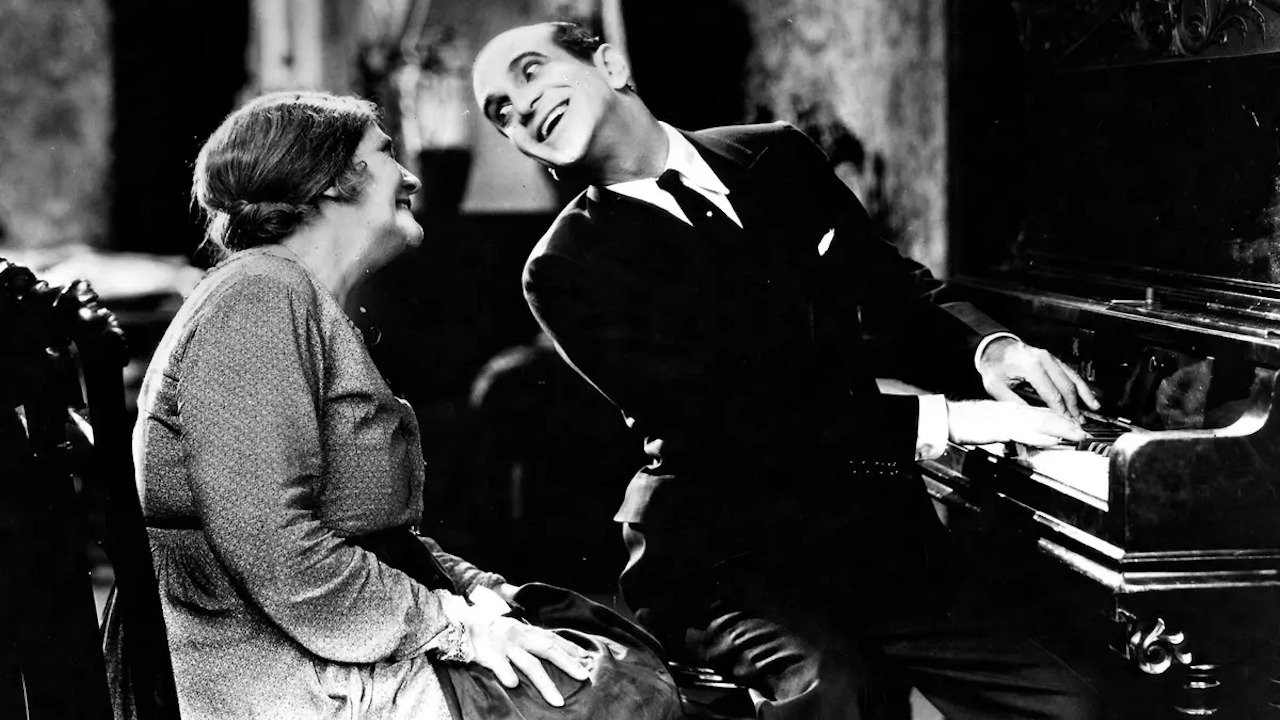
It is impossible to talk about the history of Hollywood without hitting the massive, jagged pillar that is The Jazz Singer movie. Released in 1927, this film didn't just change the industry; it basically nuked the old way of doing things. Before this, movies were silent. They were pantomime. They relied on intertitles to tell you what people were thinking. Then Al Jolson opened his mouth on screen, and the world changed overnight.
But honestly? Watching it today is a bizarre, often painful experience.
Most people know it as the first "talkie," but that’s actually a bit of a myth. It was a "part-talkie." Huge chunks of the film are still silent, with that familiar flickering title card popping up to explain the plot. Yet, the moment Jolson looks at the camera and says, "Wait a minute, wait a minute, you ain't heard nothin' yet," the sheer energy of it is undeniable. You can practically feel the 1927 audience jumping out of their seats.
The Sound Revolution Nobody Saw Coming
Warner Bros. was basically broke when they decided to bet the farm on the Vitaphone system. It was a clunky, terrifyingly temperamental technology that synced a wax record with the film projector. If the needle skipped, the movie was ruined. If the projectionist was a second off, the actor's mouth moved while the sound came out later. It was a mess.
Yet, The Jazz Singer movie worked. It grossed millions. It turned Warner Bros. into a powerhouse.
The plot is fairly standard immigrant-generation-gap stuff, based on Samson Raphaelson's play Day of Atonement. Jakie Rabinowitz (played by Jolson) is a young Jewish man caught between his father’s desire for him to be a cantor and his own burning need to sing popular "jazz" music. It’s a classic "clash of cultures" story that still resonates because everyone has felt that pull between family tradition and personal ambition.
The Blackface Elephant in the Room
We have to talk about it. You can't analyze The Jazz Singer movie without addressing the blackface.
For modern viewers, seeing Jolson apply the burnt cork to his face is jarring. It’s offensive. It’s deeply uncomfortable. To understand why it’s there, you have to look at the weird, convoluted history of Vaudeville. In the 1920s, blackface was a standard, albeit racist, theatrical mask. For Jolson’s character, the blackface serves as a literal and metaphorical mask that allows him to transition from the strict religious world of his father into the "rebellious" world of American pop culture.
Scholars like Michael Rogin have argued that for Jewish immigrants of that era, performing in blackface was a way to "become American" by adopting a specifically American theatrical tradition, even as it marginalized Black performers. It’s a layered, problematic mess. Jolson himself was known to be a supporter of Black artists on Broadway, which makes the whole thing even more confusing for a modern audience trying to reconcile the man with the performance.
It wasn't just about the makeup, though. It was about the sound. Jolson’s style was loud, emotional, and physical. He didn't just sing; he performed with his entire body. This was a massive departure from the stagey, stiff acting of the silent era.
Technical Nightmares and Triumphs
Making The Jazz Singer movie was a logistical nightmare.
The cameras had to be housed in giant, soundproofed "sweatboxes" so the microphones wouldn't pick up the whirring of the gears. The actors couldn't move much because the mics were hidden in flower vases or behind furniture. If you watch closely, you’ll notice Jolson stays pretty stationary during his singing scenes.
Despite these limitations, the film feels alive. The scene where Jakie sings "Blue Skies" to his mother, Mary, is genuinely charming. It was largely ad-libbed. Jolson’s banter was so natural that the producers decided to keep it in, unknowingly creating the first "naturalistic" dialogue in cinema history.
- The Budget: Around $422,000—a massive sum for the time.
- The Premiere: October 6, 1927, at Warner Theatre in New York City.
- The Tragedy: Sam Warner, the driving force behind the sound technology, died the day before the premiere. He never saw his gamble pay off.
- The Award: It received an honorary Oscar at the first-ever Academy Awards for "pioneering" the industry.
Why We Still Study This Film
Is it a "good" movie? By modern standards, not really. The pacing is weird, the melodrama is laid on thick, and the blackface is a massive barrier for most people.
However, The Jazz Singer movie is a historical artifact that explains how we got here. It ended the careers of countless silent film stars whose voices didn't match their "look." It forced theaters across the country to spend thousands of dollars on sound equipment during the start of the Great Depression. It changed the way stories were told.
Before 1927, movies were universal. You could show a Charlie Chaplin film in Tokyo, Paris, or New York, and everyone understood it because there was no language barrier. Sound changed that. It localized cinema and created the need for dubbing and subtitles.
The film also highlights the complexity of the "American Dream." Jakie Rabinowitz wants to be Jack Robin. He wants to shed his past but finds he can't quite do it. Even at the end, he's shown singing "Kol Nidre" in the synagogue, filling in for his dying father, before returning to the stage. It suggests that you can't ever truly escape where you came from, even if you’re a superstar.
The Cultural Ripple Effect
The success of Jolson's performance essentially killed the "silent" industry in less than two years. By 1929, almost every major studio had shifted to 100% sound production.
There’s also the influence on the musical genre itself. Without this film, we don't get Singin' in the Rain, The Sound of Music, or even modern hits like La La Land. It established the "backstage musical" trope—the idea of a performer struggling to make it big while dealing with personal demons.
How to Watch It Today
If you're going to watch The Jazz Singer movie, do it with a historical lens.
- Watch for the transitions: Notice when the film goes from silent to sound. It’s usually when Jolson is about to sing.
- Listen to the dialogue: Notice how awkward the scripted lines feel compared to Jolson’s improvised "Blue Skies" banter.
- Contextualize the performance: Read up on Vaudeville history before you tackle the blackface scenes. It doesn't make it okay, but it helps explain why a 1927 audience didn't bat an eye.
- Compare the remakes: There have been several, including a 1952 version with Danny Thomas and a fairly disastrous 1980 version starring Neil Diamond. None of them captured the lightning-in-a-bottle moment of the original because the novelty of sound could only happen once.
The film is currently in the public domain in many jurisdictions, making it easy to find on various streaming platforms or archives like the Internet Archive and YouTube.
Moving Forward With Film History
The legacy of The Jazz Singer movie is a double-edged sword. It is a masterpiece of technical innovation and a relic of racial insensitivity. It represents the birth of modern entertainment and the death of a beautiful, silent art form.
To truly understand cinema, you have to grapple with these contradictions. You can't just ignore the "problematic" parts of history, but you also can't ignore the technical leaps that allow us to enjoy movies today.
Actionable Next Steps
- Visit a Film Museum: If you're in Los Angeles, the Academy Museum of Motion Pictures has incredible exhibits on early sound technology.
- Research the Vitaphone: Look into the "Vitaphone Project," a group dedicated to restoring the original sound discs for these early films.
- Watch 'Singin' in the Rain': It’s the best "meta" commentary on the chaos caused by the transition to sound that started with Jolson.
- Read 'The Speed of Sound' by Scott Eyman: This is widely considered the definitive book on how the "talkie" revolution actually happened.
Ultimately, we don't watch this movie for the plot anymore. We watch it to see the exact moment the 20th century decided to turn the volume up. It's a loud, messy, uncomfortable, and brilliant piece of history that refuses to be forgotten.