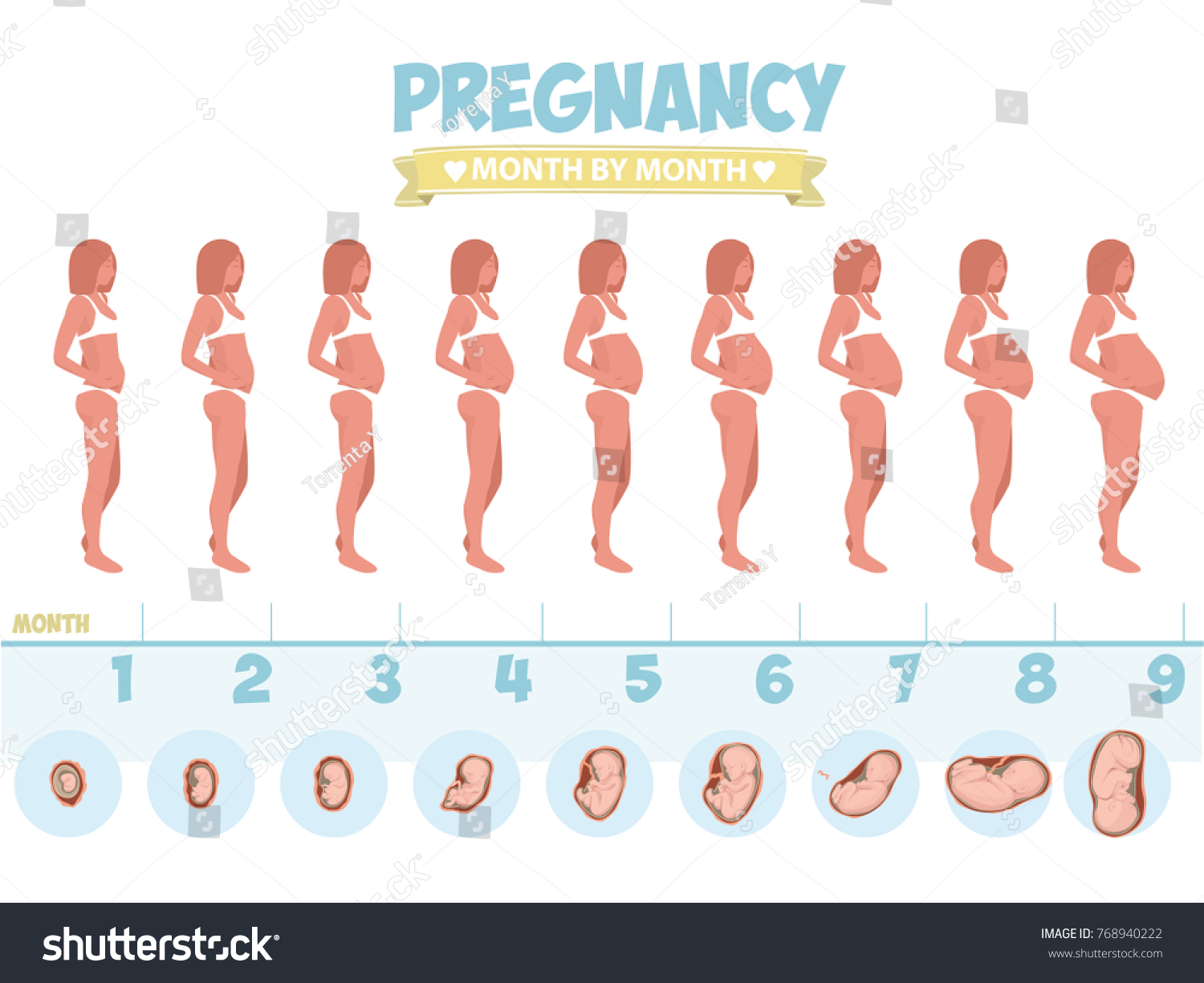
So, you’re eight weeks in. You’ve probably spent a good chunk of your morning staring sideways into the bathroom mirror, pulling your shirt taut and wondering if that slight curve is actually your baby or just the three tacos you had for dinner. Honestly? It’s almost certainly the tacos. Or, more accurately, it's the progesterone-induced bloat that makes you feel like a human parade float.
When people search for information about a two months pregnant belly, they usually expect to see a cute, distinct little mound. The reality is way less "Instagram-perfect" and way more "I can’t quite zip my favorite jeans today." At two months—which covers weeks five through eight—your uterus is roughly the size of a large lemon or a navel orange. It’s still tucked safely behind your pubic bone. Unless you’re carrying twins or this isn't your first rodeo, a true pregnancy bump is usually still weeks away.
The bloat vs. the bump: What’s actually happening?
The biggest misconception about the two months pregnant belly is that the size change is caused by the fetus. Let’s look at the math. At eight weeks, your embryo is about the size of a kidney bean or a raspberry. It weighs about one gram. That tiny bean isn't pushing your abdominal wall out quite yet.
What is happening is a massive hormonal surge. Progesterone is the main culprit here. It relaxes the smooth muscles in your body, including your digestive tract. This is great for making sure your baby gets every last nutrient from your food, but it’s terrible for your waistline. Digestion slows down to a crawl. Gas builds up. You feel puffy.
You might wake up with a flat stomach and go to bed looking six months pregnant. That’s the "bloat bump." It’s real, it’s uncomfortable, and it’s one of the first things people notice.
Why some people show earlier
Every body is a different shape. If you have a retroverted uterus—meaning it tilts toward your back instead of your front—you might not show for a long time. Conversely, if you have a short torso, there’s simply less vertical room for everything to shift, so things move outward sooner.
Second-time moms also "pop" way faster. Your abdominal muscles have already been stretched out once before. They remember the drill. They basically give up the ghost the second that pregnancy test turns positive, whereas first-time moms often have tighter muscles that hold everything in place much longer.
What's going on inside that two months pregnant belly?
While the outside might just look a bit soft, the inside is a construction site. This is the embryonic period. It’s the most critical time for organ development. By the end of month two, the "tail" at the end of the embryo is gone. The heart is beating—fast. We're talking 150 to 170 beats per minute.
According to the Mayo Clinic, the neural tube is closing, and the tiny buds that will become arms and legs are starting to sprout. Even though you can't feel it, your baby is actually starting to make tiny, jerky movements. You won't feel those "quickening" flutters for another two months, at least.
The physiological shift
Your blood volume is already increasing. Your kidneys are working overtime to process the extra fluid. This is why you're peeing every twenty minutes. It’s also why your skin might look "glowy"—or, more likely, why you’re breaking out like a teenager. The "glow" is often just extra oil and more blood flow to the skin.
Dealing with the discomfort
It’s a weird phase. You don't look pregnant enough to get a seat on the subway, but you feel "thick" enough that your clothes are annoying.
- The hair-tie trick: Take a hair elastic, loop it through the buttonhole of your jeans, and hook it over the button. It buys you an extra inch of breathing room.
- Hydration: It sounds counterintuitive, but drinking more water helps flush out the sodium that contributes to the bloating.
- Fiber: Since progesterone slows things down, you need to keep things moving. Think raspberries, lentils, and chia seeds.
Fatigue and the "Invisible" struggle
The two months pregnant belly might be invisible to the world, but the exhaustion is very real. Your body is literally building a placenta from scratch. This is an entirely new organ. It’s an incredibly energy-intensive process. If you feel like you need a nap at 2:00 PM every day, listen to your body. You aren't being lazy; you're growing a life support system.
Common myths about the eight-week bump
You’ll hear a lot of old wives' tales. "You’re carrying high, it’s a girl." "You’re showing early, it must be a boy." At two months, these mean absolutely nothing. Your bump shape at this stage is determined by your bowel movements and your core strength, not the sex of the baby.
Another big one? The idea that you need to be "eating for two." Nutritional science has largely debunked this for the first trimester. Most doctors, including those at the American College of Obstetricians and Gynecologists (ACOG), suggest that you don't actually need extra calories yet. You just need quality nutrients. If all you can keep down is white toast and ginger ale because of morning sickness, don't panic. The baby will take what it needs from your body's reserves.
When to talk to a doctor
While a little cramping and bloating are standard for a two months pregnant belly, you should always keep a pulse on your symptoms. Mild, period-like cramps are usually just your uterus stretching.
However, if you experience sharp, one-sided pain or heavy bleeding, call your OB-GYN or midwife immediately. This could indicate an ectopic pregnancy or other complications. Most first prenatal appointments happen right around this time—week eight or nine—so it’s the perfect time to bring a list of your "is this normal?" questions.
The Ultrasound Experience
If you have an ultrasound at two months, don't expect to see a "baby" that looks like a person. It looks more like a little gummy bear. You’ll see a flickering light on the screen, which is the heartbeat. It's a surreal moment because it finally makes the bloating and the nausea feel like they have a purpose.
Actionable steps for your second month
This is the transition zone. You're moving out of the "I just found out" shock and into the reality of pregnancy.
Audit your wardrobe. You don't need maternity clothes yet, but you do need "transition" clothes. Think leggings with a soft waistband, oversized button-downs, and jersey knit dresses. Avoid anything with a restrictive high waist.
Start a pregnancy journal or app. Record how you feel. Even the annoying stuff. You’d be surprised how quickly you forget the specific "flavor" of this first-trimester weirdness.
Switch to a prenatal with DHA. If your current vitamin makes you nauseous, try taking it at night with a small snack. The iron in prenatals is notorious for causing constipation, which only makes the two-month bloat worse.
Take the "before" photo. Even if you feel like you just look like you ate a big lunch, take the photo. In six months, you’ll look back at your "non-bump" and laugh at how small you felt.
The two months pregnant belly is essentially the "stealth mode" of pregnancy. Enjoy the ability to move easily while you still can, even if you have to keep your pants unbuttoned under a long sweater. The real bump is coming, and once it arrives, you'll probably miss being able to see your toes.