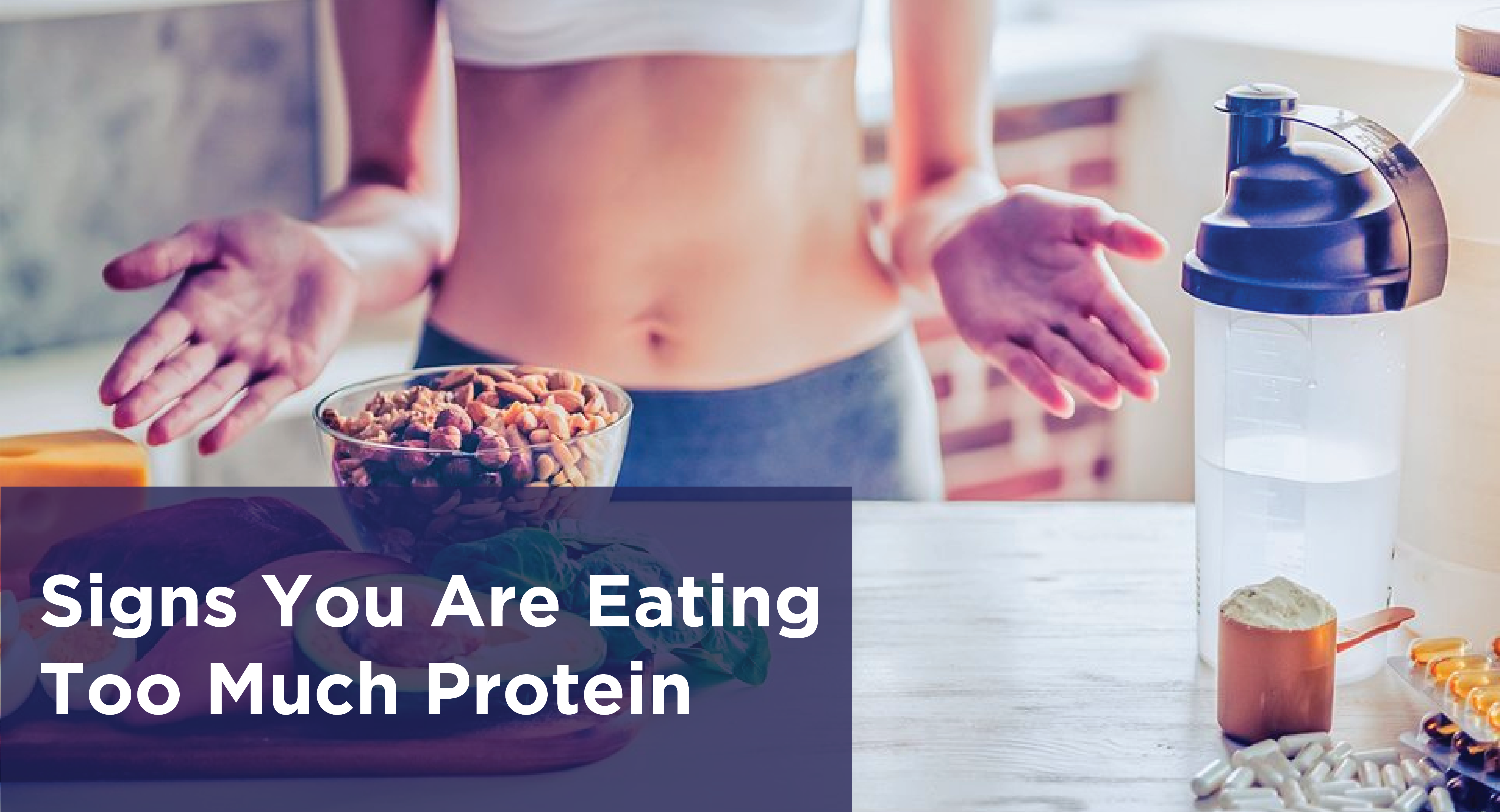
You’ve seen the jugs of whey in every gym locker room and the "high protein" labels plastered over everything from breakfast cereal to ice cream. It’s the one macronutrient that seems to have a halo over it. While fat and carbs take turns being the villain of the decade, protein usually gets a free pass. We treat it like the more you eat, the more muscle you grow, and the healthier you become. But honestly, there’s a point where your body just goes, "Okay, that's enough." People are starting to ask: is eating too much protein bad for you, or are we just overthinking a good thing?
It’s complicated.
Your body isn't a bottomless pit for amino acids. When you smash a 16-ounce ribeye after a protein shake, your physiology handles that input in very specific, sometimes messy ways. For most healthy people, the kidneys are total rockstars at filtering out the waste. But "most people" isn't everyone. If you’re living on nothing but chicken breasts and egg whites, you might be missing out on the stuff that actually keeps your gut moving and your heart ticking.
The Kidney Myth vs. The Kidney Reality
There is this long-standing fear that high protein diets will absolutely wreck your kidneys. You've probably heard it from a concerned relative or read it on an old-school health forum. The logic seems sound: your kidneys filter the nitrogenous waste from protein metabolism, so more protein equals more work, which equals "wear and tear."
But the science tells a slightly more nuanced story.
A landmark study published in the Journal of the International Society of Sports Nutrition followed athletes consuming massive amounts of protein—up to 3.4 grams per kilogram of body weight. That’s more than triple the RDA. The result? No significant changes in kidney function for those healthy individuals. However—and this is a big "however"—if you already have pre-existing kidney issues or chronic kidney disease (CKD), a high protein intake is like throwing gasoline on a fire. For those folks, the kidneys struggle to clear the urea and other byproducts, leading to a buildup of toxins in the blood.
So, for the average gym-goer, your kidneys are probably fine. But "probably fine" doesn't mean you should ignore the signs of strain if you're overdoing it.
Your Gut is Usually the First to Complain
Let's talk about the "protein sweats" and the "protein bloat." You know the feeling. If you lean too hard into the carnivore-adjacent lifestyle, you’re likely cutting out fiber-rich carbohydrates like lentils, berries, and whole grains.
Fiber is what keeps the trains running on time in your digestive tract. Without it? You're looking at chronic constipation. Plus, there is the smell. When you eat more protein than your small intestine can actually absorb, that excess protein travels down to the large intestine. There, your gut bacteria ferment it. This process, known as protein fermentation, produces some pretty foul-smelling gases (hydrogen sulfide, anyone?) and metabolites like p-cresol and ammonia.
It's not just about being a social pariah because of the gas. Long-term exposure to these fermentation byproducts has been linked in some research to inflammation in the colonic lining. Basically, your gut prefers a balance, not a mono-diet of turkey breast.
Is Eating Too Much Protein Bad for You if You Want to Live Longer?
Longevity researchers like Dr. Valter Longo, the director of the Longevity Institute at USC, have raised some serious red flags about excessive animal protein. The issue centers around a growth hormone called IGF-1 (Insulin-like Growth Factor 1).
- Protein, especially from animal sources, raises IGF-1 levels.
- While IGF-1 is great for building muscle in your 20s, high levels in middle age are linked to an increased risk of cancer.
- The theory is that high IGF-1 tells your cells to grow and divide—which is exactly what you don't want a precancerous cell to do.
Longo’s research suggests that for people between ages 50 and 65, a high-protein diet (where 20% or more of calories come from protein) was associated with a 4-fold increase in cancer death risk compared to a low-protein diet. Interestingly, once you get past 65, the recommendation flips. Older adults actually need more protein to prevent sarcopenia (muscle wasting) and frailty. It’s all about the season of life you’re in.
Dehydration and the Invisible Strain
Protein requires more water to metabolize than fats or carbs. Every time your liver strips the nitrogen from an amino acid to turn it into energy, it creates urea, which your kidneys then have to flush out with water.
You might not even feel thirsty.
A study from the University of Connecticut found that as protein intake went up, biomarkers for dehydration increased, even though the athletes didn't feel any thirstier. If you're doubling down on protein shakes and not doubling your water intake, you're essentially walking around in a state of sub-clinical dehydration. This can lead to headaches, fatigue, and—in the worst-case scenarios—kidney stones. Especially if that protein is coming from red meat, which is high in purines. Purines break down into uric acid. High uric acid plus low water? That’s a recipe for a very painful stone or a gout flare-up.
The Calorie Trap
There’s this weird myth that protein calories are "free" calories. Like your body just burns them off through the thermic effect of food (TEF). While it’s true that protein takes more energy to digest than fat, a calorie is still a calorie.
If you are eating 3,000 calories a day but only burning 2,500, it doesn't matter if those extra 500 calories came from organic grass-fed whey or a glazed donut. Your body will store the excess. Usually, the liver converts the carbon skeletons of those amino acids into glucose or fat. You aren't just peeing out the extra calories; you're wearing them.
Finding the Sweet Spot
So, what’s the actual number? The RDA is 0.8 grams per kilogram of body weight, which is honestly pretty low—it’s the minimum to prevent deficiency, not the optimum for performance.
Most experts, including those at the American College of Sports Medicine, suggest that if you're active, you should aim for 1.2 to 2.0 grams per kilogram. If you weigh 180 lbs (about 82 kg), that’s roughly 100 to 164 grams of protein.
Eating 300 grams? That’s likely overkill.
How to Balance Your Intake
- Diversify the source. Don't just rely on whey and beef. Get some protein from chickpeas, tempeh, or quinoa. You get the amino acids plus the fiber your gut is begging for.
- Hydrate like it's your job. If you increase protein, increase your water. Simple as that.
- Watch the timing. Your body can really only "use" about 25-40 grams of protein for muscle protein synthesis in one sitting. Eating a 100g protein steak in one go doesn't mean you're building 4x the muscle; it just means you're giving your liver more work to do at once.
- Listen to your skin. Sometimes, excessive dairy-based protein (like whey) can trigger acne flare-ups in certain people due to the insulin response it triggers.
Actionable Next Steps
If you suspect you've been overdoing it, don't just cut protein cold turkey. Start by tracking your actual intake for three days. Most people are surprised to find they are either way over or—surprisingly—still under because they're "eyeballing" portions.
- Calculate your target: Multiply your weight in kilograms by 1.6. That is a solid, middle-ground target for most active people.
- Swap one animal meal: Once a day, replace your meat source with a plant-based protein like lentils or tofu to lower the acid load on your kidneys and boost fiber.
- Check your labs: Next time you get blood work, look at your BUN (Blood Urea Nitrogen) and Creatinine levels. If they are creeping toward the high end of the range, talk to your doctor about whether your protein intake is the culprit.
- Add a "Fiber First" rule: Before you eat that chicken breast, eat a cup of broccoli or a salad. It slows down digestion and helps manage the metabolic byproduct load.
Protein is a tool. It's the building block of your enzymes, hormones, and muscle tissue. But like any tool, if you use a sledgehammer to hang a picture frame, you're going to end up with a hole in the wall. Balance isn't a boring buzzword; it's the physiological requirement for a body that doesn't just look good, but actually functions well for the long haul.