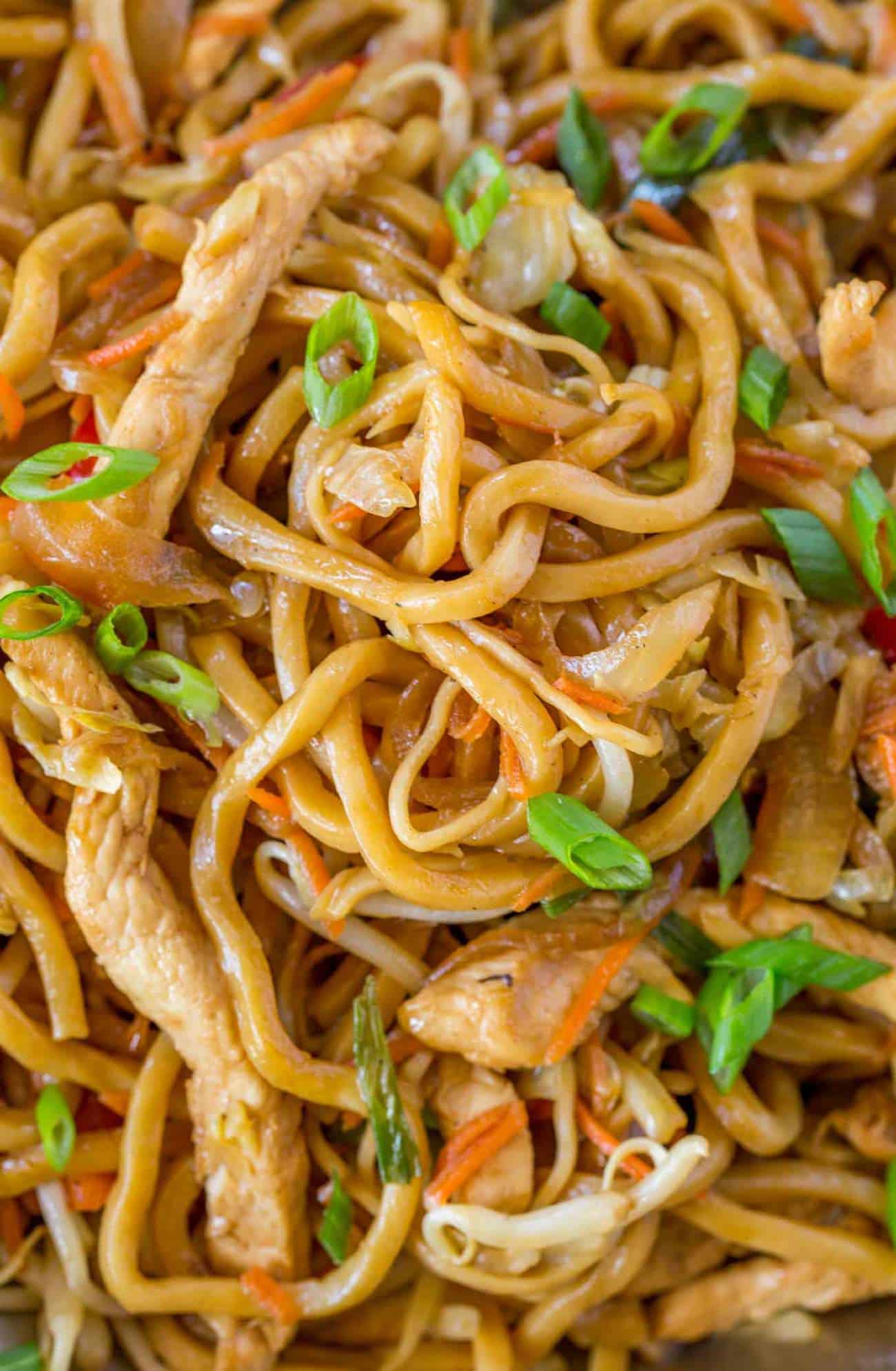
Let's be honest. Most people ordering chicken lo mein have no idea they’re probably eating something else entirely. You open that white cardboard box, steam hits your face, and you dig into those slick, savory noodles thinking you’ve got the authentic experience. But here’s the thing: in the world of Chinese-American cuisine, the line between "lo mein" and "chow mein" has been blurred so much it’s basically invisible.
Chicken lo mein isn't just a dish. It's a technique.
If you're eating noodles that are crunchy or dry, you aren't eating lo mein. The name literally translates from Cantonese—lo meaning "stirred" or "tossed," and mein meaning "noodles." It's about the toss. It’s about that specific, slippery mouthfeel that only comes from fresh egg noodles meeting a high-heat wok for a very short amount of time.
The Great Noodle Identity Crisis
There’s a massive misconception that the difference between these dishes is just the vegetable count. That's wrong. The real distinction lies in how the noodles are treated before they ever hit the plate. For a proper plate of chicken lo mein, the noodles are parboiled—partially cooked in water—and then tossed into the wok at the very end of the cooking process. They don’t fry. They don’t get crispy. They soak up the sauce like a sponge.
Chow mein noodles are fried. They’re meant to be brittle or at least have a distinct "bite" from the oil. When you order "lo mein" in a fly-over state, you might get those thin, yellow curls that have been sitting in a steamer tray for four hours. That's not it. Real lo mein uses thick, round, wheat-based egg noodles that are about the diameter of a standard spaghetti noodle but with a much denser, chewier heart.
Traditional recipes, like those documented by food historian Grace Young in The Breath of a Wok, emphasize that the wok should be hot enough to sear the chicken but the noodles should only stay in long enough to get coated. If you overcook them, they turn into mush. Nobody wants noodle mush.
What Actually Goes Into the Sauce?
Most people think it's just soy sauce. It isn't. If you only use soy sauce, your chicken lo mein will taste flat and salty. The "secret" that high-end Cantonese chefs and busy takeout joints alike use is a balance of dark soy sauce for color and light soy sauce for salt.
Then comes the toasted sesame oil. You can’t skip it.
And then there's the oyster sauce. This is the heavy lifter. It adds that umami funk and the viscous texture that makes the sauce cling to the noodles. If you’re making this at home and it feels "watery," you probably skipped the cornstarch slurry or didn't use enough oyster sauce. A dash of Shaoxing wine (Chinese rice wine) adds an acidic backnote that cuts through the grease. If you can’t find Shaoxing, dry sherry is a decent substitute, though purists will definitely give you side-eye for it.
The Velvet Chicken Secret
Ever wonder why the chicken in a professional kitchen is so incredibly soft? It’s almost unnaturally tender. That’s because of a process called "velveting."
You don't just chop up a breast and throw it in. You marinate the thin slices of chicken in a mixture of egg white, cornstarch, and sometimes a splash of oil or baking soda. This creates a protective barrier. When the chicken hits the hot oil, the outside sears instantly while the inside stays poached and tender. It prevents the fibers from toughening up under the intense heat of a 100,000 BTU wok burner.
- Step 1: Slice the chicken against the grain. This is non-negotiable.
- Step 2: Coat it in the cornstarch mixture for at least 20 minutes.
- Step 3: Flash-fry it in oil (or water, for a lower-fat version) before you even start the vegetables.
Why Your Home Version Probably Fails
It's the heat. Or lack of it.
Your stove at home probably puts out about 12,000 BTUs. A commercial wok range is a literal jet engine. Because home cooks can't get that "wok hei" (the breath of the wok), they tend to overcook the vegetables while waiting for the pan to get back up to temperature.
To fix this, you have to cook in batches. Most people dump everything in at once. The temperature drops. The vegetables start to steam in their own juices instead of searing. Suddenly, your chicken lo mein is a soggy mess. You’ve got to sear the chicken, take it out. Sear the cabbage and carrots, take them out. Only at the very end do you bring everyone back to the party for a final toss with the noodles and sauce.
Vegetables: The Unsung Heroes
In a standard chicken lo mein, the vegetables provide the structural integrity. You need crunch to offset the soft noodles.
- Bok Choy: The stems give a watery crunch, while the leaves soak up sauce.
- Snow Peas: These add a sweetness that balances the salty soy.
- Mung Bean Sprouts: Add these at the literal last second. If they cook for more than 30 seconds, they turn into grey strings.
- Shiitake Mushrooms: They provide an earthy depth that mimics the savory notes of the chicken.
The Nutrition Reality Check
Let's talk health, because there's a lot of fear-mongering about MSG and sodium. Most modern nutritional studies, including those summarized by the Mayo Clinic, have debunked the "Chinese Restaurant Syndrome" myths surrounding MSG. It’s a naturally occurring salt found in tomatoes and parmesan cheese.
However, the sodium in chicken lo mein is legitimately high. A single serving can easily pack 2,000mg of sodium. That’s your entire daily recommended intake. If you're watching your blood pressure, the move is to use "low sodium" soy sauce, but honestly, you’re better off just controlling the portion size. The noodles are also calorie-dense wheat, so it’s a carb-heavy meal. It’s fuel. It’s delicious, soul-warming fuel, but it’s not exactly a "light" salad.
Variations Across the Globe
In the UK, you might find something similar called "Special Chow Mein," which often includes chicken, pork, and shrimp. In India, "Hakka Noodles" are the local cousin of chicken lo mein, featuring much more green chili, vinegar, and sometimes even ketchup. It’s a fascinating look at how a simple "tossed noodle" dish adapts to local palates.
Authentic Cantonese versions are often much simpler than the American version. You might see just noodles, ginger, scallions, and maybe a few pieces of chicken. The American version is a "more is more" approach—more sauce, more veggies, more meat. Both have their place, but don't expect a traditional Hong Kong eatery to serve you the sauce-drenched version you get in Brooklyn.
How to Order Like a Pro
Next time you’re at a high-quality Chinese restaurant, ask if they use fresh or dried noodles for their lo mein. Fresh noodles contain egg and have a distinct yellow hue and a springy texture. Dried noodles are okay, but they lack that specific "snap." If they say they make their own noodles or source them daily from a local bakery, you’ve found the gold mine.
Also, look at the color of the dish. It should be a rich, mahogany brown. If it’s pale, they skimped on the dark soy. If it’s black, they probably overused it, and it's going to taste bitter.
Actionable Steps for the Perfect Dish
If you want to master chicken lo mein, stop looking for a "one-pot" recipe. It doesn't exist.
First, go to an Asian grocery store and buy fresh egg noodles from the refrigerated section. Avoid the shelf-stable boxes if you can. While you’re there, grab a bottle of Lee Kum Kee Oyster Sauce and a bottle of Shaoxing Rice Wine.
Second, prep everything before you turn on the stove. This is "mise en place." Once the wok starts smoking, you won't have time to chop a carrot.
Third, use a carbon steel wok. Non-stick pans can’t handle the heat required to get the chicken properly seared without sticking.
Finally, remember the "toss." The goal isn't to cook the noodles in the pan; it's to marry them to the sauce. You’re looking for a glaze, not a soup. If there is a puddle of liquid at the bottom of your bowl when you're done, the sauce wasn't reduced or thickened enough.
Focus on the texture of the chicken through velveting, the snap of the vegetables by batch-cooking, and the quality of the noodles. That is the difference between a mediocre Tuesday night meal and a world-class chicken lo mein.