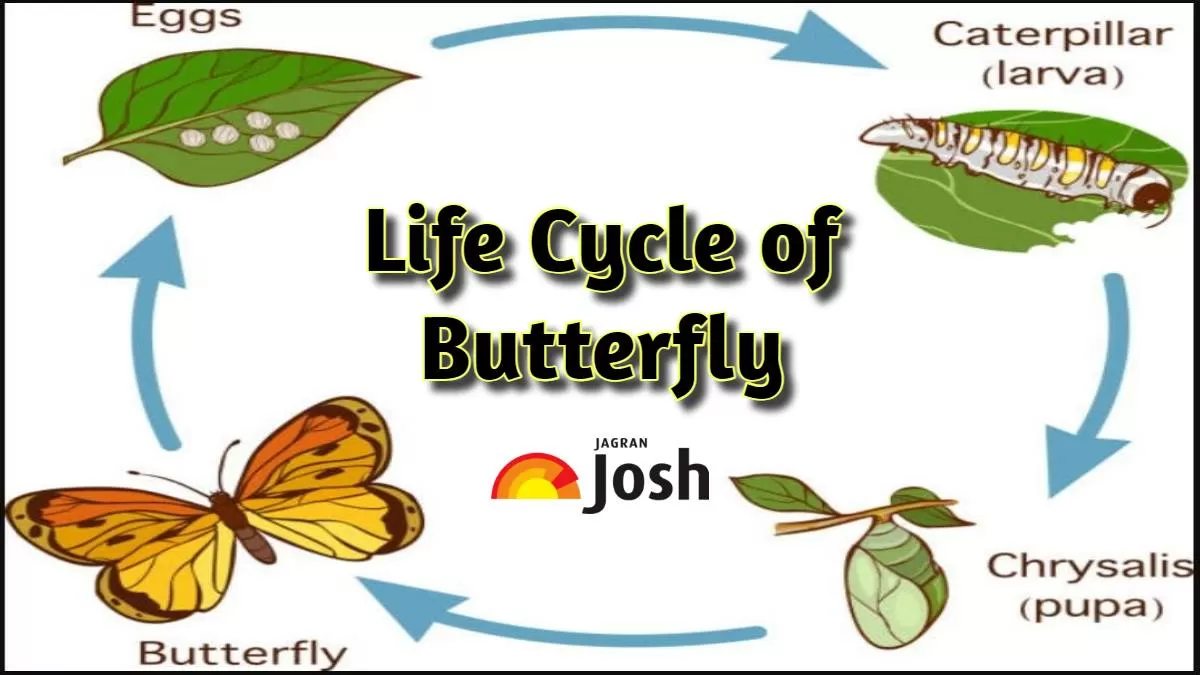
You probably remember the poster from third grade. A green leaf, a chubby caterpillar, a hanging cocoon, and then—poof—a Monarch. It looks so linear. So simple. Honestly, the standard life cycle diagram of a butterfly usually leaves out the weirdest, most gruesome, and most fascinating parts of how these insects actually function.
Nature isn't a clean circle.
Metamorphosis is more like a total biological meltdown followed by a high-stakes reconstruction project. If you really look at the biology, you'll see that a butterfly doesn't just "grow wings" inside that shell. It dissolves. It becomes soup.
The Egg: More Than Just a Tiny Dot
It starts with a glue. Butterflies don't just drop eggs and hope for the best. A female butterfly uses a specialized secretion to cement her eggs to the underside of a very specific host plant. If she picks the wrong leaf, her kids starve. It's that simple.
Most people think the egg stage is dormant. It's not. Inside that tiny shell—which is often ribbed or sculpted like a miniature piece of glass—a complex nervous system is forming. For some species, like the Blue Morpho, the egg changes color as it gets closer to hatching, almost like a countdown timer.
Then comes the first meal.
The larva eats its own eggshell. It’s the ultimate recycling move. The shell is packed with nutrients and protein that the caterpillar needs to kickstart its only job: eating. If you look at a life cycle diagram of a butterfly, this is usually just a tiny circle, but it's the foundation for everything that follows. Without that specific protein hit from the chorion (the eggshell), many larvae struggle to survive their first molt.
Larva: The Eating Machine Phase
The caterpillar is essentially a walking stomach. It has one goal: gain weight. Rapidly. A caterpillar can grow 100 times its size in just a few weeks. Imagine a human baby weighing 8 pounds at birth and 800 pounds by the end of the month. That’s the scale we’re talking about here.
They breathe through holes in their sides called spiracles.
They don't have lungs like us. They don't have a complex skeleton. Instead, they have a hydrostatic skeleton, which is basically a fluid-filled balloon that they move using muscles. They have six "true" legs up front and then a bunch of "prolegs" in the back that have tiny hooks called crochets. These hooks are why it's so hard to pull a caterpillar off a stem without hurting it.
Molting and the Instar Secret
Butterflies don't just get bigger; they outgrow their skin. This is the part people usually miss when drawing a life cycle diagram of a butterfly. They go through stages called instars.
Between each instar, the caterpillar stops eating. It spins a little silk pad, anchors itself, and waits. A new, larger skin forms underneath the old one. Then, the old skin splits down the back and the caterpillar crawls out, looking soft and slightly damp. It swallows air to expand its new skin before it hardens. Most butterflies go through five of these instars before they are ready for the big change.
The Pupa: It’s Not a Sleeping Bag
Let’s get one thing straight: butterflies make a chrysalis. Moths make a cocoon.
A cocoon is a silk wrapping. A chrysalis is the insect's actual body. When the caterpillar is ready, it finds a safe spot and sheds its skin one last time. But instead of a bigger caterpillar emerging, the new skin hardens into a protective shell.
This is where the "soup" happens.
Inside the chrysalis, an enzyme called caspases starts breaking down the caterpillar’s tissues. Its muscles, its digestive system, its legs—it all turns into a nutrient-rich liquid. The only things that stay intact are "imaginal discs." These are tiny clusters of cells that have been sitting dormant inside the caterpillar since it was an egg.
These discs are the blueprints. One disc becomes a wing. One becomes a leg. One becomes the long, coiled proboscis used for drinking nectar. The butterfly uses the "soup" of its old self as fuel to build its new self. It’s a complete cellular reorganization.
Survival and the Final Reveal
The pupa stage is the most vulnerable time in the life cycle diagram of a butterfly. It can’t run. It can’t fight. So, it hides. Some chrysalises look like dead leaves. Others, like the Mechanitis polymnia, look like solid gold to confuse predators by reflecting light like a water droplet.
When it's finally time to emerge, the chrysalis often becomes transparent. You can see the wings folded up inside. The butterfly splits the casing, crawls out, and looks... terrible.
Its wings are tiny, wet, and crumpled. Its abdomen is huge and swollen.
The butterfly has to pump fluid (hemolymph) from its body into the veins of its wings. It’s like inflating a balloon. If it doesn't do this quickly, the wings will dry shriveled, and the butterfly will never fly. It hangs there, vulnerable, waiting for the sun to dry the chitin and harden the structure.
The Adult (Imago): The Mission Changes
Once the wings are dry, the mission shifts from "eat everything" to "reproduce at all costs."
Most adult butterflies only live for a few weeks. Some, like the migrating Monarchs, can live for several months, but they are the exception. Their mouths are now tubes. They can't eat solid food. They drink nectar for sugar-energy, but they don't really "grow" anymore.
They spend their days searching for mates and, eventually, the perfect host plant to start the whole life cycle diagram of a butterfly all over again.
Why This Matters for Your Garden
If you're looking at this diagram because you want more butterflies in your yard, you have to realize that you aren't just planting for butterflies. You're planting for caterpillars.
- Host Plants are Non-Negotiable: A Monarch butterfly will only lay eggs on milkweed. If you don't have milkweed, you won't have Monarchs. Period.
- Stop the "Clean" Garden Mentality: Caterpillars need places to hide and pupate. If you rake every single leaf and trim every dead branch, you're likely throwing away chrysalises.
- Chemical Sensitivity: Because butterflies breathe through their skin (spiracles), they are incredibly sensitive to pesticides. Even "organic" ones can be lethal during the larval stage.
Understanding the nuances of the life cycle diagram of a butterfly changes how you see the world. It’s not just a pretty insect. It’s a survivor of a brutal, beautiful, and slightly disgusting biological process that has stayed largely unchanged for millions of years.
Actionable Steps for Conservation
To actually support this cycle in your own space, start by identifying your local native species. Use a resource like the National Wildlife Federation’s Native Plant Finder. Don't just buy "wildflower mix" from a big-box store; those often contain invasive species that don't actually support local larvae.
Focus on creating a "soft landing" under trees. Many caterpillars drop from the canopy to the ground to pupate in the leaf litter. By leaving a patch of leaves or planting native groundcovers instead of mown grass, you provide the protection they need to complete their transformation into the adult stage.