Wait. Let’s get one thing straight before we even dive into the music. When people talk about Rahat Fateh Ali Khan, they almost always frame him as the "successor" to the late, legendary Nusrat Fateh Ali Khan. It’s a heavy mantle. Maybe too heavy. Honestly, it’s kinda unfair to compare the two as if they were the same artist separated by a generation. They weren't.
Nusrat was a force of nature. A once-in-a-millennium voice that broke the West without ever compromising the spiritual grit of Qawwali. Rahat, his nephew and student, is something else entirely. He’s the bridge. He's the man who took the raw, sweaty, transcendental energy of the shrine and polished it for the bright lights of Bollywood and global arenas. If Nusrat was the lightning, Rahat is the electricity captured in a bottle, channeled through the radio and into every wedding playlist from Lahore to London.
But there is a specific nuance here that most people miss. To understand the trajectory of Rahat Fateh Ali Khan, you have to understand the transition from the Dargah (shrine) to the Studio. It wasn't just a career move; it was a fundamental shift in how South Asian spiritual music is consumed.
The Weight of the Bloodline
Born into the 600-year-old tradition of the Qawwal Bachon ka Gharana, Rahat didn't really have a choice about his career path. You don't just "decide" to be a Qawwal in that family. You're born into it. His father, Farrukh Fateh Ali Khan, was Nusrat’s right-hand man and a harmonium master. Basically, Rahat grew up in a house where the air was thick with the sound of sargams and the rhythmic clapping of the humnawa (the choral group).
His first public performance? He was seven. Seven years old. Imagine standing in front of a crowd at the death anniversary of his grandfather, Fateh Ali Khan, and trying to hold a note while the elders of the clan watched with eagle eyes. He survived it. By 1985, he was a permanent fixture in Nusrat’s traveling party. If you watch old grainy footage of Nusrat’s 1980s world tours—the ones that blew the minds of Peter Gabriel and the WOMAD crowd—you’ll see a young, slim Rahat sitting right behind his uncle. He was the understudy for a king.
The Bollywood Pivot: Changing the Game
Nusrat died in 1997. The world felt a bit quieter. For a few years, it felt like the traditional Sufi sound might retreat back into the shrines of Pakistan, away from the global stage. Then came 2003.
Most people point to the movie Paap as the turning point. The song was "Mann Ki Lagan." It didn't sound like a traditional Qawwali. It was slower, more melodic, and deeply romantic in a way that fit the Bollywood mold. This is where Rahat Fateh Ali Khan found his own voice. He realized he couldn't just be a "Nusrat clone." He had to be something different. He leaned into the ghazal style and the semi-classical romantic ballad.
It worked. Boy, did it work.
Suddenly, Rahat was everywhere. From "Teri Ore" to "Sajdaa," he became the go-to voice for soulful longing in Indian cinema. But here’s the thing: while he was winning Filmfare awards, the purists were grumbling. They felt he was "diluting" the sacred tradition. They weren't entirely wrong, but they were missing the bigger picture. Rahat wasn't killing Qawwali; he was evolving it for a generation that didn't have the patience for a 40-minute trance-inducing epic. He gave them the "cliff notes" version—four minutes of vocal gymnastics that still carried the scent of the shrine.
Why the Nusrat Comparisons are Flawed
Let's look at the technicality of the voice. Nusrat had this incredible, gravelly power in his lower register and a piercing, almost frightening intensity when he hit the high notes. He sang like he was trying to tear a hole in the sky to talk to God directly.
Rahat Fateh Ali Khan is different. His voice is cleaner. It’s smoother. He has a technical precision in his taans (rapid melodic passages) that is arguably more disciplined than his uncle’s, simply because he was trained for the studio microphone. He knows how to pull back. He knows how to "croon." You can't imagine Nusrat "crooning." Nusrat only knew how to erupt.
The Misconception of Successorship
People often ask: "Is Rahat the best Qawwal alive?"
That's the wrong question. In the traditional sense, groups like the Sabri Brothers or even some of the lesser-known families in Pakistan might stick closer to the "authentic" Sufi roots. But if the question is "Who has kept the spirit of the Khan legacy relevant?" then there is no competition. Rahat is the reason a 20-year-old in New York even knows what a harmonium sounds like. He’s the reason the word "Sufi" became a mainstream genre in the music industry.
The Struggles and the Comebacks
It hasn't been all standing ovations. Rahat has faced significant hurdles. There were the high-profile tax issues at Indian airports, the grueling tour schedules that led to visible exhaustion, and the constant pressure of being the patriarch of a musical empire.
In 2024 and 2025, we saw a shift in his public persona. He started focusing more on "Legacy Projects." He’s been trying to re-introduce longer-form Qawwalis into his live sets, almost as if he’s trying to reconnect with that 1985 version of himself sitting behind Nusrat. It’s a conscious effort to balance the "Pop Star Rahat" with the "Ustad Rahat."
What You Should Listen to (Beyond the Hits)
If you only know him from Bollywood, you're missing the real skill. To actually hear what he's capable of, you have to look for his live "Unplugged" sessions or his performances at the Nobel Peace Prize concert.
- "Main Jahaan Rahoon" (Live): Listen for the way he holds a single note and then breaks it into a dozen tiny pieces. That's the classical training.
- "Afreen Afreen" (Coke Studio version): Yes, it’s mainstream, but the chemistry between him and Momina Mustehsan showed he could play well with others without overshadowing them—a rare trait for a maestro.
- "Allah Hoo": This is where you hear the ghost of Nusrat. When Rahat performs this, he isn't just singing; he's participating in a ritual.
The Reality of His Impact
We have to acknowledge the limitations of his path. By becoming a global superstar, he moved away from the raw, unedited spirituality that made Qawwali so dangerous and exciting in the 70s. His music is safe. It’s beautiful, yes, but it’s safe. It’s meant for concert halls with velvet seats, not necessarily for the dusty floors of a shrine where people lose their minds in a trance.
But maybe that’s okay.
Music has to move to survive. If Rahat had stayed in the shrine, the world might have forgotten the Fateh Ali Khan name. Instead, he made it immortal. He proved that the sargam could coexist with the synthesizer. He proved that a man from Faisalabad could become the most sought-after voice in a billion-dollar film industry.
How to Truly Appreciate the Legacy
If you want to understand the depth of this musical lineage, don't just stream the top hits on Spotify. Do a little homework.
- Listen Chronologically: Find a recording of Rahat as a backup singer in 1990. Then listen to his first solo album, Tasveer. Finally, listen to his 2024 live recordings. You’ll hear the voice age, deepen, and eventually, start to mirror his uncle’s rasp.
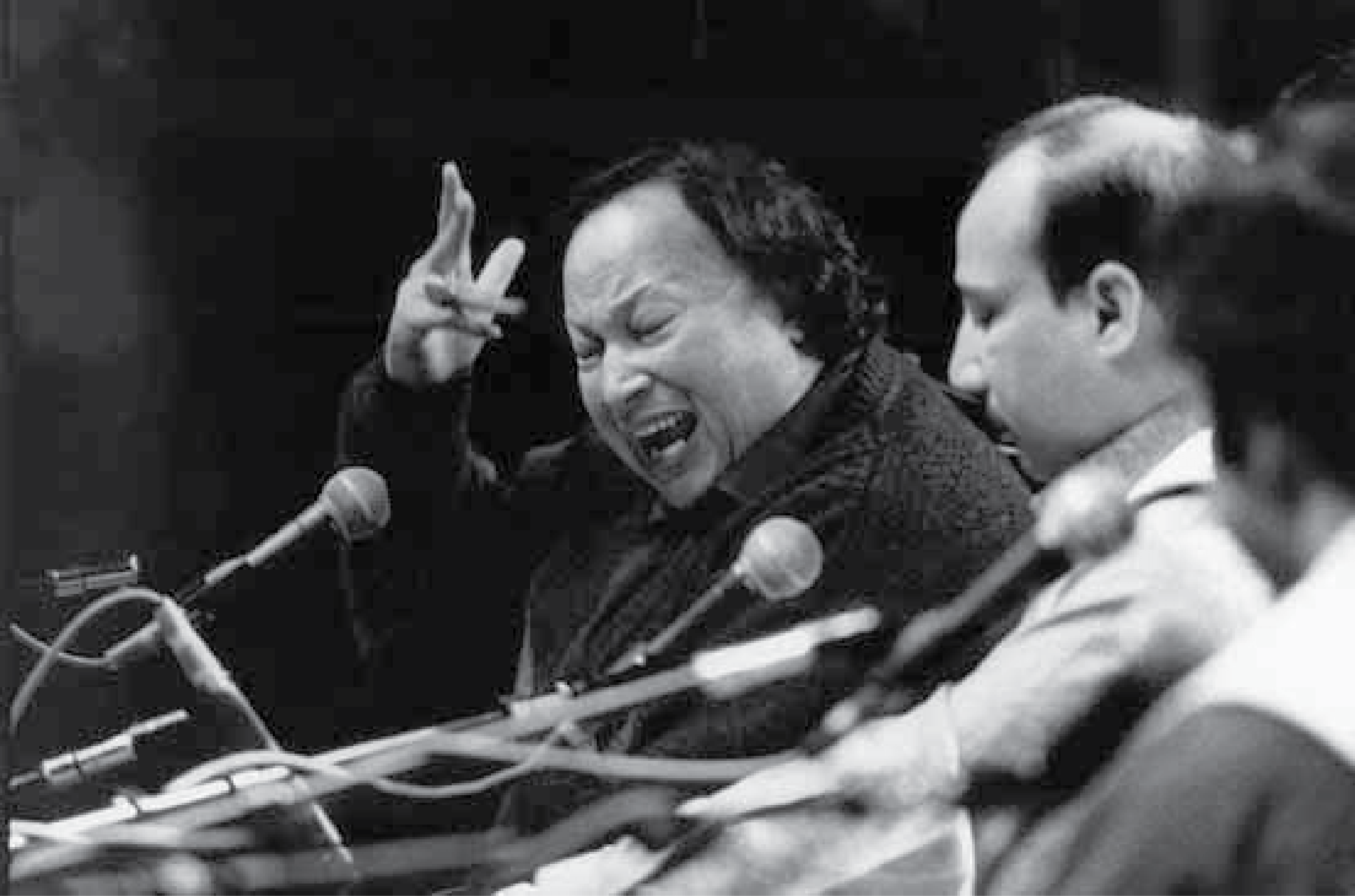
- Watch the Hands: In Qawwali, the hand gestures aren't just for show. They are a form of sign language for the melody. Rahat’s hand movements are a direct carbon copy of Nusrat’s—it’s a physical memory passed down through DNA.
- Separate the Singer from the Song: Realize that many of the "Rahat songs" you hear in movies are composed by people who want a hit. To hear Rahat himself, find the recordings where he is the composer. That's where the real soul is.
Rahat Fateh Ali Khan isn't the "new" Nusrat. He’s the only Rahat we’ve got. He’s a man caught between two worlds—the ancient and the modern—and he’s managed to thrive in both. That, in itself, is a miracle of sorts. He didn't replace a legend; he just made sure the legend's story never had to end.
To get the most out of his music today, look for his live "Sufi Nights" recordings rather than the studio versions. The imperfections in the live setting are where the true magic of the Qawwali tradition actually lives. Seek out the 20-minute versions of "Tumhe Dillagi," where the improvisations take over. That's where you'll find the man behind the brand.