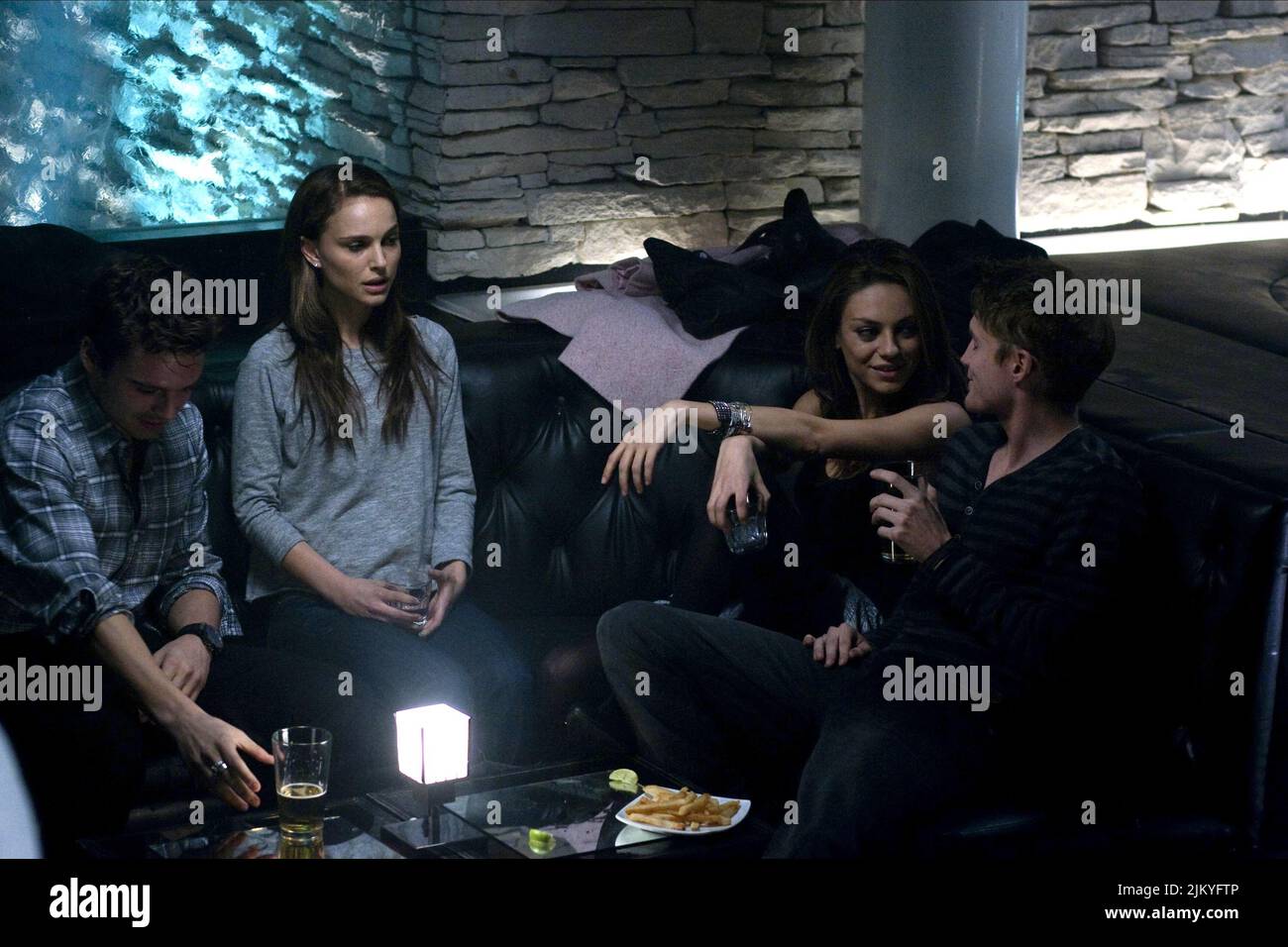
When people talk about the 2010 psychological thriller Black Swan, they usually focus on two things: the toes bleeding in satin slippers and the rumors that Natalie Portman and Mila Kunis basically hated each other. It makes sense, right? Darren Aronofsky is famous for being a director who pushes his actors to the brink of insanity. The movie itself is literally about a toxic, soul-crushing rivalry.
But honestly? Most of what you’ve heard about their "feud" is total nonsense.
In reality, the production was less about catfights and more about two friends trying to survive a 1,200-calorie diet while their director tried—and failed—to play mind games with them. Looking back at it now, 15 years later, the truth about what happened on that set is actually way more interesting than the tabloid headlines.
The Director Who Tried to Break a Friendship
Darren Aronofsky is a genius, but he’s also a bit of a "sneaky director," a term he’s actually used to describe himself. While filming, he had this grand plan to manufacture "method" tension. He figured if Natalie Portman and Mila Kunis were genuinely jealous of each other, that electricity would jump onto the screen.
His strategy? Isolation and psychological poking.
He’d pull Natalie aside and whisper that Mila was doing "so much better" during her dance rehearsals. Then he’d turn around and tell Mila that Natalie was working on her days off, implying she was miles ahead in her training. He even kept them in separate trailers and tried to limit their socializing.
It didn't work.
Portman and Kunis had been friends long before the cameras started rolling. They used to hang out at the Rose Bowl Flea Market and watch Top Chef together. When Aronofsky tried to stir the pot, they just texted each other to compare notes. "Darren would tell me, 'Nat is working really, really hard... She's not even taking Saturdays and Sundays off,'" Kunis recalled in a recent retrospective. "Then I’d text Nat and she’d be like, 'No, I’m not?'"
They basically laughed in his face. Instead of getting competitive, they bonded over how weird the whole situation was. It turns out, you can’t really bait two professionals who actually like each other into a petty rivalry, even if you’re an Oscar-nominated director.
The Physical Toll Nobody Talks About Enough
We all know Natalie Portman lost weight for the role—about 20 pounds off her already tiny frame—but the sheer brutality of the training was next level. She wasn't just "taking some classes." She was dancing five to eight hours a day, swimming a mile every morning, and living on what she described as a "monastic" diet of carrots and almonds.
She ended up with a displaced rib during a lift. Instead of stopping, Aronofsky actually filmed her getting treated by a physical therapist and put it in the movie. That’s the kind of raw intensity we’re talking about here.
Mila Kunis had it just as rough.
- Weight Loss: She dropped down to 95 pounds.
- Training: She spent seven days a week for six months learning to look like she’d been dancing her whole life.
- Injuries: She tore a ligament and popped a shoulder out of place.
Kunis has been very vocal since then about how she would never, ever do that again. She’s called the physical transformation "rough" and admitted that while she looked like a ballerina, she felt like a "brick house" made of skin and bones.
That Infamous Scene and the "Friendship" Awkwardness
You can't discuss Natalie Portman and Mila Kunis Black Swan without mentioning that scene. The hallucinated intimate moment between Nina and Lily.
At the time, it was all the media wanted to talk about. But for the actresses, it was just... awkward. Imagine having to film something like that with a person you usually go shopping for vintage clothes with. Portman famously said it was "fun to work with your friend until you have to film a sex scene with them."
There were no intimacy coordinators back in 2010. They just had to figure it out. The fact that they remained close friends after the movie wrapped is a testament to how professional they actually were. They didn't let the "scandalous" nature of the film's marketing define their relationship.
Was the Dance Double Controversy Fair?
After Natalie won her Oscar for Best Actress, a bit of a firestorm erupted. Sarah Lane, an American Ballet Theatre soloist who served as Portman's dance double, claimed that she did about 95% of the full-body shots. She felt the studio was downplaying her contribution to make Natalie's "one year of training" seem more miraculous for the awards campaign.
Aronofsky eventually stepped in with a shot-by-shot breakdown. He pointed out that there were 139 dance shots in the movie, and 111 of them were Natalie Portman untouched. That’s roughly 80%.
The nuance here is important:
- Natalie did the acting. Every facial expression, the port de bras (arm movements), and the psychological breakdown was her.
- Sarah did the "pro" stuff. The complex footwork and the fouettés that take a lifetime to master.
Both things can be true. You can’t learn to be a principal dancer in a year, but you can train hard enough to look convincing in 80% of the footage.
The Lasting Legacy of the Black Swan Duo
When you look at their careers now, Black Swan remains a massive pivot point. For Natalie, it solidified her as one of the greatest actors of her generation. For Mila, it proved she wasn't just "the girl from the sitcom" and could handle dark, prestige drama.
The movie grossed over $330 million on a tiny $13 million budget. That almost never happens for R-rated psychological horrors. It worked because the chemistry—or the "suppressed friendship," as some critics call it—between Portman and Kunis felt dangerously real.
Key Takeaways for Fans:
- Trust the Work, Not the Rumors: The "rivalry" was a directorial tactic that failed because the leads were actually supportive friends.
- Physicality Matters: Both actors sustained real, lasting injuries that emphasize the danger of "extreme" method transformations.
- The Power of Collaboration: Natalie actually recommended Mila for the role because she knew Mila had a background in dance. They wanted to work together.
If you’re looking to dive deeper into the world of psychological thrillers or the grueling reality of professional ballet, your best bet is to check out the 15th-anniversary interviews the cast did recently. They’re much more open now about the "broth and bruises" lifestyle they had to endure.
You can also look into the work of Mary Helen Bowers, the trainer who helped Natalie prep; she’s since built an entire fitness empire based on the "Ballet Beautiful" method they used for the film. Just maybe... eat more than a carrot for lunch before you try it.