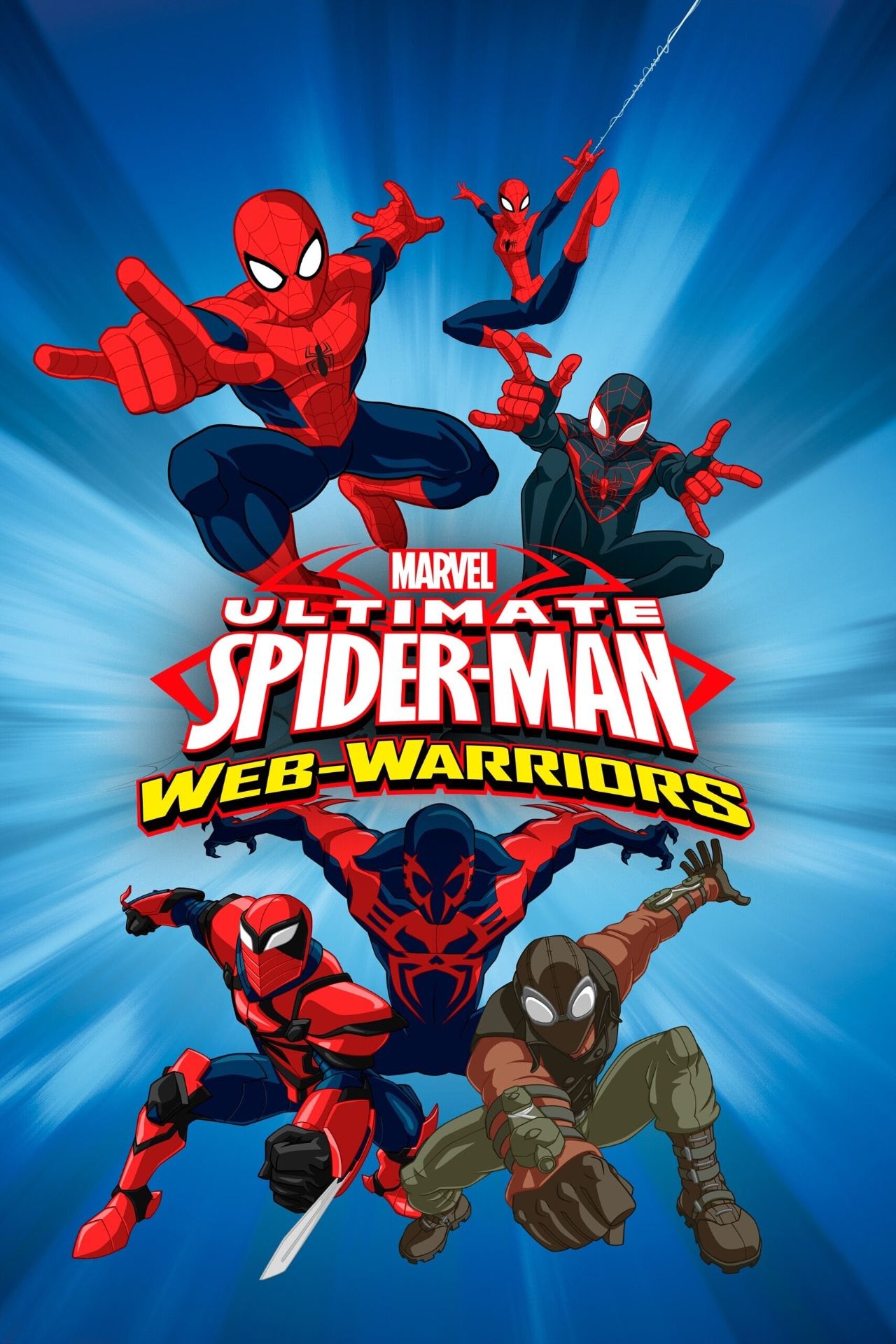
Man, the internet really hated this show for a while. If you were on a message board or scrolling through Twitter around 2012, you probably remember the absolute vitriol directed at Disney XD’s Ultimate Spider-Man. People were mourning the loss of The Spectacular Spider-Man, which was—and honestly still is—considered by many to be the gold standard of Peter Parker storytelling. But then came this high-octane, fourth-wall-breaking, wacky version that felt like a complete 180-degree turn. It was loud. It was colorful. It was very, very different.
Yet, somehow, it became the longest-running Spider-Man cartoon ever. 104 episodes. Four seasons. You don’t get that kind of longevity if nobody is watching.
The reality of Ultimate Spider-Man is a lot more complex than just "it was for kids." While the show definitely leaned into a younger demographic with its slapstick humor and "chibi" cutouts, it also did something the previous shows never quite managed. It built a massive, interconnected Marvel TV Universe. It wasn't just Peter in a vacuum anymore. He was part of S.H.I.E.L.D. He was leading a team. He was basically the center of the Marvel animated world.
The Drake Bell Factor and the New Tone
Let’s talk about the voice. Drake Bell was the voice of Peter Parker for this entire run. For some, his snarky, energetic delivery was the perfect fit for a Peter who was constantly talking to the audience. For others? It was grating. But that was the point of this specific iteration. This Peter wasn't the brooding, perpetually down-on-his-luck loner we saw in the 90s series. He was a kid with a jetpack. Literally.
The showrunners, including big names like Paul Dini and the Man of Action collective (the folks behind Ben 10), wanted to emulate the "Ultimate" comics by Brian Michael Bendis. But they also wanted to make it feel like a living comic book.
Frames would freeze. Little doodles would appear on screen to explain Peter’s internal monologue. It felt like Family Guy meets Ferris Bueller but with web-shooters. If you grew up with the 1994 series, this felt like sacrilege. If you were seven years old in 2012, it was the coolest thing on television.
Not Just a Friendly Neighborhood Hero
The biggest departure was the team dynamic. Instead of Peter doing the "with great power comes great responsibility" thing solo, Nick Fury (voiced by the legendary Chi McBride) recruits him into a training program. Suddenly, Spidey is roommates with:
- Nova (Sam Alexander)
- White Tiger (Ava Ayala)
- Power Man (Luke Cage)
- Iron Fist (Danny Rand)
This changed the stakes. A lot of the conflict wasn't just about stopping Doc Ock; it was about Peter learning how to be a leader. Honestly, it was a smart move for Disney. It allowed them to introduce kids to characters they’d later see in the MCU or other media. It turned Spider-Man into a gateway drug for the rest of the Marvel Universe.
We also got some of the weirdest, most ambitious crossovers. Remember the episode where Spidey meets the cast of Jessie? Yes, the Disney Channel sitcom. It happened. It was bizarre. But then you’d have an episode like "The Spider-Verse" arc, which actually predates the massive 2018 movie. This show gave us the first animated appearances of Miles Morales, Spider-Gwen, and even Spider-Ham. It was doing the Multiverse thing before it was a billion-dollar cinema trope.
Why the Animation Matters
The visuals were handled largely by Film Roman and later other studios, and they were slick. Say what you want about the writing, but the action was fluid. The way Spider-Man moved in this show felt "correct." It had a weight and a speed that some of the older, more stiffly animated shows lacked.
Breaking Down the Seasons
Season one was mostly about the team. Season two started digging into the "Sinister Six." By the time we hit "Web-Warriors" and "S.S.I.E.L.D. Academy" in seasons three and four, the scope had become massive.
We weren't just in Queens anymore. We were on the Helicarrier. We were in space. We were in different dimensions. This scale is why the show lasted. It never stayed static. It kept adding new toys to the sandbox. Agent Venom, Scarlet Spider, Iron Spider—all of them got their time in the spotlight.
The Controversy of "The Spectacular" Comparison
It’s impossible to discuss Ultimate Spider-Man without mentioning the show it replaced. The Spectacular Spider-Man was canceled after Sony and Disney had a messy corporate "divorce" regarding TV rights. Disney got the animation rights but decided to start fresh rather than continue what Sony started.
Fans were devastated. Spectacular was deep, operatic, and character-driven. Ultimate Spider-Man was... well, it was a comedy.
Critics like to point out that the stakes often felt lower in the Disney XD version. When Peter can just call Iron Man or Captain America for help, does the Vulture really feel like a threat? It’s a fair point. The "loner" aspect of Spider-Man is a huge part of his DNA, and this show stripped that away almost immediately. However, the show countered this by focusing on the "mentorship" angle. Seeing Peter interact with Logan (Wolverine) or Tony Stark offered a different kind of character growth that we hadn't seen on screen before.
What Most People Get Wrong About the Writing
There's a common misconception that the show was "dumbed down." While the humor was definitely juvenile at times, the overarching plots were actually quite intricate. The "Contest of Champions" arc at the end of the series was a massive, high-stakes battle that involved almost every hero and villain introduced.
The show also handled Doc Ock in a really fascinating way. He wasn't just a guy with mechanical arms; he was a body-hopping, manipulative genius who felt like a genuine shadow over Peter's life. The redemption arcs for characters like Flash Thompson (who becomes Agent Venom) were surprisingly well-handled for a "kids' show."
The Voice Cast Was Stacked
- J.K. Simmons as J. Jonah Jameson (He’s the only one who can do it, let's be real).
- Clark Gregg as Principal Coulson (Bridging the gap to the MCU).
- Steven Weber as Norman Osborn.
- Stan Lee as Stan the Janitor.
Having Stan Lee as a recurring character who was secretly a high-level S.H.I.E.L.D. operative was a stroke of genius. It was the kind of meta-humor that worked perfectly for this specific universe.
The Legacy of the "Ultimate" Era
When the show finally ended in 2017 to make way for the Marvel's Spider-Man series (the one with the shorter, more "science-heavy" focus), the tone of the conversation had shifted. People weren't as angry anymore. They realized that Ultimate Spider-Man had its own identity.
It wasn't trying to be the 90s show. It wasn't trying to be Spectacular. It was a fast-paced, loud, joyous celebration of the wider Marvel world. It taught a whole generation of kids that Spider-Man is the heart of that world.
Moving Forward: How to Revisit the Series
If you’re looking to dive back in or see it for the first time, don't go in expecting a gritty drama. It’s a comic book brought to life with all the "BAM" and "POW" intact.
Next Steps for the Spider-Fan:
- Watch the "Spider-Verse" Four-Part Special: It’s in Season 3. Even if you don't like the rest of the show, this arc is essential viewing for seeing how the animated Multiverse started.
- Check out the "Agent Venom" Episodes: These episodes give Flash Thompson more depth than almost any other adaptation.
- Look for the Crossovers: The episodes featuring the Avengers or the Guardians of the Galaxy are generally where the animation and scale really shine.
- Acknowledge the Context: Remember that this show exists to bridge the gap between the comics and the cinematic universe. Once you see it through that lens, the creative choices make a lot more sense.
The show is currently streaming on Disney+, making it easy to binge. Just be prepared for a lot of fourth-wall breaks and a Peter Parker who won't stop talking to you. But hey, that’s Spidey. He’s always been a talker. This version just took it literally.