Let's be real for a second. Being a fan of the World Cup English team is basically a full-time exercise in managed trauma. We’ve all been there—sitting in a pub or on a sofa, draped in a flag, genuinely believing that "football is coming home" only to watch a penalty fly into the stands or a VAR decision ruin a perfectly good Tuesday. It’s a cycle. A brutal, repetitive, yet somehow addictive cycle.
Football isn't just a game in England. It's a cultural weight. When the Three Lions step onto that pitch during a FIFA World Cup, they aren't just eleven guys chasing a ball; they are carrying the collective anxiety of a nation that hasn't won the big one since 1966. That’s sixty years of "what ifs."
The Southgate Era: Was it actually a success?
Honestly, Gareth Southgate changed the vibe. Before he took over, the World Cup English team felt like a collection of massive egos who couldn't play together because they were too busy hating each other's club teams. Remember the mid-2000s? You had Lampard, Gerrard, and Scholes—all world-class—but putting them in the same midfield was like trying to mix oil and water. It just didn't work.
Southgate made playing for England fun again. He got rid of the "Golden Generation" curse and replaced it with a squad that actually liked each other. They played darts in the hotel. They rode inflatable unicorns in the pool. More importantly, they won knockout games.
But here’s the thing.
Winning "kinda" isn't winning. Semi-finals in 2018 and a quarter-final exit in 2022 to France still left that bitter taste. Against France, Harry Kane’s missed penalty was the ultimate "England" moment. It was a game they probably deserved to win, or at least take to extra time, but that's the thing about the World Cup—it doesn't care about "deserving" anything.
The tactical shift under Thomas Tuchel
Now, we’re looking at a massive shift. Thomas Tuchel is in the hot seat for the 2026 cycle. This is a huge deal because it’s only the third time a non-Englishman has managed the side. Sven-Göran Eriksson had the celebrities. Fabio Capello had the discipline (and the boredom). Tuchel has the tactical brain that has actually won the Champions League.
The World Cup English team has always struggled with game management. We get a lead, we sit back, we get nervous, and we concede. It’s predictable. Tuchel is a "tinkerer." He changes systems mid-game. He doesn't wait for things to go wrong before he acts. This might be exactly what the squad needs to bridge the gap between "good" and "champions."
Why the 2026 World Cup English team is terrifyingly talented
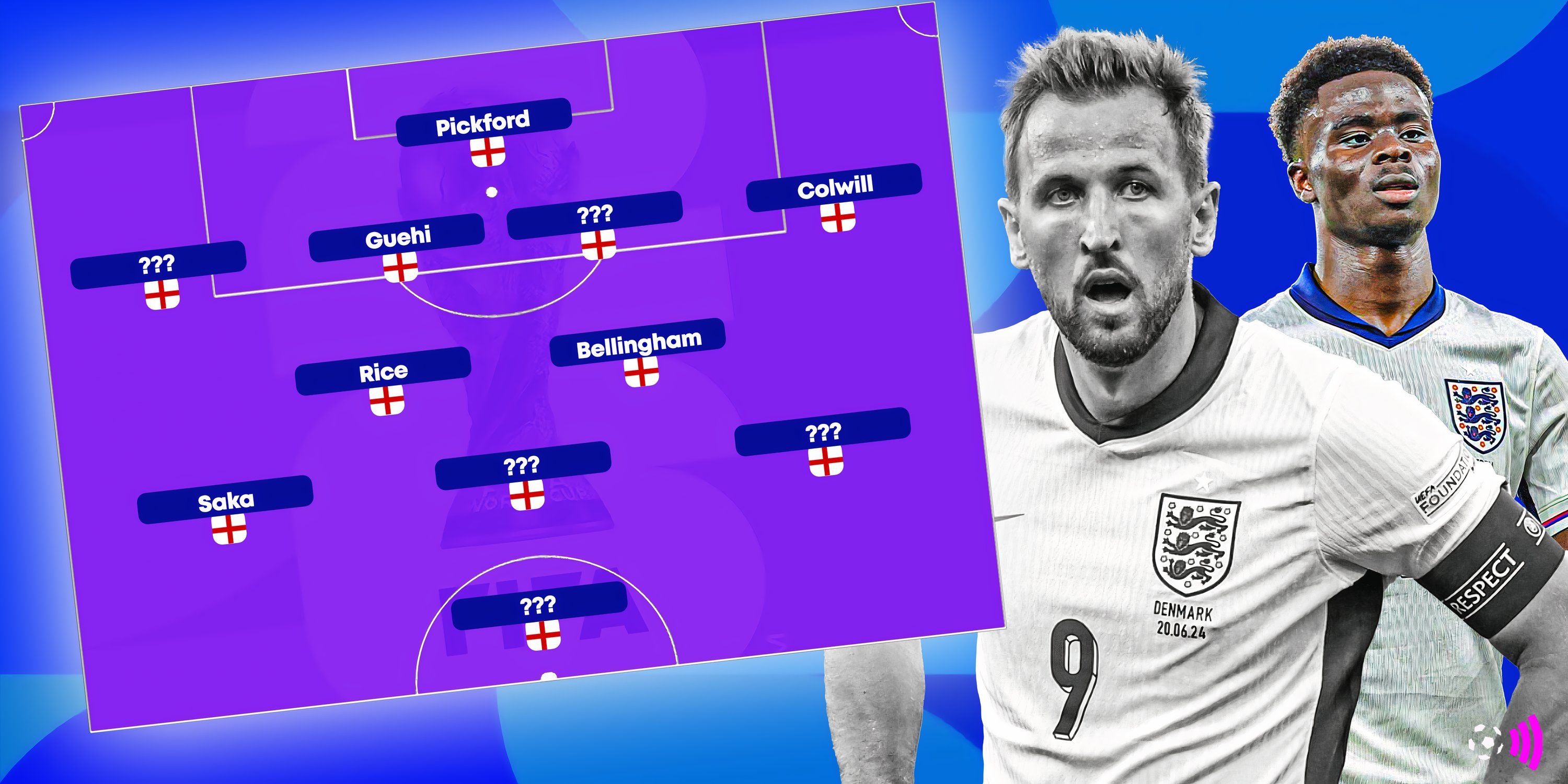
If you look at the roster of players England has right now, it’s actually ridiculous. We aren't just relying on one or two stars anymore.
- Jude Bellingham: The guy plays for Real Madrid like he owns the place. He's got that "arrogance" (the good kind) that England has lacked for decades.
- Phil Foden: Pep Guardiola calls him the best player in the Premier League for a reason. His close control is basically illegal in some countries.
- Bukayo Saka: The most consistent winger in Europe? Probably. He’s the heart of the team.
- Cole Palmer: This kid doesn't have a pulse. He could be playing in a World Cup final or a Sunday league game in a park and he’d still look just as bored and brilliant.
The depth is the real story here. In past tournaments, if the striker got injured, the nation went into a state of emergency. Now? If Harry Kane isn't firing, there are options. Ollie Watkins and Dominic Solanke have shown they can handle the pressure of the big stage.
But talent has never been the problem for the World Cup English team. The problem is the weight of the shirt. It’s heavy. When you put on that white kit, you’re playing against the opposition, but you’re also playing against the ghost of Bobby Moore and the expectations of 55 million people.
The "Penalty" Problem: Is the curse finally dead?
We have to talk about penalties. We just have to. For years, the World Cup English team and penalty shootouts were a match made in hell. 1990, 1998, 2006... it was a recurring nightmare.
Southgate actually fixed the process. He brought in psychologists. He made them practice under fatigue. They won shootouts against Colombia and Switzerland. It felt like the demon was exorcised.
However, the Euro 2020 final loss to Italy on penalties proved that the trauma is never truly gone. It’s just dormant. For 2026, the focus has to be on ending games before they reach that point. The best teams in the world—the Brazils, the Frances, the Argentinas—they usually find a way to kill the game in 90 minutes. England needs that "killer instinct."
Moving away from the "Fear of Failure"
There’s this term sports psychologists use: "paralysis by analysis."
In previous World Cups, English players looked like they were thinking about the headlines they’d see the next morning if they made a mistake. You could see it in their faces. They played safe passes. They didn't take risks.
The current crop—guys like Kobbie Mainoo and Adam Wharton—seem different. They grew up in a different era of coaching. They are more comfortable on the ball under pressure. They don't just clear it long because they’re scared of losing it; they invite the press, bypass it, and move forward.
What most people get wrong about the 1966 legacy
Everyone talks about 1966 as the benchmark. But honestly? It’s been a bit of a shackle.
For fifty years, the English media acted like England had a divine right to be in the final. That’s not how international football works. The global game has caught up and, in many ways, overtaken the English style. The World Cup English team isn't entitled to anything.
The most successful recent version of the team was the one that embraced the "underdog" mentality in 2018. Nobody expected anything from them. They played with freedom. As soon as the expectations returned in 2022, the tension returned with them.
Tuchel’s job isn't just to pick the right 4-3-3 or 3-4-3 formation. It’s to manage the circus. It’s to keep the players in a bubble where they don't hear the noise from the tabloids or the "experts" on social media.
Key challenges for the 2026 campaign
It’s not going to be easy. The 2026 World Cup is being held across North America. Travel is going to be a nightmare. Humidity in Miami, altitude in Mexico City, and long-haul flights between games.
England has traditionally struggled when the weather gets hot. We’re used to the drizzle of Manchester or London. Playing in 35-degree heat in a stadium in Texas is a different beast entirely.
Then there’s the defensive question. While England’s attack is world-class, the backline has some question marks.
- The Post-Walker Era: Kyle Walker’s recovery speed has bailed England out of so many situations. He won't be around forever. Who replaces that raw pace?
- Left-Back Woes: Why is it so hard to find a fit, left-footed defender in a country of millions? Luke Shaw’s fitness is always a gamble.
- The Center-Back Partnership: John Stones is a ball-playing genius, but he needs a partner who is a "pure" defender. Harry Maguire has been the go-to, but the transition to a younger, more mobile partner is inevitable.
Actionable insights for the road to 2026
If you're following the World Cup English team and want to know what actually matters over the next 18 months, stop looking at the scorelines in friendlies. They don't matter. Look at these specific factors instead:
- Tactical Flexibility: Watch if Tuchel sticks to one system or if he experiments. If he can get this team comfortable in a back three AND a back four, they become much harder to scout and beat.
- The Declan Rice Pivot: Rice is the most important player on the team. If he gets injured, the whole structure collapses. Watch how the team plays when he’s rested—that will tell you how "ready" they are.
- Goalkeeper Evolution: Jordan Pickford has been a hero for England, but his distribution and decision-making will be under the microscope with a manager who demands high-level technical play from his keepers.
- The "Impact Sub" Strategy: In modern football, the five-sub rule means the "finishers" are just as important as the starters. Watch who Tuchel uses in the final 20 minutes of games. That’s where World Cups are won.
The 2026 World Cup English team has the highest ceiling of any squad since the 90s. The talent is undeniable. The coaching is now world-class. The only thing left to conquer is the history. And maybe, just maybe, this time we won't need the inflatable unicorns to stay afloat.
Keep an eye on the Nations League fixtures; that’s where Tuchel will bake his tactical bread. If England can dominate the middle of the park against top-tier European opposition there, the 2026 dream might actually be more than just a catchy song.
Next Steps for Fans:
- Monitor the fitness of key defensive players during the grueling Premier League winter schedule.
- Pay attention to Thomas Tuchel’s first few squad selections to see which "unfashionable" players he prioritizes for tactical balance.
- Re-watch the 2024 Euro highlights to see where the transition from defense to attack broke down; that’s the specific area this team must fix to win in 2026.