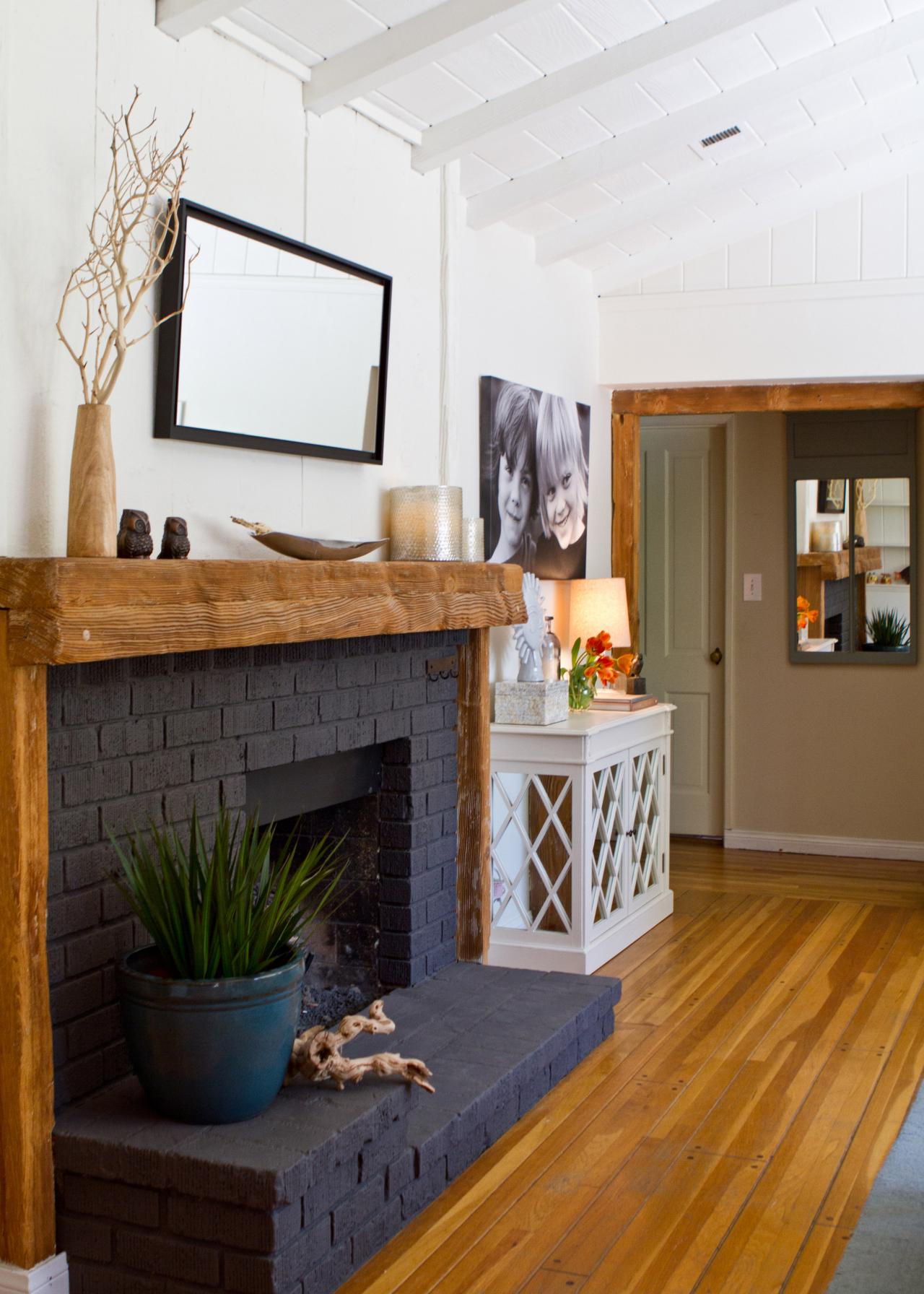
Red brick is iconic. It's also, honestly, a bit of a bully sometimes. You walk into a living room from 1978 and there it is—a massive, floor-to-ceiling wall of orange-tinted clay that sucks every bit of light out of the space. It’s heavy. It’s dark. It’s bossy. This is exactly why the modern painted brick fireplace became a runaway design sensation over the last decade. People just wanted to breathe again.
But if you mention "painting brick" in a room full of architectural purists, you might get a glass of chardonnay thrown at you. There is a real, heated debate here. Critics argue that once you paint brick, you've "suffocated" a natural material and committed a permanent sin. Proponents argue that your home isn't a museum and you shouldn't have to live in a cave. Both sides have a point, but the reality is that a well-executed paint job can completely transform a room's DNA. It takes a dated relic and turns it into a sculptural element.
It’s about more than just slapping a coat of White Dove on some masonry.
The Physics of Masonry and Why Most People Mess This Up
Brick is alive. Well, not literally, but it’s porous. It breathes. It absorbs moisture from the air and releases it. When you decide to go for a modern painted brick fireplace, you are fundamentally changing how that material interacts with your home's environment. If you use the wrong product, you trap moisture inside the brick. This leads to "spalling," which is a fancy way of saying the face of your brick starts popping off because the moisture has nowhere to go.
It looks terrible. It's also a pain to fix.
You’ve got to use the right stuff. Most experts, including the folks at Romabio, advocate for mineral-based paints or lime washes rather than standard acrylic latex. Mineral paint doesn't just sit on top like a plastic film; it bonds to the masonry. It allows the brick to keep breathing. If you’re looking for that ultra-matte, chalky, high-end look that defines the modern painted brick fireplace aesthetic, mineral paint is the gold standard. It’s also naturally mold-resistant because of its high pH levels.
Finding the Right Shade: It’s Not Just "White"
Choosing a color is paralyzing. You think you want white, but then you realize there are four thousand whites.
If you go too cool, the fireplace looks like a refrigerator. Too warm, and it looks like it’s been stained by decades of cigarette smoke. Designers like Shea McGee often lean toward "off-whites" or "greiges" to maintain some softness. However, there is a growing movement toward the "moody" fireplace. Imagine a deep, charcoal gray or a matte black.
Black painted brick is risky. It’s bold. In a room with high ceilings and tons of natural light, a black modern painted brick fireplace acts as a stunning focal point. It anchors the space. But in a small, dark room? It’s a black hole. You have to consider the light. Always paint a large sample board and lean it against the brick for at least 48 hours. Watch how the color changes from the morning sun to the evening glow of your lamps.
To Wash or to Coat? That is the Real Question
The "German Smear" or a "Limewash" is a different beast entirely. It’s for the person who wants a modern painted brick fireplace but still wants to see the soul of the brick.
Limewashing is an ancient technique. You're basically applying crushed limestone and water. The cool thing is that it's reversible for the first few days. You can wash it off if you hate it. It creates a weathered, Old World vibe that somehow feels incredibly current. It’s less "suburban flip" and more "European villa."
On the flip side, a solid coat of paint is a commitment. It’s clean. It hides the variations in the brick's color and focuses entirely on the texture. If your brick is particularly ugly—maybe it has weird purple spots or a splotchy 80s finish—solid paint is your best friend. It levels the playing field.
The Secret is in the Prep Work (The Boring Part)
Nobody wants to talk about cleaning. We want the "after" photo. But if you don't prep, your modern painted brick fireplace will start peeling in six months.
- The Deep Clean: Brick is a magnet for soot, dust, and oils. Use a stiff wire brush and a solution of TSP (Trisodium Phosphate). It’s heavy-duty stuff, so wear gloves. You need to get all the carbon off the surface, or the paint simply won't stick.
- Vacuuming: Use a shop vac to get into the nooks and crannies of the mortar lines. Any leftover dust becomes a layer of grit under your paint.
- The Primer: If you aren't using a self-priming mineral paint, you need a high-quality masonry primer. Look for something "alkali-resistant." Brick is naturally basic, which can eat through standard primers.
- The Tools: A regular roller won't cut it. You need a thick-nap roller (at least 3/4 inch) and a high-quality sash brush to poke paint into the deep recessed mortar. It’s tedious. You will get hand cramps. It’s worth it.
Addressing the "Value" Elephant in the Room
Does painting your fireplace hurt your home’s resale value? Honestly, it depends on who is buying.
If you have rare, handmade 19th-century bricks, painting them is probably a financial mistake. You’re destroying a piece of history. However, if you have generic, mass-produced "builder grade" brick from 1994, painting it will almost certainly increase your home's appeal. Most modern buyers want light, bright, and move-in ready. They don't want to figure out how to decorate around "Harvest Gold" bricks.
The modern painted brick fireplace is a tool for modernization. It’s a way to make an old house feel like it belongs in the 2020s.
Beyond the Paint: Styling the New Look
Once the paint is dry, the real work begins. A painted fireplace changes the rules of decor.
If you’ve gone with a stark white, you need warmth. A raw wood mantle—maybe a chunky piece of reclaimed white oak—is the perfect foil to the clean paint. It introduces a natural texture that prevents the room from feeling too clinical. You should also think about the hearth. Sometimes, people paint the brick but leave the hearth as raw stone or tile. This "mixed media" look is very popular in high-end interior design right now.
And please, don't forget the inside of the firebox. If you've painted the outside a beautiful cream, but the inside is covered in crusty black soot, it looks unfinished. Use a high-heat spray paint (specifically designed for stoves and grills) to refresh the interior in a matte black. It makes the whole project look professional.
Common Myths About Painted Masonry
- "It will peel immediately." Only if you didn't clean it or used cheap interior latex.
- "It’s impossible to remove." Not impossible, but a total nightmare. Sandblasting or chemical stripping is expensive and messy. Think of it as a permanent change.
- "It makes the fireplace unsafe." As long as you aren't painting the actual interior where the flames touch (unless using high-heat specialty paint), it’s perfectly safe.
Actionable Steps for Your Weekend Project
If you're ready to take the plunge and create your own modern painted brick fireplace, stop scrolling Pinterest and do these three things first:
- Test for moisture: Tape a square of plastic wrap to your brick. Wait 24 hours. If there's condensation under the plastic, your brick is "wet," and you shouldn't paint it until you find the source of the leak or dampness.
- Pick your finish: Glossy brick looks like a subway station. It’s weird. Stick to flat, matte, or eggshell finishes. They hide imperfections and look much more expensive.
- Buy more paint than you think: Brick is thirsty. It will soak up the first coat like a sponge. Expect to use 50% more paint than you would on a flat drywall surface.
Stop overthinking the "purity" of the material. If you hate the brick, you hate the room. If you hate the room, you aren't enjoying your home. Painting that fireplace is one of the cheapest ways to gain a massive amount of "lifestyle equity." It’s just paint. But it’s also a totally new house.
Make sure to protect your flooring with heavy-duty drop cloths—not the thin plastic ones that tear—because masonry paint is notoriously difficult to get out of hardwood or carpet once it sets. Start from the top and work your way down, catching drips as you go. Focus on the mortar joints first, then roll the faces. Take your time. The result of a properly executed modern painted brick fireplace is a sophisticated, architectural feature that looks like it was always meant to be there.