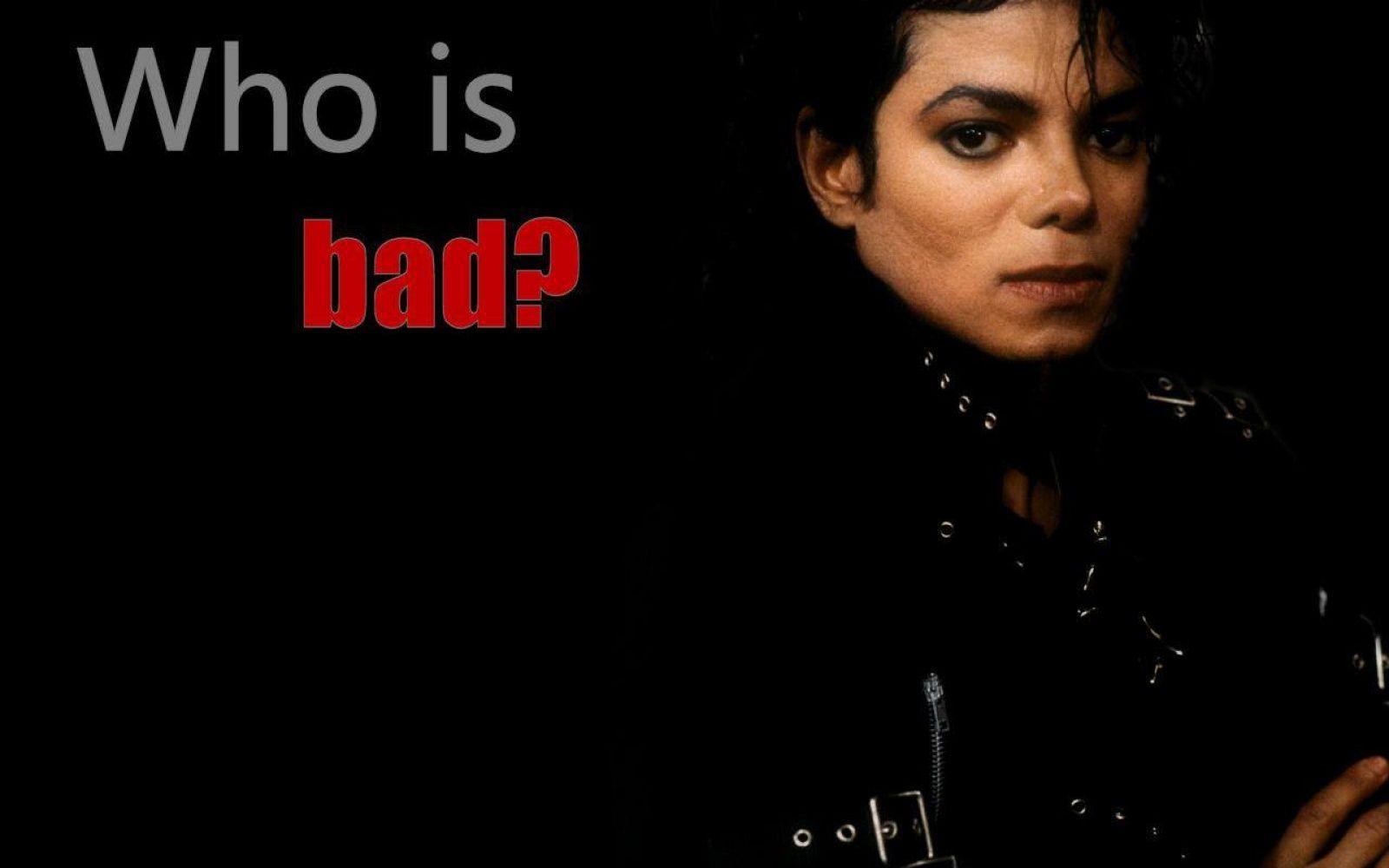
People usually call it a music video. Honestly, that’s an understatement. When we talk about the Michael Jackson Bad film, we’re talking about a 18-minute cinematic event directed by Martin Scorsese and written by novelist Richard Price. It wasn't just a promotional clip to sell records. It was a gritty, urban short story that attempted to redefine Michael's image from the "boy next door" of the Thriller era to something much tougher, much more complicated.
You’ve probably seen the truncated version on VH1 or MTV back in the day. The one where he's wearing the buckles and dancing in a subway station. But if you haven't seen the full-length version—the actual "film" part—you’re missing the entire point of why this project exists.
It’s dark. It’s tense. It’s weirdly realistic until it explodes into a dance routine that shouldn't work, but somehow does.
The Scorsese Factor: Gritty Realism Meets Pop Magic
In 1987, Michael Jackson was the biggest star on the planet. He could have hired anyone. He chose Martin Scorsese. At that point, Scorsese was coming off The Color of Money and was deep in his "New York gritty" phase. He brought a cinematic weight to the Michael Jackson Bad film that literally no one else in pop music was even attempting.
They shot it on location in Harlem and at the Hoyt-Schermerhorn Streets station in Brooklyn. You can feel the cold. You can see the grime on the tiles.
The story is simple but heavy. Michael plays Darryl, a scholarship kid returning home from a private school to his rough neighborhood. He’s caught between two worlds. His friends, led by a then-unknown Wesley Snipes, think he’s gone soft. They think he’s "white" or "bougie." They want him to prove he’s still "bad" by mugging an old man in the subway.
It’s an uncomfortable watch. The dialogue is snappy and sharp, thanks to Richard Price, who went on to write for The Wire. He captures that specific New York friction. Darryl doesn't want to do it. He’s trying to navigate his identity while Snipes’ character, Mini Max, keeps poking at his pride.
"You ain't bad," Mini Max sneers. That line sets up everything.
That Iconic Subway Sequence
The transition from the grainy, black-and-white film of the first 12 minutes to the vivid color of the dance sequence is a masterstroke. It’s like The Wizard of Oz, but with more leather and high-kicking.
When the music finally kicks in, it’s a release of all that built-up tension.
The choreography was a collaborative effort between Michael and Jeffrey Daniel. They wanted something aggressive. Something that felt like a street fight turned into art. If you look closely at the background dancers, they aren't just "backup." They are characters. They look like they belong in that station.
Most people don't realize how much of that routine was improvised or tweaked on the spot. Michael was obsessed with the "snap" of the movement. He wanted the buckles on his outfit to actually make noise. He wanted the sound of the boots hitting the concrete to echo. It’s loud. It’s percussive.
And then there’s Wesley Snipes. This was his big break. He didn't even know how to dance, but his physical presence as the antagonist is what makes the Michael Jackson Bad film work. Without a credible threat, Michael’s transformation into the "Bad" version of himself wouldn't have landed. You need that friction.
Why the Michael Jackson Bad Film Faced Backlash
Not everyone loved it. Some critics felt Michael was trying too hard to be "street." They pointed to his changing appearance and his privileged life at Neverland and laughed at the idea of him playing a kid from the projects.
But that misses the nuance.
The film is actually about the impossibility of being "bad" when you’ve seen a different life. Darryl fails the test. He can’t bring himself to hurt the old man. The dance sequence is a fantasy—a projection of what he wishes he could be to earn their respect without actually becoming a criminal.
It’s a meta-commentary on Michael’s own life. He was trapped between his public persona and his private reality. He was a global icon who couldn't walk down a street, trying to convince the world he was still connected to the "real" world.
- The Subway Station: The Hoyt-Schermerhorn station is still a pilgrimage site for fans. The MTA actually considered putting up a plaque, though they eventually decided against it for some bureaucratic reason.
- The Costume: Designed by Christian Blanken, the "Bad" suit featured more than 20 buckles. It was heavy, hot, and nearly impossible to dance in.
- The Run Time: At 18 minutes, it was one of the most expensive music videos ever produced, costing roughly $2.2 million in 1987 dollars.
A Legacy Beyond the Moonwalk
We see the influence of this short film everywhere today. Every time a modern artist like Beyoncé or Kendrick Lamar releases a "visual album," they are following the blueprint Michael and Scorsese laid down. They proved that a pop song could be the soundtrack to a legitimate short film with social stakes.
The Michael Jackson Bad film isn't just a period piece of the late 80s. It's a study in tension. It's a look at the "otherness" of being a scholarship kid. It's Wesley Snipes at his most raw.
It reminds us that Michael was an actor as much as he was a singer. He understood the power of the frame. He knew that to sell a song called "Bad," he couldn't just stand in a studio and lip-sync. He had to create a world where that word actually meant something.
Even the ending is surprisingly quiet. There’s no big celebration. After the dance, the gang leaves. Darryl is left alone in the station. It’s a somber, lonely image. He’s "won," but he’s still isolated.
Practical Ways to Experience the Film Today
If you want to actually "get" this piece of history, don't just watch the 4-minute YouTube clip.
- Find the 18-minute version: It’s available on the Michael Jackson's Vision DVD set or occasionally on high-quality streaming uploads. The black-and-white intro is essential.
- Listen to the Foley work: Pay attention to the sounds not in the song. The footsteps, the breathing, the clinking of the chains. It’s a masterclass in sound design.
- Watch Wesley Snipes' eyes: Seriously. His performance as Mini Max is what keeps the film grounded. His facial expressions during the final confrontation are incredible.
Stop thinking of it as a music video. Start thinking of it as a Scorsese film that happens to have a legendary song in the middle of it. When you change your perspective, the Michael Jackson Bad film becomes a whole different animal. It’s a gritty, beautiful, and deeply weird piece of pop culture that hasn't been matched since.