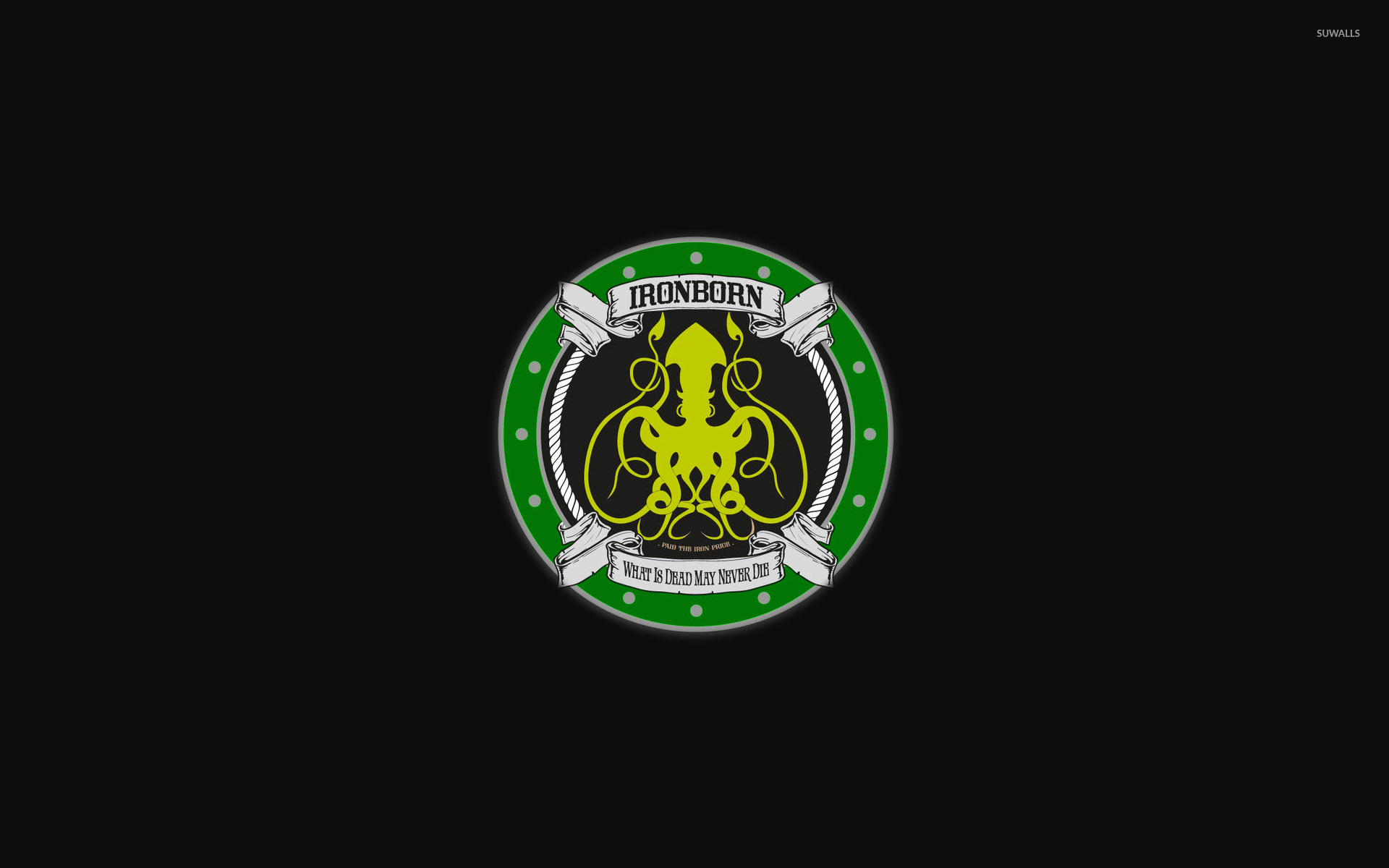
The Iron Islands are basically the wet, miserable armpit of Westeros. If you’ve watched the show or read George R.R. Martin’s A Song of Ice and Fire, you know the drill: gray skies, jagged rocks, and a bunch of people who think paying for things with actual money is a sign of weakness. They call it the "Iron Price." It sounds cool in a gritty, metal-band sort of way, but the reality of the Game of Thrones Ironborn is a lot more complicated—and honestly, more tragic—than just "Vikings on a budget."
When we first meet the Greyjoys, they feel like outliers. While the Starks are busy worrying about honor and the Lannisters are drowning in gold, the Ironborn are off in the Sunset Sea, reminiscing about the "Old Way." They’re obsessed with a past that probably wasn't even as good as they remember. It’s a culture built entirely on the idea of taking what belongs to others because their own land is too rocky to grow anything but stunted grain and resentment.
What most people get wrong about the Ironborn way of life
Most fans look at the Ironborn and see a warrior culture. That’s only half the story. Their entire identity is rooted in a religion that is essentially a death cult. The Drowned God isn't some benevolent deity; he’s a terrifying entity that demands his followers literally drown to prove their worth. "What is dead may never die" isn't just a catchy slogan for a t-shirt. It’s a theological loophole. If you’ve already died in the water, the logic goes, you can’t die again. You’re already a ghost in service to the sea.
This creates a psychological profile that is terrifying to fight against. Imagine an army that genuinely believes they are already dead. They don't wear heavy plate armor like the knights of the Reach or the Westerlands. Why? Because if you fall overboard in full plate, you’re going straight to the bottom. They prefer boiled leather and mail. They want to be light. They want to be fast.
But here’s the thing: they are terrible at long-term planning.
Balon Greyjoy is perhaps the best example of this. The man is a tactical disaster. He rebels against Robert Baratheon and loses his two eldest sons. Then, years later, he tries it again when Robb Stark is at war. Instead of joining the Starks to take the rich lands of the South, he attacks the North—a massive, freezing territory that the Ironborn have zero hope of actually holding. It’s ego over strategy. It’s the "Old Way" blinding them to the reality of the New World.
The real power of the Iron Fleet
While their land-based campaigns are usually a mess, the Iron Fleet is no joke. These aren't just little raiding boats. Under Victorian Greyjoy (in the books) or the terrifyingly unhinged Euron Greyjoy, these ships are the most dangerous thing on the water. They use longships that can navigate shallow rivers, allowing them to strike deep inland before a lord can even call his banners.
Euron is where the story gets weird. In the show, he’s a bit of a Jack Sparrow-esque pirate with a weirdly modern sense of humor. In the books, he’s a Lovecraftian nightmare who has potentially traveled to Valyria and wears a suit of Valyrian steel armor. This is a crucial distinction. The Game of Thrones Ironborn under Euron represent a shift from traditional raiding to something much more apocalyptic. He doesn't just want to reclaim the Iron Islands; he wants the world.
The Ironborn women who broke the mold
You can't talk about the Ironborn without talking about Yara (or Asha in the books). The Iron Islands are aggressively patriarchal, yet here is a woman commanding ships and leading men who would normally look down on her. She succeeds because she’s smarter than her father and more grounded than her brother, Theon.
Theon is the ultimate tragedy of this culture. He’s a boy caught between two worlds. He wants to be a Stark, but he feels he must be a Greyjoy. When he returns to Pyke, he realizes he’s a stranger in his own home. He tries to out-Ironborn the Ironborn by taking Winterfell, an act of sheer desperation to prove he belongs. It destroys him. His journey from Theon to Reek and back again is arguably the most intense character arc in the entire series, highlighting how the "Iron Price" often costs more than anyone can afford to pay.
Why the Iron Islands are geographically cursed
Geography is destiny. The Iron Islands consist of seven main islands: Pyke, Great Wyk, Old Wyk, Harlaw, Saltcliffe, Orkmont, and Blacktyde. They are resource-poor. There’s iron (obviously), lead, and tin, but very little timber. This is the great irony: a seafaring culture that lives on islands with almost no trees. They have to raid the mainland just to get the wood to build the ships they use for raiding. It’s a parasitic cycle.
- They raid for wood.
- They build ships with that wood.
- They use those ships to raid for more wood.
If they ever stopped raiding, their culture would literally collapse within a generation because they wouldn't be able to maintain their fleet. This is why the "New Way" proposed by Quellon Greyjoy (Balon’s father) was so important. He tried to integrate them into the rest of Westeros, banning reaving and encouraging trade. But the moment he died, his sons went right back to the old, violent habits. It’s a culture addicted to its own destruction.
The Drowned God vs. The Storm God
The dualism in their religion is fascinating. It’s not just about the Drowned God. There’s also the Storm God, who lives in the sky and sends winds to wreck their ships. Every time a storm hits, the Ironborn believe it’s a personal attack. This creates a worldview where the entire universe is hostile. You’re either under the water or you’re being hammered from above. There is no peace.
This constant state of conflict is why they struggle to form alliances. To an Ironman, everyone else is a "greenlander." Greenlanders are soft. They sow seeds and watch them grow. Ironborn take what they want. It’s a simplistic, brutal philosophy that works great for a pirate crew but sucks for a sovereign nation.
The Kingsmoot: A glimmer of democracy?
One of the coolest scenes in the later seasons (and the fourth book, A Feast for Crows) is the Kingsmoot. It’s one of the few instances of democracy in Westeros. Any captain can put his name forward to be king. It’s not just about bloodlines; it’s about who can make the best pitch and provide the most loot.
Of course, in typical Ironborn fashion, this "democracy" usually involves whoever can shout the loudest or promise the most impossible things. Euron wins the Kingsmoot by promising to bring the world to heel using dragons. It’s a populist movement fueled by grand promises and a total disregard for the consequences.
The actual legacy of the Game of Thrones Ironborn
So, why do we care about these salt-stained raiders? Because they represent the rawest form of the struggle for identity in George R.R. Martin’s world. They are a people clinging to a dead past because the present is too hard to face.
The Ironborn remind us that culture can be a cage. Theon was trapped by it. Balon was blinded by it. Victarion is a slave to it. Only someone like Yara seems to see the Iron Islands for what they actually are: a group of rocks that need to change or be forgotten.
When you’re looking at the Game of Thrones Ironborn, don’t just see the axes and the ships. See a society that chose the hardest path possible and then wondered why everyone else hated them. They are the ultimate "outsiders" of Westeros, not because they were pushed out, but because they walked out and slammed the door behind them.
Actionable steps for fans and lore hunters
If you want to dive deeper into the gritty details of the Ironborn, here’s how to do it without getting lost in the weeds:
- Read "The World of Ice & Fire": This book has a massive section on the history of the Iron Islands, including the era when they ruled the Riverlands and built Harrenhal. It puts their current "fallen" state into much better perspective.
- Compare the "Drowned" ritual: Look at the historical parallels with real-world Viking baptisms and seafaring myths. The nuance in how Martin subverts these tropes is where the real storytelling magic happens.
- Track Theon’s chapters: If you’re re-reading the series, pay close attention to how the seafaring metaphors change as he loses his identity. It’s some of the best psychological writing in the series.
- Analyze the Harrenhal connection: Remember that the biggest castle in Westeros was built by an Ironborn king (Harren the Black). Understanding why he built it—and why it was his downfall—tells you everything you need to know about the Ironborn ambition.
The Ironborn are a cautionary tale about what happens when you value "strength" over "sustainability." They are the storm that hits the coast—powerful, terrifying, and inevitably fleeting. They leave nothing behind but salt and wreckage, and in the game of thrones, that's rarely enough to win.