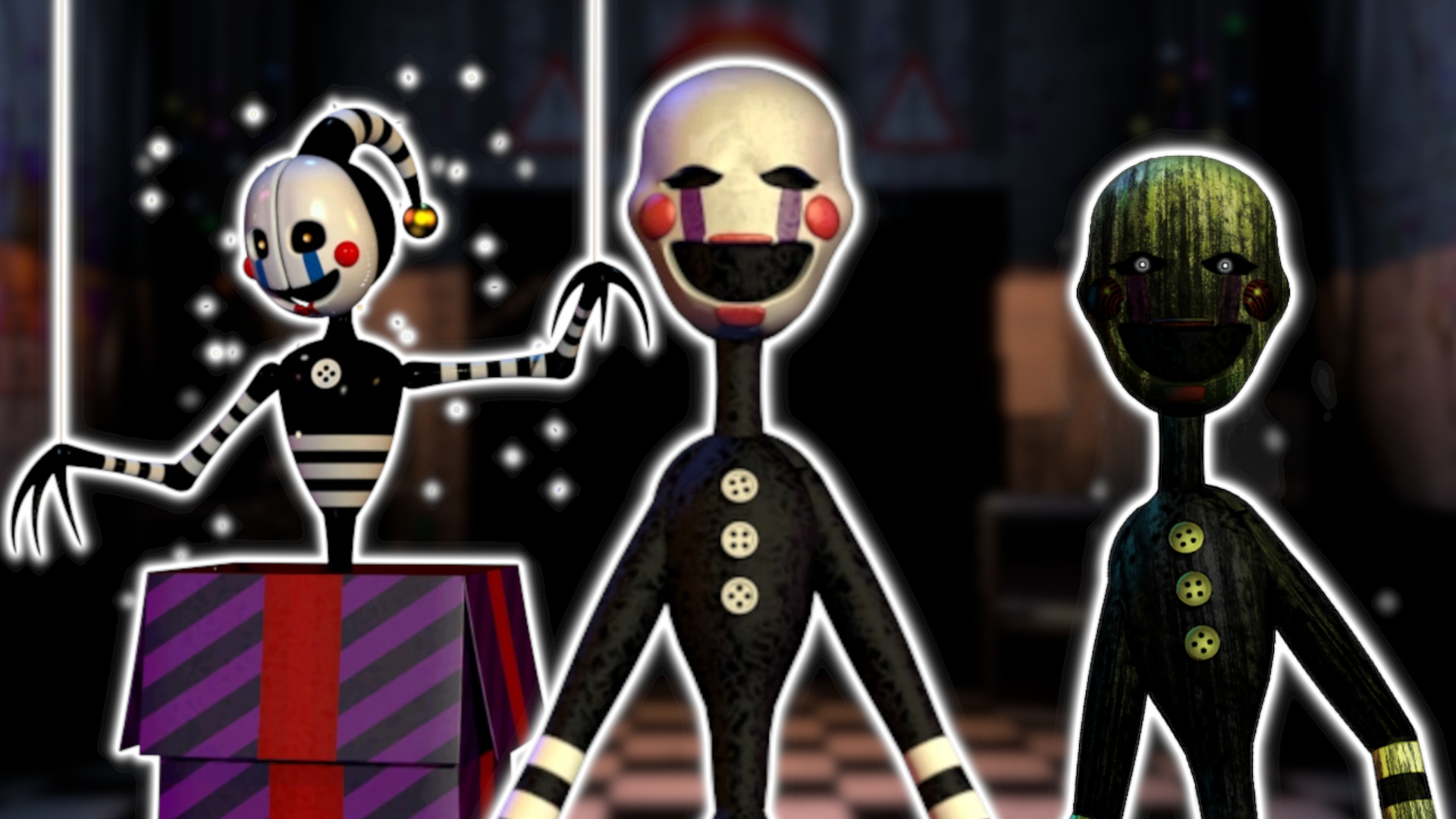
You're sitting in the office. It’s 3 AM. The monitors are flickering, and your power is draining faster than you’d like. But you can't look at the vents or the hallway yet because you’re stuck in a loop of frantic clicking on Cam 11. You know that sound. That repetitive, tinkling melody that should be soothing but feels like a countdown to your own demise. The FNaF puppet music box is the literal heartbeat of Five Nights at Freddy's 2, and honestly, if you stop winding it for even a second too long, the game is basically over. It’s a mechanic that changed the entire vibe of the franchise. It turned a game about watching doors into a game about managing a ticking time bomb.
The Psychological Trap of the Music Box
Scott Cawthon is a master of anxiety. In the first game, you had doors. Doors feel safe. You close them, you’re a king in a castle. But in the second game? He took the doors away and gave us a wind-up box. It’s a genius piece of game design because it forces the player to look away from the danger. To keep the Puppet—also known as Charlotte Emily in the deeper lore—stuck inside that Prize Corner, you have to keep your camera fixed on a specific spot. This creates a "tunnel vision" effect. You’re so worried about that tiny circular meter that you completely miss the fact that Toy Bonnie is literally standing in the vent right next to you.
The melody itself is "My Grandfather's Clock." It’s an old 1876 tune by Henry Clay Work. Most people just think of it as "the Puppet song," but the lyrics are actually super eerie when you think about the context of the game. It’s about a clock that stops short when the old man dies. In FNaF 2, when the music stops, you’re the one who dies. There’s something deeply unsettling about using a nursery-style chime to signal an incoming jump-scare. It’s that contrast between childhood innocence and visceral horror that makes the FNaF puppet music box so iconic.
How the Mechanic Actually Works Under the Hood
Let's talk technical for a second. The music box isn't just an "on or off" switch. It has a value that constantly ticks down. In the early hours of Night 1, the wind-down speed is a joke. You can go half a minute without even checking it. But by Night 5 or the dreaded 10/20 mode? Forget it. The wind-down rate increases significantly as the nights progress.
Interestingly, the Puppet is one of the few animatronics that doesn't care about your Freddy mask. If you let that box run out, it doesn't matter if you're wearing the mask or if you're hiding under the desk—the Puppet is coming. Once the "Pop! Goes the Weasel" music starts playing, you've already lost. You might survive another thirty seconds if you're lucky, but the script has already been written. The Puppet will travel through the pizzeria, ignoring all obstacles, until it reaches your office.
- The Warning Sign: A small flashing triangle appears on the UI when the box is low.
- The Point of No Return: Once the music box is fully empty, the "Pop! Goes the Weasel" version of the tune triggers.
- The Jump-scare: It’s a lunging attack. Unlike the other animatronics who might peek in, the Puppet just flies at your face.
Why the Puppet is Different from Freddy and the Gang
Lore-wise, the Puppet is the most important character in the early games. According to the Freddy Files and the various mini-games like "Give Gifts, Give Life," the Puppet is the one who "gave life" to the original five children. It’s the soul of Henry Emily's daughter. Because of this, the FNaF puppet music box serves as a tether. It’s the only thing keeping this incredibly powerful, sentient entity contained.
A lot of fans debate why a music box works. Is it because the soul inside is soothed by the melody? Or is it a programmed response of the animatronic's hardware? In Ultimate Custom Night, we see a variation of this with the Global Music Box, which affects multiple characters like Chica and Lefty. It suggests that these spirits are somehow bound to the sensory input of the music. It calms the "agony," a term often used in the Fazbear Frights book series to explain how these machines are haunted.
Surviving the Music Box at High Levels
If you're trying to beat the 4/20 or 10/20 challenges, you need a rhythm. You can't just hold the button down. Expert players use a "count" system. You wind for about five or six ticks, then immediately flip the camera down to check the vents. If you stay on the camera for more than two seconds, you're dead. The FNaF puppet music box forces you into a specific playstyle that is incredibly frantic.
One thing people get wrong is thinking they need to keep the box full. You don't. You just need to keep it from hitting zero. Over-winding is actually a death sentence because it wastes time you should be using to flash Foxy in the hallway. It’s a balancing act. You’re spinning plates, and the music box is the biggest, heaviest plate in the room.
The Evolution of the Music Box in Later Games
While the mechanic started in FNaF 2, it haunted the rest of the series. In FNaF 3, you have the Phantom Puppet who blocks your view, reminding you of the trauma of the box. In Sister Location, we see the "Music Box" reappear in the Funtime Freddy breaker room section, though it’s used differently. But the real return to form was Ultimate Custom Night.
In UCN, managing the music box is even more stressful because you have to toggle between different types of music to keep different animatronics happy. It’s a callback to why the FNaF puppet music box worked so well in the first place—it’s an audio-based stressor. It’s not just about what you see; it’s about what you hear. Or rather, what you stop hearing.
Actionable Steps for Players and Creators
If you are struggling with the Puppet in your current playthrough, or if you are a developer looking to recreate this kind of tension, here is the breakdown of what actually matters.
For Players:
Don't wait for the warning triangle. Develop a muscle memory where you wind the box for two seconds every time you open the camera, regardless of how full it looks. This prevents the "panic winding" that happens when the red light starts flashing, which usually leads to you forgetting about the other animatronics. Also, listen for the "Pop! Goes the Weasel" transition. If you hear that change in tempo, stop winding. It's wasted effort. Focus on trying to finish the night before the Puppet reaches the office, though this is rarely successful.
For Horror Creators:
The success of the FNaF puppet music box lies in the "required distraction." To make a horror game effective, you need to force the player to perform a mundane task that makes them vulnerable. The music box isn't scary; the fact that you have to look at it while something else is crawling toward you is what creates the fear. Use a familiar, slightly distorted nursery rhyme to create a false sense of security that eventually becomes a trigger for anxiety.
The Puppet remains one of the most terrifying figures in gaming history not because of how it looks, but because of that damn box. It’s a masterclass in how a simple mechanical requirement can carry the weight of an entire game's atmosphere.
Key Takeaways for Game Mastery
- Learn the Rhythm: Spend 2-3 seconds winding, then check the hallway. Repeat.
- Audio Cues Over Visuals: Listen for the wind-down sound rather than waiting for the red icon.
- Ignore the Mask: The Puppet ignores the Freddy mask entirely; do not waste time putting it on if the music has already stopped.
- Prioritize Foxy: The Puppet and Foxy work in tandem. If you spend too much time on the music box, Foxy will get you. If you spend too much time on Foxy, the Puppet will get you.