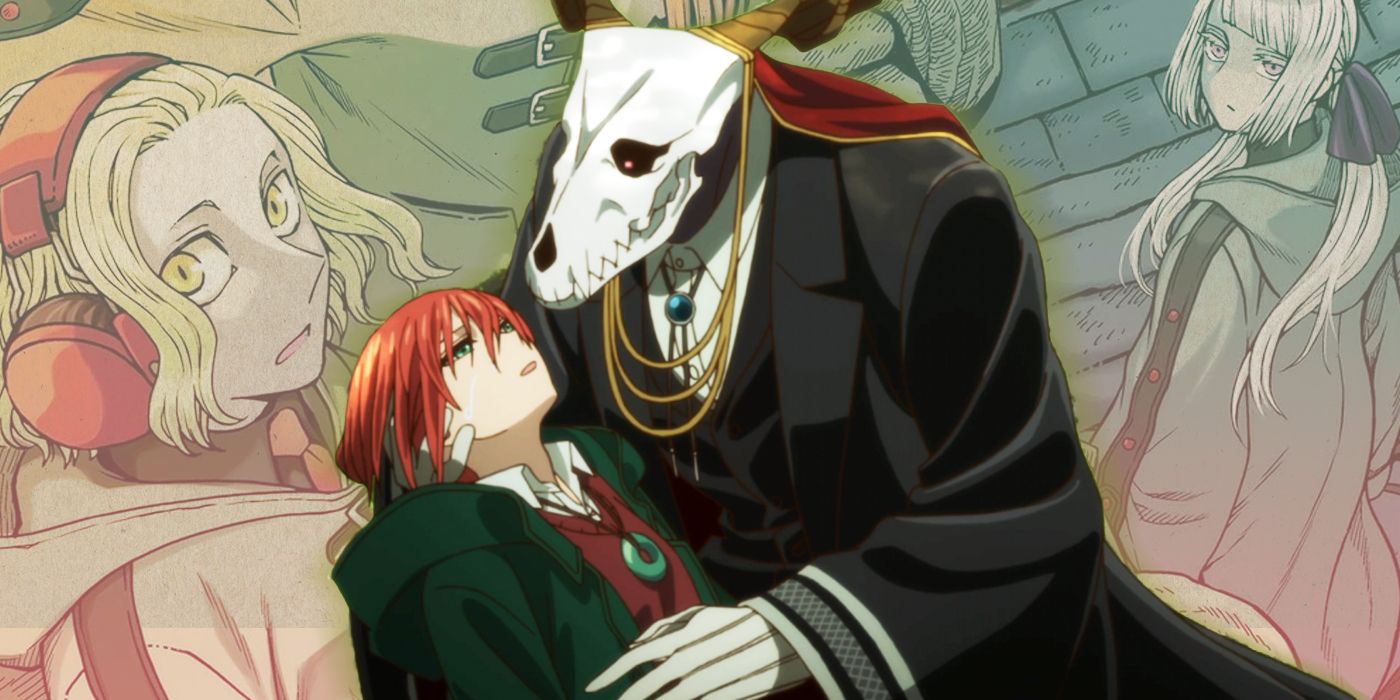
Honestly, if you go into the Ancient Magus Bride anime expecting a fluffy supernatural romance, you’re in for a massive shock. It’s heavy.
Chise Hatori, the protagonist, literally sells herself into slavery because she’s so broken by her ability to see spirits that she doesn't think her life has value. That is a dark starting line. When Elias Ainsworth, a seven-foot-tall mage with a wolf-skull for a head, buys her at an auction for five million pounds, the "romance" flags start flying. But this isn't a simple love story. It is a slow, often painful exploration of trauma, codependency, and what it actually means to be human when you've been treated like a monster your whole life.
Produced by Wit Studio (and later Studio Kafka for the second season), the series adapts Kore Yamazaki’s manga with a level of atmospheric detail that most fantasy shows just can't touch. It’s grounded in actual British folklore. Not the sanitized Disney version, either. We’re talking about the gritty, dangerous Fair Folk—the kind of creatures that will turn you into a pile of leaves if you say the wrong thing.
The Problem With Calling Elias a Romantic Hero
Let’s get real about Elias. He’s fascinating, but he’s basically a toddler with the power of a god and the social awareness of a brick. He doesn't understand human emotions. In many ways, he’s just as broken as Chise. Their relationship is messy.
Critics often point out the power imbalance, and they aren't wrong. He bought her. He calls her his "apprentice" and his "bride" in the same breath. However, the Ancient Magus Bride anime doesn't ignore this. It leans into the discomfort. As the series progresses, you realize Elias is leaning on Chise for emotional stability just as much as she leans on him for a place to belong.
It’s a symbiotic relationship that borders on toxic before it starts to heal. That nuance is exactly why the show sticks with you. You aren't watching two perfect people fall in love; you’re watching two "others" try to figure out how to exist in a world that doesn't have a place for them.
The Magic System Isn't About Fireballs
Forget Black Clover or Fairy Tail. The magic here is based on "Sleigh Beggies." Chise is one of these rare beings—essentially a massive magical battery that absorbs energy from her surroundings but burns out her physical body in the process.
The "Magi" in this world, like Elias, use spirits (Aristoi) to do their bidding. It’s about negotiation and cost.
- Sorcerers use science and logic to manipulate energy.
- Mages use relationships with the supernatural.
- Sleigh Beggies are the tragic middle ground—limitless power at the cost of a short lifespan.
This creates a ticking clock. Every time Chise uses her power, she’s essentially shaving months off her life. It adds a layer of desperation to every episode. You’re not just watching her learn spells; you’re watching her decide if life is actually worth the effort it takes to stay alive.
Folklore That Actually Feels Ancient
One thing the Ancient Magus Bride anime does better than almost any other series is its use of mythology. This isn't just "generic European fantasy."
Take the episode with the King of Cats in Ulthar. It’s a direct nod to H.P. Lovecraft, but blended seamlessly into the show's own logic. Then there’s the Black Dog (Ruth), a church grim who guards graves. These aren't just background characters. They are steeped in the melancholy of old-world myths.
The appearance of the Leanan Sídhe is another gut-punch. In folklore, she’s a muse who gives artists incredible talent in exchange for their life force. In the anime, her relationship with an old man named Joel is one of the most heartbreaking subplots in the entire first season. It highlights the show’s central theme: love is often a form of sacrifice that isn't always healthy, but it's human.
Visual Storytelling and the "Wit Studio" Touch
The first season looks incredible. The way they use color—the lush greens of the English countryside versus the stark, cold whites of the Land of Dragons—sets the mood perfectly. Studio Kafka took over for the College Arc (Season 2), and while the art style shifted slightly, the focus on atmospheric weight remained.
The music by Junichi Matsumoto is also a huge factor. It’s ethereal. It uses Celtic influences and strange, haunting vocals that make you feel like you’re actually standing in a misty forest in Iceland or the Cotswolds. Without that score, the "vibe" of the show would fall flat. It's essential.
Why Season 2 Changed Everything
If Season 1 was about Chise finding a home, Season 2 is about her finding herself. The College Arc moves the setting to a secret underground academy for sorcerers.
Some fans found this transition jarring. We went from a cozy (if creepy) cottage in the woods to a "magic high school" setting. But it works because it forces Chise to interact with people her own age. She has to move beyond Elias.
The introduction of Lucy Webster and Philomela Sergeant adds new layers of trauma to the mix. Philomela, in particular, mirrors Chise’s early-series depression, allowing Chise to act as a mentor. It's a brilliant bit of character growth. It proves that Chise isn't just a victim anymore; she’s a survivor with agency.
Addressing the Controversy: Is it Grooming?
This is the elephant in the room. Does the Ancient Magus Bride anime depict a grooming situation?
It’s complicated. Elias is centuries old but emotionally stunted. Chise is a teenager. If you look at it through a strictly modern, real-world lens, it’s highly problematic. However, the narrative treats them more like two different species trying to bridge a gap. The show eventually calls out Elias for his possessive behavior. He’s not portrayed as a perfect romantic lead; he’s often the antagonist of his own story.
If you want a show that challenges your ethics rather than spoon-feeding you "correct" behavior, this is it. It explores the darker corners of attachment.
Key Elements That Define the Series
There are a few things you’ll notice if you pay close attention to the world-building:
- The Wand Making: Chise’s wand isn't just a stick. It’s made from a branch of a tree she grew herself, infused with her own blood and hair. The physical toll of magic is always emphasized.
- The Dragons: These aren't Smaug-style hoarders. They are ancient, dying creatures that turn into trees when they pass away. It’s a beautiful, bittersweet take on extinction.
- Cartaphilus (Joseph): The primary "villain" isn't just evil for the sake of it. He’s the Wandering Jew of legend, cursed with immortality while his body literally rots away. His search for a way to stop the pain makes him a perfect foil for Chise, who originally wanted to die to escape her own pain.
Real-World Takeaways
Watching the Ancient Magus Bride anime teaches you a lot about the importance of boundaries.
Chise’s journey is about learning that she doesn't owe her entire soul to the person who "saved" her. It’s a lesson in self-worth. By the time you reach the end of the second season, the power dynamic has shifted. Elias is learning to be "human," and Chise is learning to be a "mage." They meet in the middle as equals, or at least as close to equals as a human and a bone-headed monster can be.
Moving Forward with The Ancient Magus Bride
If you’re looking to get the most out of this series, don’t just binge-watch it. The pacing is intentionally slow. It’s meant to be lived in.
Start with the three-part OVA, Those Awaiting a Star. It acts as a prequel and gives you much-needed context for Chise’s childhood. It’s technically an anime-original story, but it’s written by the manga author and fits the canon perfectly.
Next, move through Season 1 and the Boy from the West and the Knight of the Blue Storm OVAs before hitting Season 2. This order preserves the emotional arc and prevents the "College Arc" from feeling like a random genre shift.
Keep an eye on the background details. Almost every spirit Chise encounters is pulled from actual folklore—looking up the "Silkies" or the "Will-o'-the-Wisps" will give you a much deeper appreciation for the writing. The show doesn't hand-hold; it expects you to be curious about the old world it’s trying to resurrect.
Focus on the character's eyes. Wit Studio put an absurd amount of effort into Chise’s expressions. At the start, her eyes are "dead"—no highlights, no life. As she heals, the light slowly returns. It’s a subtle bit of visual storytelling that says more than any dialogue ever could.
Pay attention to the concept of "give and take." Every interaction in the mage world requires an exchange. This isn't just a plot device; it's a philosophy. It suggests that nothing in life, especially love and healing, comes for free. You have to be willing to put in the work and pay the price.
The series is currently ongoing in the manga, so the anime is by no means the end of the road. Dive into the source material if you want to see where the sorcery-heavy plot of the College is headed next. It gets even weirder, and the stakes for Chise's physical health only get higher as she explores the depths of the underground magical society.