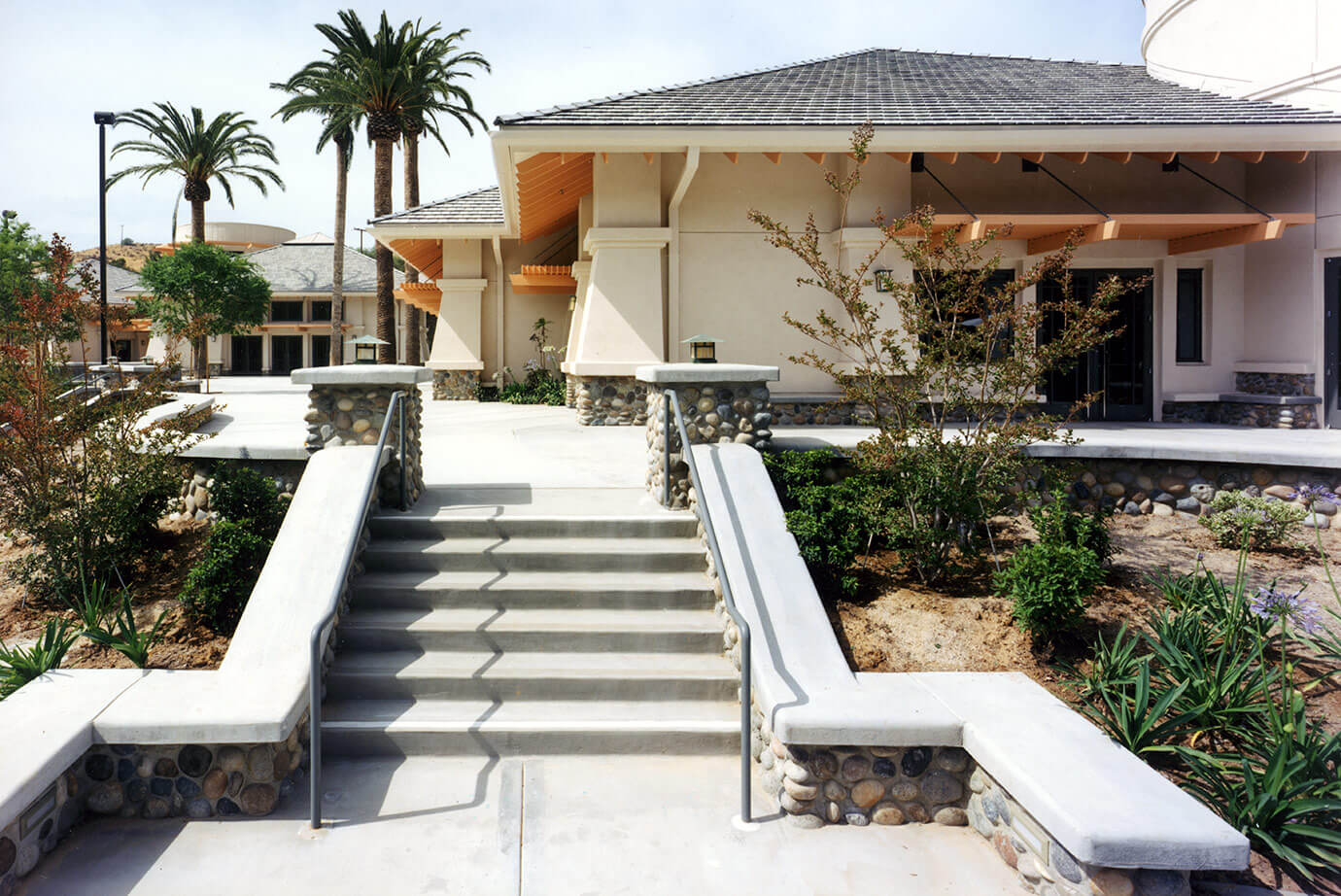
If you’ve ever driven through the Simi Hills, just past the edge of the San Fernando Valley, you might have noticed a sudden shift in the landscape. The suburban sprawl of Los Angeles fades. The hills get bigger. Then, you see it—the American Jewish University Brandeis-Bardin Campus.
It’s huge. We're talking 2,800 acres of rolling hills, ancient oak trees, and that weirdly beautiful, mid-century modern architecture that looks like it belongs in a sci-fi movie or a spiritual retreat. Honestly, it’s both. For decades, this land has been a weirdly well-kept secret for some and a second home for others. It’s the kind of place where you can find a world-class library, a working ranch, and a high-ropes course all within walking distance of each other.
But it isn't just a "camp."
People get confused about what this place actually is. Is it a college? A summer camp? A wedding venue? A filming location for Power Rangers? (Actually, yes, it was the Command Center in the 90s series). Basically, the Brandeis-Bardin Campus is the soul of the American Jewish University (AJU), and its history is as layered as the rock formations surrounding it.
The Visionary Roots of Brandeis-Bardin
To understand why this place matters, you have to go back to Shlomo Bardin. He was a man with a very specific, very intense mission. In the 1940s, he wanted to create a "living laboratory" for Jewish life. He wasn't interested in dry, dusty textbooks. He wanted young people to touch the soil, dance, argue about philosophy, and feel something visceral about their heritage.
The name "Brandeis" comes from Louis Brandeis, the first Jewish Supreme Court Justice. He was a huge supporter of Bardin's idea. The campus actually started in the East Coast, but it found its true home in Simi Valley in 1947.
Think about that timing. 1947. The world was reeling from the Holocaust. The state of Israel was about to be born. There was this desperate, urgent need to figure out what it meant to be Jewish in a modern, American context. Bardin bought this massive ranch—originally called the Santa Susana Mountain Park—and turned it into a place where the "Brandeis Collegiate Institute" (BCI) could thrive.
BCI is still the crown jewel of the campus. It’s an intensive summer program where young adults from all over the world come to... well, they come to find themselves. They work the land. They make art. They listen to speakers. It sounds a bit hippie-ish, and honestly, it kind of is. But it’s a high-level intellectual hippie-ism that has produced some of the most influential Jewish leaders in the world.
Why the Architecture Looks So "Space Age"
If you walk around the campus today, the first thing you’ll notice—besides the sheer scale of the place—is the House of the Book.
This building is legendary.
Designed by Sidney Eisenshtat, it looks like a giant concrete cylindrical fortress emerging from the hilltop. It’s brutalist, but organic. It’s the largest library of its kind in the Western United States, but most people recognize it from TV. Because it looks so futuristic, Hollywood has used it for everything from Star Trek VI to The Big Bang Theory.
But inside? It’s hushed and spiritual. The stained glass and the way the light hits the concrete creates this atmosphere that makes you want to whisper even if nobody is there. It’s a physical representation of what the American Jewish University Brandeis-Bardin Campus tries to do: bridge the gap between the ancient and the futuristic.
It's Not Just for Students Anymore
While the university uses the land for academic retreats and the BCI program, the campus has evolved into a massive community resource. You’ve got Camp Alonim, which is arguably one of the most famous Jewish summer camps on the West Coast.
If you grew up in LA, you probably know someone who went to Alonim. It’s famous for its folk dancing. Like, serious folk dancing. They have this massive covered pavilion where hundreds of kids dance with an intensity usually reserved for professional athletes. It’s a rite of passage.
Then there’s the Gan Alonim Butterfly Garden and the various sustainability initiatives. The campus has become a bit of a leader in Jewish environmentalism. They aren't just talking about "tikkun olam" (repairing the world); they’re literally planting trees and managing a massive watershed.
- The Peppercorn Forest: A favorite spot for quiet reflection.
- The Climbing Wall: Where city kids face their fear of heights.
- The Cattle: Yes, there are actual cows. It’s a working ranch, after all.
The Simi Valley Land Controversy and Conservation
It hasn't all been summer camps and sunsets, though.
In recent years, the American Jewish University faced some tough decisions. Maintaining 2,800 acres isn't cheap. The bills are astronomical. A few years back, there was talk about selling large portions of the land, which caused a huge stir in the local community and among alumni.
People were terrified that this pristine wilderness would be turned into another cookie-cutter housing development.
The debate was heated. On one side, you had the university needing to secure its financial future to keep its educational programs running. On the other, you had conservationists and "Brandeisers" who saw the land as sacred.
The good news? The university eventually pivoted. Instead of a massive sell-off to developers, there has been a significant move toward permanent conservation. In 2023 and 2024, deals were worked out to ensure that the vast majority of that land remains open space. This is a huge win for the local ecosystem. The Simi Hills are a crucial wildlife corridor for mountain lions and other species moving between the Santa Monica Mountains and the Sierras.
By keeping the American Jewish University Brandeis-Bardin Campus largely undeveloped, AJU is basically providing a massive lungs-of-the-city service for the region.
What Happens There Today?
If you go up there on a Tuesday, it might be quiet. But on a weekend? It’s buzzing.
They host "Family Days," where people from all over Ventura and LA counties come up for archery, swimming, and arts and crafts. They have public events, lectures, and holiday celebrations.
The campus also serves as a massive conference center. Because it's so close to LA but feels a million miles away, corporate groups and non-profits rent the space for retreats. It’s one of the few places where you can have a high-tech boardroom meeting in the morning and be hiking to a cave with Chumash Native American pictographs by the afternoon.
Wait, I should mention that. The land has history that goes way back before Shlomo Bardin. There are documented archaeological sites on the property. The university works to respect that history, though the focus remains primarily on the Jewish educational mission.
The "Secret" Filming History
Let's be real: a lot of people search for this campus because of the movies.
Beyond the Power Rangers and Star Trek, the campus has been used in The Ten Commandments (the 1956 version!), and more recently in various music videos and prestige TV dramas. The "House of the Book" is the big draw, but the rugged terrain is perfect for any production that needs to look like "The Middle East" or "An Alien Planet" without leaving the 30-mile studio zone.
The income from these shoots actually helps fund the scholarships for the kids attending camp. So, every time a superhero lands on that concrete plaza, it’s basically paying for a kid to learn how to ride a horse or bake challah.
Why You Should Care (Even If You Aren't Jewish)
You might think, "Okay, cool, it’s a Jewish camp." But the Brandeis-Bardin Campus is one of the last great pieces of private-but-accessible open space in Southern California.
In a world that feels increasingly digital and disconnected, a place that insists on physical labor, communal dancing, and silent reflection is rare. It’s a holdout. It’s a 2,800-acre reminder that we need space to breathe.
The American Jewish University has been through a lot of transitions lately. They sold their main Bel Air campus to focus more on digital learning and the Brandeis-Bardin site. This move signals that they see the Simi Valley land as their true future. It’s their physical anchor.
Practical Insights for Your Visit
If you're thinking about checking it out, don't just show up and wander around. It’s a private campus and they take security seriously, especially given the nature of the facility.
- Check the Calendar: Look at the AJU website for "Open House" days or public events. These are your best bet for seeing the House of the Book without getting stopped at the gate.
- Rent the Space: If you have a non-profit or a big family event, it’s actually a surprisingly affordable venue compared to hotels in Malibu or Santa Barbara.
- Summer Camp: If you have kids, Camp Alonim is legendary for a reason. But book early—it fills up months in advance.
- The Hike: There are public trails that border the property. You can get incredible views of the campus from the surrounding ridges of the Simi Hills. Just make sure you stay on the marked public paths.
The American Jewish University Brandeis-Bardin Campus is a weird, wonderful, sprawling anomaly. It’s a library, a ranch, a film set, and a sanctuary. Whether you’re interested in the brutalist architecture, the Jewish history, or the fact that Alpha 5 once yelled "Aye-yi-yi!" in the middle of the courtyard, it’s a place that deserves its spot on the map.
It reminds us that sometimes, to move forward, you need to go out into the hills and get some dirt under your fingernails.
Actionable Next Steps
If you want to experience the campus, start by looking into the Public Community Days hosted throughout the year. These events often include tours of the iconic House of the Book and access to the hiking trails that are usually restricted. For those interested in the environmental aspect, keep an eye on the university's "Eco-Judaism" workshops, which offer hands-on experience with the land's conservation efforts. If you're an alum or have a family connection, reaching out to the Brandeis-Bardin Institute archives can provide deep-dive information on the specific history of the "living laboratory" vision that started it all.