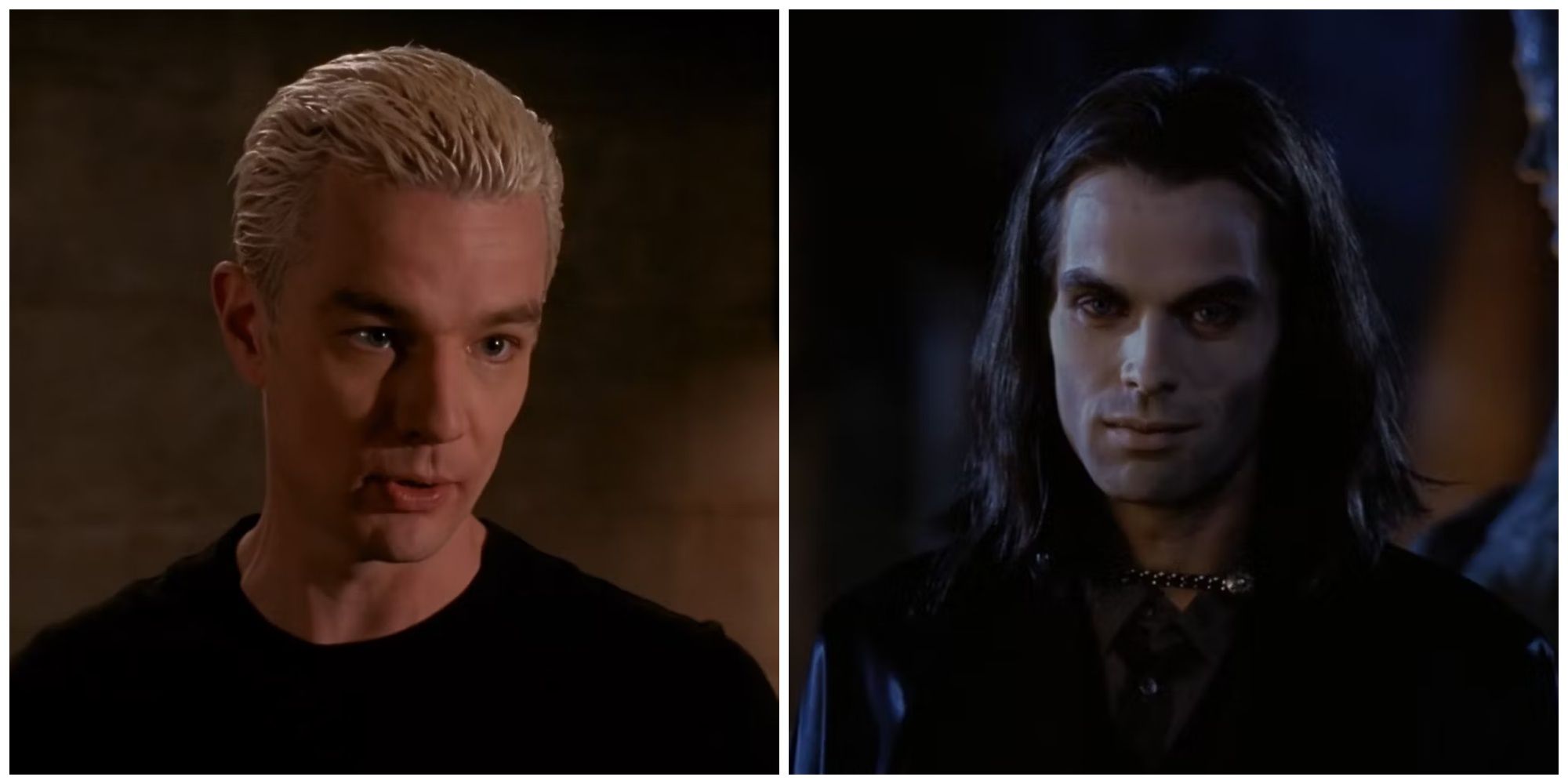
He wasn’t supposed to stay. Seriously. When James Marsters first stepped onto the set of Buffy the Vampire Slayer in 1997, his character, Spike, was slated for a short, violent expiration. He was the "Big Bad" of early Season 2, a punk-rock antithesis to the brooding, soulful Angel. He wore a heavy leather duster he took from a slayer he killed in New York. He drove his car into the Sunnydale sign. He was pure, unadulterated chaos.
But then something happened.
The fans went feral for him. It wasn't just the bleached hair or the Billy Idol aesthetic, though that certainly helped. It was the fact that Spike brought a frantic, desperate humanity to a monster that should have been a one-dimensional villain. He didn't want to conquer the world; he wanted to win back his girlfriend and maybe get a decent blood-shake.
The William the Bloody Problem
Most fans remember Spike as the swaggering vampire who called himself the "William the Bloody." But the "Bloody" didn't come from his prowess in combat. It came from his "bloody awful" poetry.
Before he was turned by Drusilla in Victorian London, he was William Pratt—a sensitive, bumbling romantic who got his heart crushed by a noblewoman named Cecily. This is the core of Spike from Buffy the Vampire Slayer. Unlike Angel, whose human persona (Liam) was a drunken wastrel, Spike’s human soul was defined by a capacity for obsessive, overwhelming love. When he became a vampire, that trait didn't vanish. It just got warped.
He didn't kill for the sake of evil. He killed because he was a romantic who found a new way to express passion. He followed Drusilla across continents for a century, not because he was a loyal soldier of hell, but because he was a "fool for love."
Breaking the Vampire Rules
In the Buffy mythos, when you become a vampire, a demon replaces your soul. You aren't "you" anymore. At least, that's what the Watcher’s Council told us. Spike broke that rule.
Even without a soul, Spike showed flashes of genuine empathy. Look at his relationship with Joyce Summers. While the rest of the Scooby Gang saw a monster, Joyce saw a guy who liked her gallery openings and shared her love for Passions soap operas. One of the most heartbreaking moments in the entire series isn't a big fight; it’s Spike showing up at Joyce’s house with flowers after she passes away, refusing to even let Buffy see him because he didn't want to make the moment about his own grief.
He was "good" long before he was actually good.
The Chip, the Soul, and the Controversy
Season 4 changed everything. The Initiative—a secret government monster-hunting task force—implanted a microchip in Spike’s brain. If he tried to hurt a human, he felt a debilitating neural shock.
This turned him into a reluctant ally. It’s a brilliant narrative trick. The writers forced a wolf to live with the sheep, and eventually, the wolf started liking the sheep's music. But let's be honest: the transition wasn't always clean.
The relationship between Buffy and Spike in Season 6 is some of the most polarizing television ever aired. It’s dark. It’s messy. It’s often toxic. They used each other to feel something—anything—in the middle of their respective depressions. Buffy was reeling from being ripped out of heaven; Spike was obsessed with a woman who hated him (and himself).
The "Seeing Red" Turning Point
We have to talk about the bathroom scene in the episode "Seeing Red." It is the most difficult moment in the franchise. Spike attempts to force himself on Buffy. It’s a harrowing, visceral scene that reminds the audience that despite his witty one-liners, Spike is still a predator without a moral compass.
However, the aftermath is what defines the character's legacy.
Most villains would have doubled down. Spike did the opposite. He was so horrified by what he had become—and the realization that he could never truly be what Buffy needed without a soul—that he traveled to Africa to endure a series of trials. He didn't go to get the chip removed. He went to get his soul back.
He chose to be judged. He chose the pain of remorse.
Why Spike Works Better Than Angel
People love to debate Spike vs. Angel. It’s the classic "Bad Boy" vs. "Brooding Hero" trope. But from a writing perspective, Spike is a significantly more complex achievement.
Angel was given his soul as a curse. He didn't ask for it. He spent decades moping because he was forced to remember his sins.
Spike earned his.
He fought for the very thing that would make him miserable. He knew that getting a soul meant he would have to live with the memory of every person he ever killed, every family he destroyed, and the shame of what he tried to do to Buffy. He did it anyway because he loved her.
That makes his redemption arc in Season 7 and the final season of Angel feel earned. When he sacrifices himself in the Sunnydale crater, wearing the amulet, he isn't doing it to be a hero. He's doing it because it's the right thing to do.
"I'm opening a door, bitch," he tells the First Evil. Classic Spike.
The Cultural Impact of the Leather Jacket
Spike wasn't just a character; he was a vibe. He influenced a generation of TV anti-heroes. You can see DNA of Spike in characters like Damon Salvatore from The Vampire Diaries or even Eric Northman from True Blood.
He proved that you could have a character who was funny, terrifying, pathetic, and heroic all in the same forty-two-minute episode. James Marsters' performance—complete with a British accent so convincing that many fans were shocked to learn he was from California—anchored the show when it risked becoming too bogged down in its own mythology.
Surprising Facts Most Fans Miss
- The Hair Damage: James Marsters had to bleach his hair every eight days for six years. By the end of the show, his scalp was reportedly a mess of chemical burns.
- The Musical Note: In the famous musical episode "Once More, with Feeling," Marsters did all his own singing. His rock background made "Rest in Peace" one of the standout tracks of the soundtrack.
- The Audition: He originally auditioned with a Texan accent. The producers decided a London "punk" vibe fit the rebel persona better.
- The Puppet Cameo: Even after Buffy ended, Spike lived on in the spin-off Angel. The "Smile Time" episode where Spike has to fight a puppet version of Angel is peak 2000s television comedy.
How to Revisit the Spike Saga Today
If you’re looking to dive back into the world of Spike from Buffy the Vampire Slayer, don't just stop at the TV show. The story actually continues in a major way through the official comic books (Season 8 through 12).
In the comics, Spike’s journey takes him to some wild places—including commanding a crew of giant alien bugs on a spaceship. It sounds insane, but in the context of the Buffyverse, it weirdly works. It highlights his role as the eternal outsider, the man who fits in nowhere but is needed everywhere.
Actionable Ways to Experience the Character
- Watch the "Fool for Love" Episode (Season 5, Episode 7): This is the definitive Spike episode. It intercuts his history of killing slayers with his current obsession with Buffy. It explains his psychology better than any dialogue ever could.
- Listen to "Ghost of the Robot": This is James Marsters’ real-life band. If you want to hear the "Spike energy" in musical form, their early albums are the way to go.
- Read the "Spike: Into the Light" Graphic Novel: Written by Marsters himself, this story fills in the gaps of what happened to Spike right after he got his soul back but before he returned to Sunnydale. It's a gritty look at his internal struggle.
- Analyze the "Spuffy" vs. "Bangel" Debate: Engaging with the fan community on platforms like Reddit or Tumblr will show you that even twenty years later, the ethical implications of Spike’s relationship with Buffy are still being fiercely debated.
Spike remains the gold standard for how to transition a villain into a hero without losing the edge that made them interesting in the first place. He was a monster who chose to be a man, and that’s why we’re still talking about him decades after the Hellmouth closed for good.