It was 1986. People wore neon leg warmers.
The goal? Six million people. Hand in hand. Across the entire United States.
Hands Across America 1986 was basically the ultimate "eighties" moment—a massive, star-studded, logistical nightmare that attempted to solve hunger through the power of human contact. If you were there, you probably remember the catchy song or the sight of celebrities like Kevin Bacon and Yoko Ono standing on a dusty road. But if you look at the actual numbers, the story gets a lot more complicated. It wasn’t just a feel-good afternoon; it was a massive gamble by Ken Kragen, the same guy who managed Lionel Richie and organized "We Are the World." He wanted to take that studio magic and stretch it across 4,152 miles of asphalt.
Honestly, it’s a bit of a miracle it happened at all.
The Wild Logistics of Hands Across America 1986
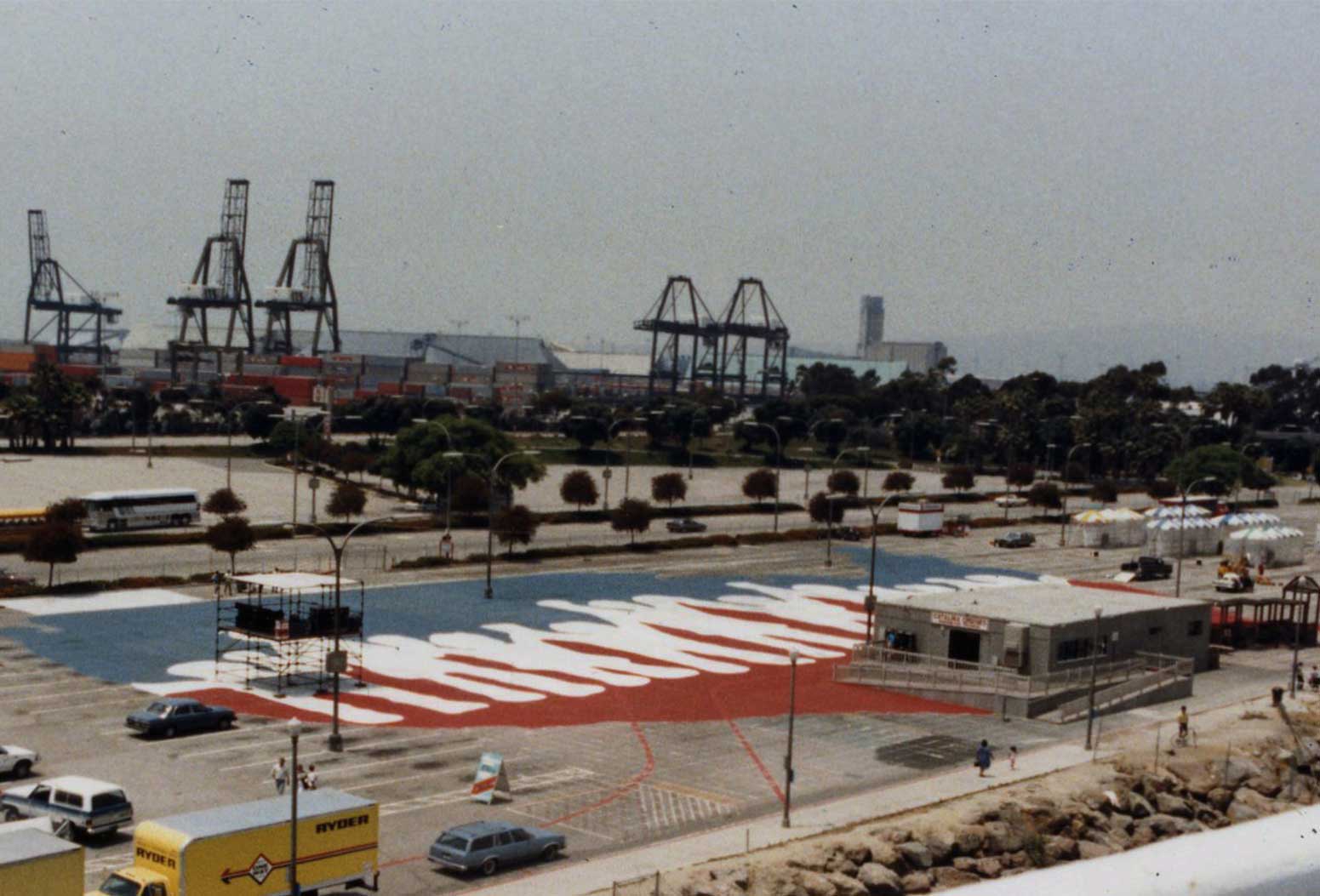
Imagine trying to coordinate six million people before the internet existed. No GPS. No cell phones. Just landlines, paper maps, and a lot of hope. The line was supposed to start in New York City and end in Long Beach, California. But the geography of the US isn't exactly a straight, populated line.
There were massive gaps.
In the deserts of the Southwest, organizers had to use "human ribbons" or just long stretches of nylon rope because, well, nobody lives in the middle of the Mojave. Even with the rope, the line was broken in hundreds of places. It wasn’t a continuous circuit. People like to think of it as this unbroken chain of humanity, but in reality, it was more like a series of very enthusiastic clusters connected by a dream and some string.
Ken Kragen was the mastermind. He was coming off the high of "We Are the World" and wanted to tackle domestic hunger. The entry fee was ten dollars. That seems cheap now, but for a family of four in 1986, it was a commitment. The organizers expected to raise $100 million. They didn't even get close.
Where the Money Actually Went
A lot of people think the event was a financial home run because of the publicity. It wasn't. After you factor in the massive overhead—the staging, the security, the insurance, the marketing—the net profit was around $15 million.
That’s a lot of money, sure. But when you’re trying to solve homelessness and hunger across the entire country, $15 million is a drop in the bucket. It was basically a logistical triumph and a financial "meh."
Wait, it gets more interesting.
The event happened on Sunday, May 25, 1986. At 3:00 PM ET, everyone broke into song. They sang "We Are the World," "America the Beautiful," and the official "Hands Across America" theme. It was surreal. You had Ronald and Nancy Reagan standing on the White House lawn, holding hands with staffers. You had Liza Minnelli in New York. You had people in the middle of a cow pasture in Ohio.
It was a total media circus.
The Celebrity Factor and the "Missing" People
The celebrity list was insane. We're talking Prince, Michael Jackson (who didn't actually show up but supported it), Bill Cosby, and even Mickey Mouse. But the celebrities weren't the ones doing the heavy lifting. It was the "line captains." These were regular people tasked with making sure their mile of the road was filled.
If your mile was empty, it was on you.
Some sections were packed ten people deep. In Manhattan, it was a literal wall of people. But once the line hit the rural Midwest? Not so much. Organizers had to bus people in from cities just to make the photos look good. There’s this misconception that the line was a perfect, thin thread. Nope. It was messy. It was chaotic. It was very, very loud.
The critics at the time were pretty harsh. They called it "sentimentalism without substance." They argued that instead of standing in the sun for twenty minutes, people should have spent that time volunteering at a local soup kitchen. It’s a classic debate: awareness versus action. Does holding hands actually feed a child in Appalachia? Probably not. But it did put the issue of "The New Poor" on the cover of every newspaper in the country.
A Quick Look at the Numbers (The Prose Version)
To get a sense of the scale, look at the geography. The line crossed sixteen states and Washington D.C. It moved from the George Washington Bridge through Philadelphia, Baltimore, and D.C. Then it headed west through the Ohio River Valley, into St. Louis, across the plains of Kansas, over the Rockies, and finally down into the California sun.
The organizers had to deal with:
- Over 1,000 miles of "empty" space where they had to recruit volunteers to travel.
- The coordination of hundreds of radio stations to play the song at the exact same moment.
- Managing the logistics of 35,000 "line monitors" who wore special bibs.
- Dealing with the fact that President Reagan was participating while his administration’s policies were being blamed for the very poverty the event was trying to fix.
That last point created a lot of friction. Protesters actually showed up at certain points of the line to point out the irony. It wasn't all smiles and singing.
Why We Still Talk About It
You might wonder why we care about a forty-year-old PR stunt. It’s because Hands Across America 1986 represents the peak of "Celebrity Philanthropy." It was the era of Live Aid and Farm Aid. It was a time when we genuinely believed that if we just got enough famous people in a room (or on a road), we could solve the world’s biggest problems overnight.
It was naive. But it was also kind of beautiful.
There's something deeply human about wanting to physically connect with someone a thousand miles away. Even if the money didn't fix everything, the event changed how charities operated. It proved that you could mobilize millions of people for a singular, non-political (mostly) cause using the power of the nascent 24-hour news cycle.
Also, it gave us some of the weirdest photos in American history. Seeing Bill Cosby and screaming fans in a human chain next to a highway is an aesthetic you just don't get anymore.
The Reality Check
Let's talk about the money again, because that's usually where the "expert" knowledge comes in. The $15 million net was distributed by a foundation called USA for Africa. They were very careful about where it went. It didn't just go to "hunger." It went to specific grants for emergency food providers and long-term development projects.
If you look at the archives, you’ll see that the money actually helped a lot of small-town food banks stay open through the late eighties. So while it didn't "solve" hunger, it definitely kept the lights on for the people who were actually doing the work.
How to Apply the Lessons of 1986 Today
If you're a community organizer or a marketer, there are actually some pretty solid takeaways from this giant experiment.
First, scale is a double-edged sword. The more people you involve, the higher your "activation energy" and cost. Sometimes, a smaller, more focused event is more efficient than a cross-country chain.
Second, symbolism matters. People still remember Hands Across America 1986 not because of the dollar amount, but because of the visual. In a world of digital clicks, physical presence still carries a lot of weight.
Third, be transparent about the "why." The event faced backlash because the goals were too vague. "Ending hunger" is a massive, systemic issue. If you're going to ask people for money, be specific about what their ten dollars is actually buying.
Actionable Steps for Researching Local Impact
If you want to see what actually happened in your neck of the woods during the event, do this:
- Check Local Newspaper Archives: Most local libraries have digitized papers from 1986. Search for "Hands Across America" + your town name. You'll likely find photos of your neighbors standing on a local bridge or highway.
- Look for the "Line Captions": Many of these people are still around. They often have the original T-shirts, certificates, or the "official" transistor radios that were sold for the event.
- Evaluate Current Food Banks: Contact your local food pantry and ask if they were around in the mid-eighties. Some of the infrastructure built with that $15 million in grant money still supports local communities today.
The event wasn't perfect. It was a messy, loud, expensive, and somewhat ineffective way to change the world. But for one afternoon, millions of people decided that standing in the sun and holding a stranger's hand was better than doing nothing. In a world that feels increasingly disconnected, there's a certain charm in that.
The line might have been broken in the desert, but the effort was real.
To understand the full impact, look into the specific grants issued by USA for Africa in the three years following the event. It reveals a much more nuanced picture of how "awareness" eventually turns into actual food on tables. You can also look up the 2019 movie Us, which used the event as a major plot point, bringing the whole concept back into the pop culture zeitgeist for a new generation.
The legacy of Hands Across America 1986 isn't just a song or a T-shirt. It's a reminder of what happens when we try to do something impossibly big, fail slightly, but still manage to move the needle just a little bit. It's about the effort. It's about the 4,000 miles. It's about the fact that for twenty minutes, we all tried to be on the same page.
That’s worth remembering.