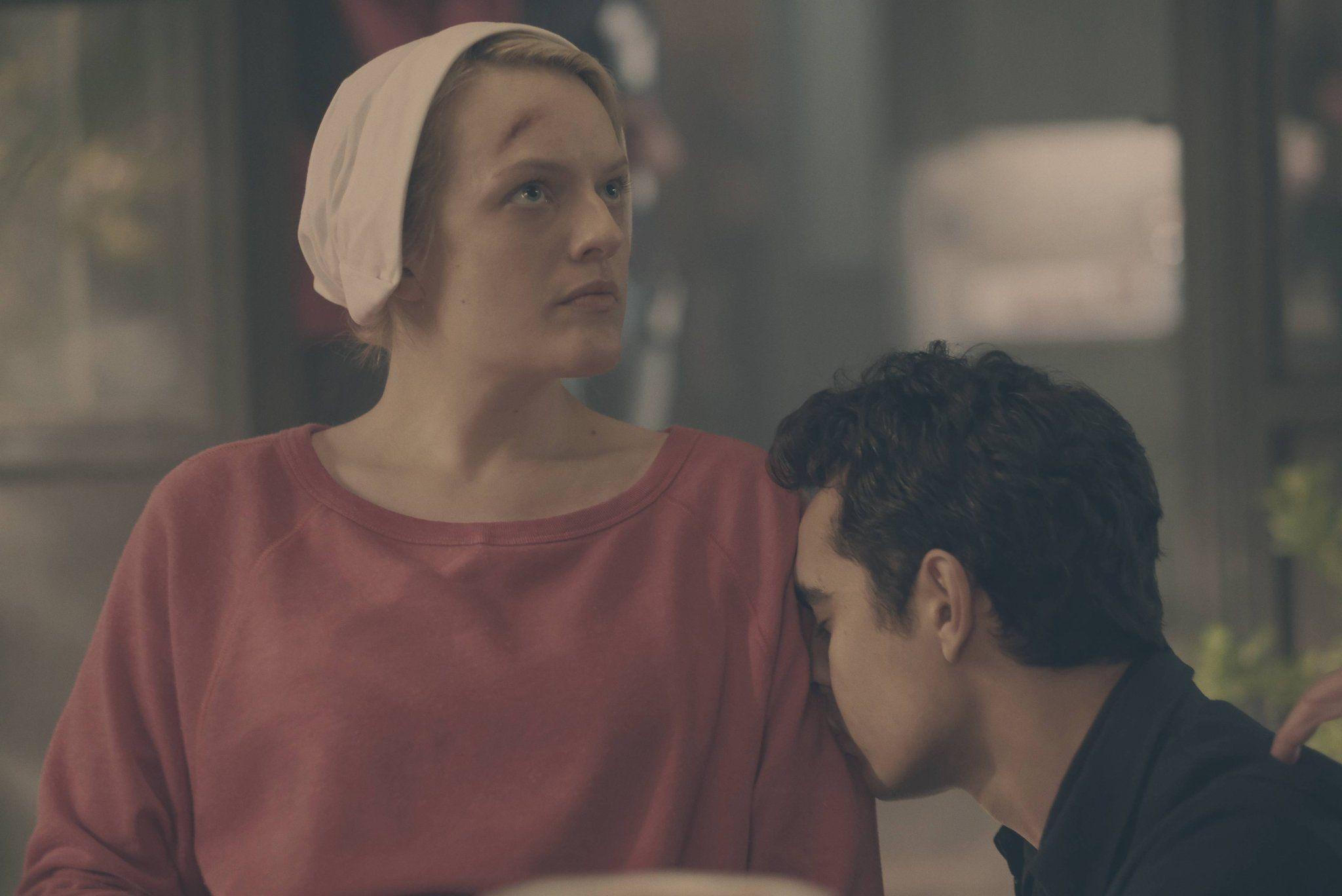
It’s been a while since June Osborne first stepped out of the red center and into the suffocating silence of the Waterford house, but honestly, nothing quite hit the gut like Handmaid's Tale Season 2. If the first season was about the shock of a world lost, the second was about the grinding, relentless reality of trying to survive within it. People often talk about "prestige TV" as something you enjoy with a glass of wine, but this season? It was a marathon of endurance. It was bleak. It was brutal. It was also, quite frankly, some of the most necessary television produced in the last decade.
Bruce Miller, the showrunner, didn't hold back. He couldn't.
The stakes shifted immediately. We stopped wondering if Gilead could happen and started watching exactly how it maintains its grip through systemic terror. You've got June, played with a terrifyingly raw intensity by Elisabeth Moss, caught in this constant loop of almost-escapes and crushing returns. It’s exhausting. That’s the point.
The Escape That Wasn't Really An Escape
The premiere of Handmaid's Tale Season 2 starts with a literal bang—or rather, the muffled sound of footsteps in a dark stadium. That opening scene at Fenway Park is burned into the retinas of anyone who watched it. No dialogue. Just the chilling clinking of chains and the sight of hundreds of women being led to a gallows. It was a fake-out, a psychological torture tactic by Aunt Lydia, but it set the tone. Gilead isn't just about rules; it’s about the total annihilation of the will.
June’s brief stint in the abandoned Boston Globe building is where the season finds its ghost-story rhythm.
Seeing the bloodstains on the walls of a former newspaper office serves as a heavy-handed, yet effective, reminder of how quickly the free press was dismantled. She’s hiding in the skeleton of the old world. It’s quiet. It’s lonely. She’s clipping her own ear to remove a tracker, a scene that made even the most hardened horror fans flinch. This isn't a spy thriller. It’s a survival horror.
The tragedy of this season is the hope. Hope is dangerous in Gilead. Every time June gets close to the Canadian border, the tether snaps. When she’s finally recaptured and brought back to the Waterfords, the show shifts from an escape movie to a domestic psychodrama. The dynamic between June and Serena Joy (Yvonne Strahovski) becomes the toxic engine of the show. They hate each other. They need each other. They are both victims of the same patriarchal nightmare, yet Serena spends most of the season doubling down on the very system that stripped her of her own power.
Entering The Colonies: Where Life Goes To Die
One of the biggest expansions in Handmaid's Tale Season 2 was finally showing us the Colonies. We’d heard about them in whispers. The "unwomen" go there to die.
The visual palette shifts to a sickly, radioactive yellow. It’s haunting. We see Emily (Alexis Bledel) and Janine (Madeline Brewer) shoveling toxic topsoil into bags. There is no hope here, only the slow decay of the body. Bledel’s performance is understated and heartbreaking. She’s a shell of the woman she was, yet she finds a way to poison a Commander’s wife who was sent there for "sins" against the state. It’s a small, dark victory in a place where skin literally peels off your fingernails.
Director Reed Morano’s influence on the show’s aesthetic remains, even as other directors stepped in. The tight close-ups on Moss’s face—the "Handmaid’s gaze"—become even more claustrophobic. You’re forced to look. You can't look away.
The Complexity of Serena Joy
Is Serena a villain? Yes. Is she a victim? Also yes. Season 2 leans hard into this discomfort. We see flashbacks to her life before the coup, as a conservative activist who essentially wrote the blueprint for her own oppression. Watching her realize that she has no seat at the table she helped build is satisfying in a "you reaped what you sowed" kind of way, but Strahovski plays it with such nuance that you almost feel a twinge of empathy. Almost.
Then she holds June down during a "ceremony" to induce labor, and that empathy evaporates.
The show explores the idea that women can be the most effective enforcers of a patriarchy. Aunt Lydia, played by the incomparable Ann Dowd, isn't just a monster. She genuinely believes she is saving these women’s souls. That’s what makes her so much scarier than a simple guard. She loves them in the most twisted, abusive way possible.
What Most People Get Wrong About the Pace
A common complaint during the original run of Handmaid's Tale Season 2 was that it was "too slow" or "misery porn."
That’s a superficial take.
The pacing reflects the reality of living under an authoritarian regime. Change doesn't happen in a fast-paced 45-minute arc. It’s a slow, agonizing crawl. The repetition of the ceremonies, the walks to the market, the ritualized greetings—it’s designed to wear you down. If the show felt fast, it wouldn't be honest. It needs to feel heavy. It needs to feel like you’re breathing in that same thick, stagnant air.
- The ritual of the "Ceremony" becomes even more grotesque as the pregnancy progresses.
- The introduction of Holly (June’s mother), played by Cherry Jones, adds a layer of feminist history that complicates June's view of the past.
- The expansion of the world to include the Canadian perspective (Luke and Moira) provides a necessary, if frustrating, contrast to the horror in Gilead.
The season isn't just about suffering; it's about the tiny, microscopic ways people resist when they have nothing left. It’s the "Nolite te bastardes carborundorum" spirit, even if that specific phrase took a backseat to more direct actions this time around.
The Nicole Factor and the Finale Choice
Everything comes to a head with the birth of baby Nicole (or Holly, depending on who you ask). The scene where June gives birth alone in a freezing house is a masterclass in acting. No dialogue, just animalistic survival. It’s a reset button. Suddenly, June isn't just fighting for herself; she’s fighting for a future that doesn't involve a red cloak.
The finale, "The Word," divided the fanbase.
June has the chance to get out. She’s at the van. Emily is there with the baby. The path to Canada is open. And she stays.
People screamed at their TVs. "Just get in the van!" But if she leaves, Hannah stays. Hannah is the anchor. A mother doesn't leave one child to save another unless she has absolutely no choice, and in that moment, June decided she still had a choice. She handed the baby to Emily and pulled her hood back up. It was a declaration of war. She wasn't a victim anymore; she was an insurgent.
Technical Mastery Behind the Dread
The cinematography in season 2, led by Colin Watkinson, is breathtaking. They use a shallow depth of field to isolate characters, making the world around them a blur of red and teal. It emphasizes the isolation. The sound design is equally oppressive. The silence in Gilead is loud. You hear every rustle of fabric, every heavy breath. It’s designed to make the viewer feel as hyper-vigilant as the characters themselves.
Critics like Margaret Atwood (who remained a consulting producer) have noted that while the show moved past the original book's plot, it stayed true to the "Atwood Rule": nothing happens in the show that hasn't happened in real life at some point in history. The public executions, the removal of children, the stripping of bank accounts—it's all pulled from the darker chapters of our own world.
Why We Still Talk About It
Handmaid's Tale Season 2 forced a conversation about the fragility of rights. It came out at a time of massive political upheaval in the real world, and the parallels were impossible to ignore. It wasn't just a show; it was a cultural touchstone. The red robes and white wings became a symbol of protest globally, from Washington D.C. to Buenos Aires.
The season ends not with a resolution, but with a transformation. June is no longer Offred. The Commander’s name no longer defines her. She is a woman who has seen the worst the world has to offer and decided to burn it down.
Moving Forward with the Story
If you’re revisiting the series or diving in for the first time, keep these things in mind to get the most out of the experience:
- Watch the background. The set design is littered with remnants of the "Before Times" that tell a story of how fast things changed.
- Track Serena’s clothing. Her wardrobe subtly shifts in color and restriction as her internal conflict grows.
- Listen to the music. The use of anachronistic pop songs (like "Burning Down the House") during key moments serves as June's internal rebellion.
- Pay attention to the Martha network. The "resistance" isn't just the people with guns; it's the women in the kitchens.
The brilliance of this season lies in its refusal to offer easy exits. It demands that you sit with the discomfort. It asks what you would do if your world vanished overnight. Would you run? Would you hide? Or would you stay and fight, even if the odds were zero? June chose to fight, and that choice redefined the entire trajectory of the series.
To truly understand the impact of the show, one must look at the legal and social shifts regarding women's autonomy over the last several years. The series transitioned from a "what if" cautionary tale into a mirror for contemporary anxieties. When you watch Season 2, you aren't just watching a fictional dystopia; you're watching a study on the mechanics of power and the endurance of the human spirit under extreme pressure. It is a grueling, beautiful, and essential piece of storytelling that remains the high-water mark for the series.
Next Steps for Fans and Researchers
If you want to understand the real-world inspirations behind the events in Gilead, read The Handmaid's Tale by Margaret Atwood and her non-fiction essays regarding the historical precedents for the "Atwood Rule." For those analyzing the show's visual language, study the use of Dutch Golden Age painting aesthetics in the lighting and composition of the Waterford house scenes. Finally, compare the Season 2 finale to the closing chapters of the original novel to see how the showrunners chose to deviate from the "ambiguous" ending of the book to create a more direct narrative of resistance.