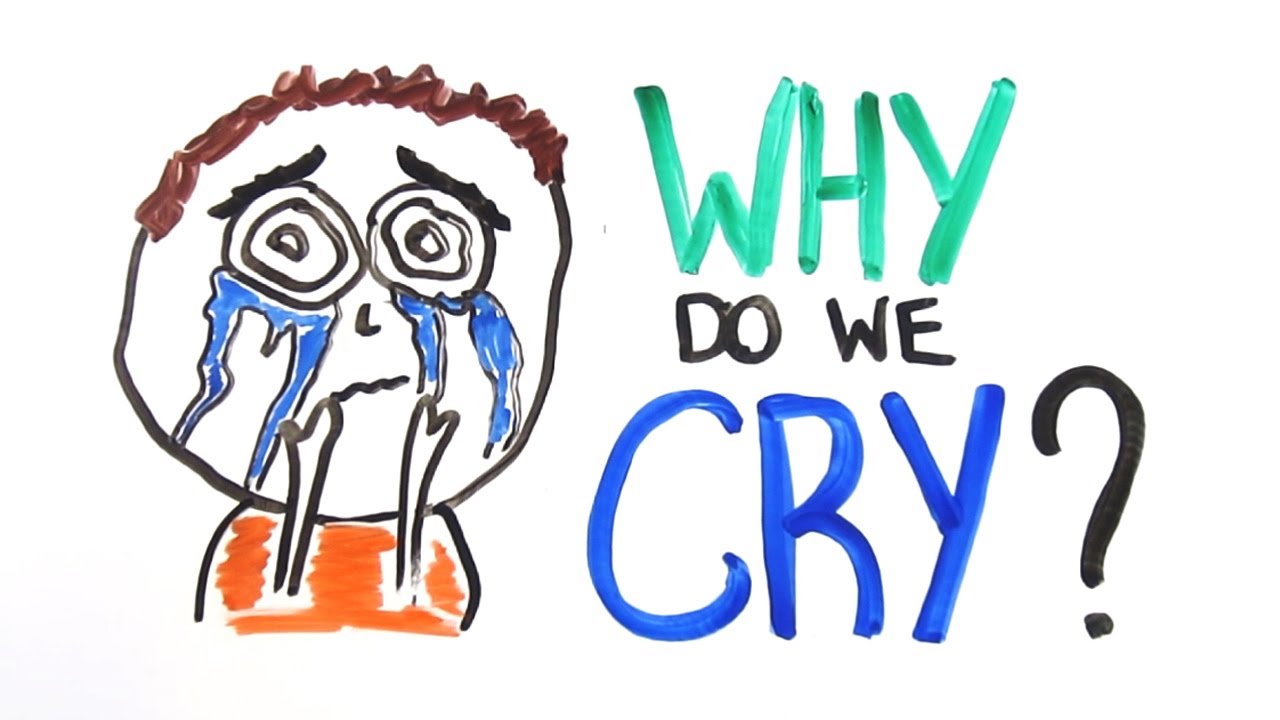
It is supposed to be the best day of the year. Cake, presents, maybe a few "happy birthday" texts from people you haven't spoken to since high school. But then, it hits. You’re sitting on the edge of your bed, or maybe in a bathroom stall at your own party, and you’re sobbing.
Why do people cry on their birthday? It’s a question that feels lonely when it’s happening, but it’s actually one of the most common psychological phenomena people experience every year. It’s called the "Birthday Blues." Or, if you want to be fancy about it, birthday depression.
Honestly, the pressure to be happy is usually what ruins it.
We live in a culture that treats birthdays like a mandatory peak experience. If you aren't having the time of your life, you feel like a failure. That gap—the distance between how you think you should feel and how you actually feel—is where the tears come from.
The Heavy Weight of Temporal Landmarks
Psychologists call birthdays "temporal landmarks." These are moments in time that stand out from the blurry grey noise of everyday life. Think of them like New Year's Day or a big anniversary. They act as a "start" button for our brains, but they also force us to look backward.
According to research published in the journal Psychological Science, these landmarks create a "Fresh Start Effect." This sounds positive, right? Well, not always. When you hit a landmark like a 30th or 40th birthday, you start measuring your life. You look at your bank account. You look at your relationship status. You look at your career.
If you aren't where you thought you’d be when you were ten years old, the birthday becomes a deadline you missed. That realization is heavy. It's not just a party; it's an audit.
The Biological Reality of Birthday Stress
Your body doesn't know it's your birthday. It only knows that your routine is broken and your cortisol levels are spiking.
Planning a party is stressful. Dealing with family expectations is stressful. Even the "good" attention can feel like a sensory overload. For people with social anxiety or sensory processing issues, the "Happy Birthday" song is basically a form of mild torture. You’re trapped in the center of a circle while people stare at you and sing off-key.
There’s also the "Birthday Effect." It’s a real statistical phenomenon. Some studies, including a large-scale one conducted in Switzerland using data over 40 years, suggested that mortality rates are actually higher on a person’s birthday. While that sounds morbid, it points to the intense emotional and physical stress these days place on the human system.
The heart reacts to the brain. If the brain is mourning the passage of time, the body feels the weight.
The Grief of "Past Selves"
Sometimes, we aren't crying because we’re sad about the future. We’re crying because we miss the past.
Every birthday is a funeral for the age you just left. You are never going to be twenty-four again. You are never going to be that version of yourself who lived in that specific apartment or had that specific group of friends. Dr. Tai-An Miao, a psychologist, often discusses how birthdays can trigger "anniversary reactions." If you’ve lost a loved one, your birthday becomes a glaring reminder of their absence.
"They should be here for this," you think. And suddenly, the cake tastes like cardboard.
Why Do People Cry on Their Birthday? Breaking Down the Social Pressure
Social media has made this so much worse. It’s a performative nightmare.
You open Instagram and see someone else’s "birthday dump." They’re on a boat. They have twenty friends who all wrote 500-word captions about how "iconic" they are. They look perfect.
Then you look at your own life. Maybe you’re tired. Maybe your "squad" is just your dog and a Netflix subscription.
- The expectation: A surprise party and a diamond ring.
- The reality: A "Happy Birthday" from your dentist via automated SMS.
This mismatch creates a sense of "identity thinness." You feel like you aren't "doing" life right. But here is a secret: most of those "perfect" birthday posts were preceded by a 20-minute argument about who was taking the photo.
The Developmental Milestone Trap
We have these weird, arbitrary rules about what we should achieve by certain ages.
- By 25, you should have a "real" job.
- By 30, you should have a "settled" life.
- By 40, you should have "figured it out."
These are lies. Everyone is winging it. But on your birthday, the lies feel like gospel. If you are turning 32 and you’re still working a job you hate or living with roommates, the birthday feels like a siren telling you that you’re "behind."
You aren't behind. You’re just aging. Everyone is doing it. It’s the only thing we all have in common.
Managing the Birthday Blues
If you find yourself crying every time the calendar hits your date, you need a new strategy. Stop trying to "win" your birthday.
First, lower the bar. Significantly. If you expect a life-changing epiphany, you’ll be disappointed. Aim for "a decent Tuesday where I eat something I actually like."
Second, set boundaries. If big parties make you want to crawl into a hole, don't have one. Tell people you’re doing a "low-key year." You are allowed to opt out of the spectacle.
Third, acknowledge the grief. It’s okay to be sad that you’re getting older. It’s okay to miss your childhood. Give yourself twenty minutes to just feel miserable. Get it out of your system. Usually, the crying happens because we’re trying to force ourselves to be happy. If you let the sadness exist, it usually gets bored and leaves.
What to Do Instead of Performing
- Control the Narrative: Plan exactly what you want to do, even if it’s "boring."
- Digital Detox: Stay off social media for the day. Don't look at other people's highlight reels while you're feeling vulnerable.
- Reframing: Instead of "What haven't I done yet?", try "What did I survive this year?"
- Small Wins: Buy the expensive coffee. Buy the book. Do the thing that makes you feel like an individual, not a milestone.
People cry because birthdays are a confrontation with time. Time is scary. It moves fast, it doesn't stop, and it changes us. Crying isn't a sign that your life is bad; it's a sign that you're human and you're paying attention.
Next time you feel the tears coming on your big day, let them fall. It’s just your brain’s way of processing the fact that you’ve done another 365-day lap around a giant ball of fire. That’s an exhausting job. You’ve earned a good cry.
Practical Steps for Your Next Birthday
If you know the "birthday blues" are coming, prepare your environment like you’re prepping for a minor surgery. Clear your schedule of high-stress meetings the day before and after. Pre-write a polite "thank you" text that you can copy-paste to everyone so you don't feel the pressure to be social in real-time. Most importantly, remind yourself that the day is just twenty-four hours. It will end, the pressure will lift, and tomorrow you can go back to being a normal person who doesn't have to be the "star" of anything.
Focus on "micro-joys" rather than "macro-events." A good sandwich is a guaranteed win; a "dream vacation" is a logistics nightmare. Choose the sandwich. Every single time.