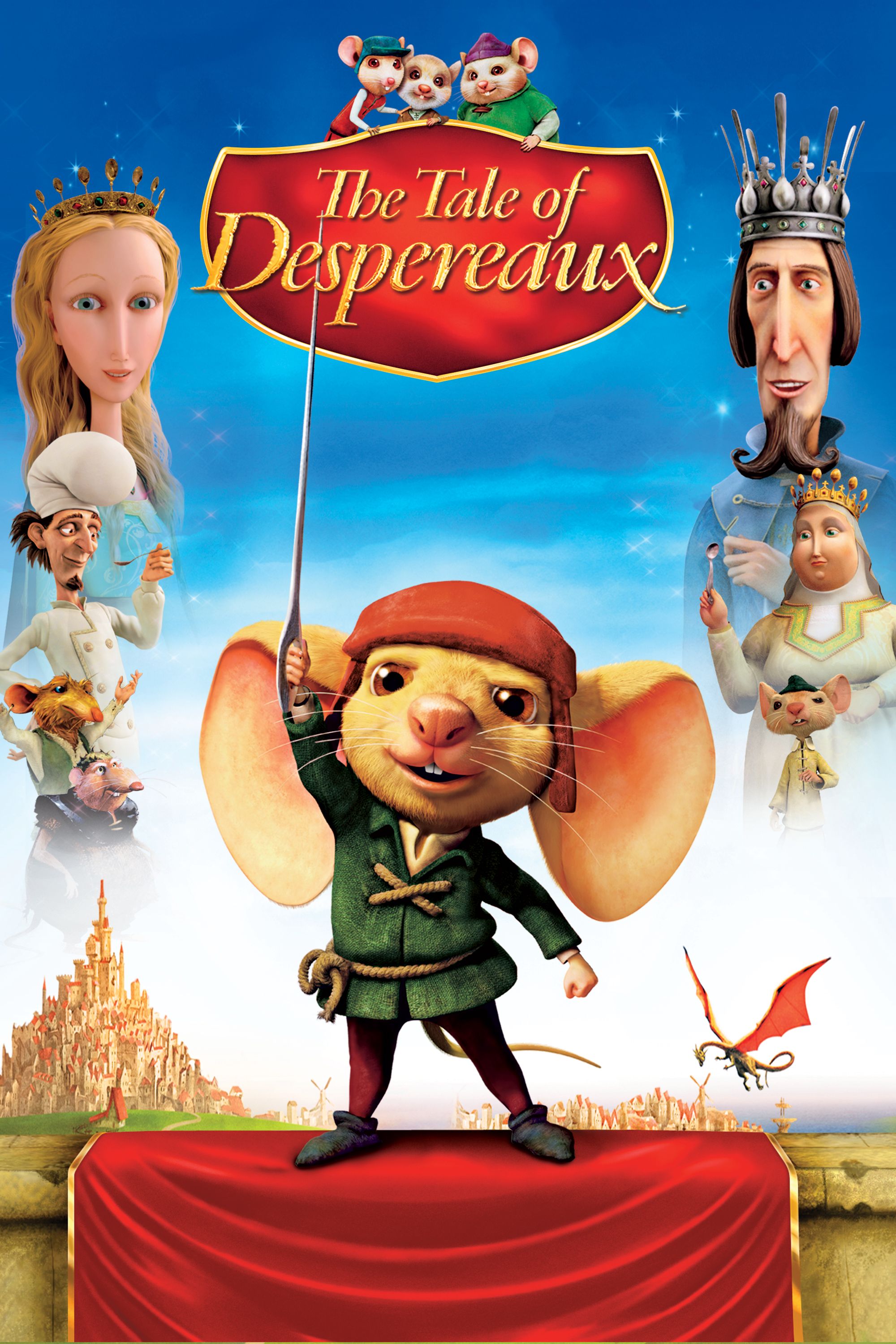
Kate DiCamillo has a knack for making kids cry. If you grew up reading The Tale of Despereaux, you probably remember the brave little mouse with the giant ears, but looking back as an adult, the characters from The Tale of Despereaux are actually pretty intense. We aren't just talking about a cute mouse quest. We’re talking about child abandonment, physical abuse, grief-induced madness, and the kind of soul-crushing longing that you usually find in a Russian novel, not a Newbery Medal winner.
It’s a weird book. It’s a beautiful book.
Basically, the story follows four main threads that eventually collide in the dungeons of the Castle of Dor. You’ve got Despereaux Tilling, the mouse who fell in love; Princess Pea, the girl who lost her mother; Roscuro, the rat who just wanted some light; and Miggery Sow, the girl nobody wanted. Most people focus on the mouse. But honestly? The tragedy of the "villains" is what actually makes the story stick in your brain decades later.
Despereaux Tilling: The Mouse Who Didn't Fit In
Despereaux is a weirdo. In the mouse world of the castle, he’s a total failure from the second he’s born. He’s tiny, his eyes are open when they should be shut, and he has those massive, oversized ears. His own family—specifically his father Lester and his brother Furlough—basically give up on him immediately.
He doesn't behave like a mouse. He doesn't want to eat books; he wants to read them. He hears music as "honey," which is a gorgeous way to describe it, honestly. But in a society built on fear and conformity, being a dreamer is dangerous. When Despereaux breaks the ultimate mouse law by talking to a human—Princess Pea—his own father calls the Mouse Council.
Imagine that. Your own dad votes to send you to the dungeon where you'll almost certainly be eaten by rats.
Lester Tilling is one of the most low-key heartbreaking characters from The Tale of Despereaux because he chooses "the rules" over his son. Despereaux’s bravery isn’t just about facing rats; it’s about the fact that he continues to love a world that literally tried to throw him away. He carries a needle like a sword. It’s a tiny bit of symbolism that works because it’s so fragile. He isn't a warrior. He's a romantic in a place that has no room for romance.
Chiaroscuro: A Villain Born from a Soup Spoon
If you want to talk about complex antagonists, you have to talk about Roscuro. His full name is Chiaroscuro, which refers to the contrast between light and dark in art. It's a perfect name.
Roscuro isn't "evil" by nature. He’s a rat who lives in the pitch-black dungeon, but he’s obsessed with the light. He wanders upstairs, sees the glittering chandeliers and the Queen’s soup, and he wants to be part of it. Then, the disaster happens. He falls into the Queen's soup, she dies of a heart attack from the shock, and the King bans all soup and all rats.
Roscuro’s heart breaks.
And that’s the pivot point. When he looks at Princess Pea, she looks at him with "glittering eyes" of hatred. That look changes him. He decides that if he can’t have the light, he will take the thing the light loves most. He’s a victim of a snap judgment. You almost feel bad for him, until he starts manipulating Miggery Sow to kidnap the Princess. It's a classic study in how being denied beauty can turn a person—or a rat—totally bitter.
Miggery Sow and the Reality of Being "Nobody"
Miggery Sow is, without a doubt, the most tragic character Kate DiCamillo ever wrote. Most kids' movies would make her a goofy sidekick. In the book? Her backstory is brutal.
Her mother died when she was young. Her father "sold" her for a handful of cigarettes, a loaf of bread, and a red tablecloth. She was forced into domestic servitude for a man she called "Uncle," who boxed her ears so often that she became partially deaf. The book describes her ears as looking like "cauliflowers." It’s a stark, realistic depiction of child abuse that hits like a ton of bricks.
All Miggery Sow wants is to be a princess. She wants the crown. She wants someone to look at her and see value.
When she gets to the castle to work as a servant, she’s incompetent. She’s "slow." But she isn't "slow" because she's born that way; she's "slow" because the world has beaten the hope out of her. Roscuro uses her. He promises her she can be a princess if she helps him. She isn't trying to be mean when she threatens the Princess with a knife; she’s just so desperate for a different life that she’ll do anything.
The King and the Grief of Dor
King Phillip is a mess. After the Queen dies in the Great Soup Disaster, he doesn't just mourn; he becomes a tyrant of grief. By banning soup and rats, he tries to legislate his pain away.
It's a weirdly adult theme. How often do we see people in power try to ban things that remind them of their own trauma? He neglects his daughter, Pea, because looking at her reminds him of what he lost. This creates a vacuum of love in the castle, which is exactly why Despereaux and Roscuro are able to cause so much chaos.
Princess Pea herself is surprisingly resilient. She’s the only one who really sees the other characters. She sees the mouse’s soul. She eventually sees the humanity—or whatever the equivalent is—in the rat. And she definitely sees the pain in Miggery Sow.
Why This Cast Still Hits Hard in 2026
We live in a world that’s pretty obsessed with "dark" reimaginings of fairy tales, but DiCamillo did it back in 2003 without being edgy for the sake of it. The characters from The Tale of Despereaux work because they represent different reactions to suffering.
- Despereaux chooses to love despite the darkness.
- Roscuro chooses to destroy what he cannot have.
- Miggery Sow is just trying to survive a world that never loved her.
- The King hides from his feelings behind a wall of useless laws.
There’s this specific moment in the dungeon where Despereaux has to decide if he’s going to keep going even though he’s terrified. He realizes that the story isn't about a hero saving a princess. It’s about "the knight in shining armor" actually being a tiny, wet mouse with a needle. It subverts everything.
Common Misconceptions About the Characters
A lot of people think the movie (the 2008 animated one) is a 1:1 reflection of the book. It isn't. The movie softens the edges. In the book, the "red tablecloth" story about Miggery Sow’s father is much more haunting. There’s no magical "soup genie" stuff in the original text; it’s much more grounded in the internal lives of the characters.
Also, people often forget that Gregory the Jailer is a thing. He’s the one who saves Despereaux initially because the mouse tells him a story. It’s a meta-commentary: stories save lives. Gregory is tied to the dungeon by a long rope because he’s afraid of getting lost in the dark. We all have our "ropes," right?
How to Re-read The Tale of Despereaux with Modern Eyes
If you're going back to this book, or introducing it to a kid, look at the way the narrator talks to you. The narrator is a character itself—a guide who keeps asking you "Reader, do you think this is right?"
It forces you to judge the characters not by their species, but by their intentions.
- Pay attention to the light. Notice how every character’s arc is defined by their relationship to light (the sun, a candle, a chandelier, or even the "light" of a smile).
- Look for the "Ear" motifs. From Despereaux’s big ears to Mig’s deaf ears, listening—or the inability to be heard—is a huge deal.
- Don't dismiss Miggery Sow. She’s often the least favorite character because she’s "annoying," but she’s actually the moral center of the tragedy.
The ending isn't a "happily ever after" where everything goes back to normal. The Queen is still dead. Miggery Sow’s father is still a man who sold his daughter (though they do have a complicated reunion). Despereaux is still a mouse. But they find a way to exist together in a world that is slightly less dark than it was before.
If you want to dive deeper into these themes, compare Despereaux to other DiCamillo characters like Edward Tulane. You'll see a pattern: she loves characters who have to be "broken" before they can be whole.
Next Steps for Readers:
Go back and read the "Coda" of the book. Most people skip the final pages, but they contain the ultimate resolution for Miggery Sow and her father that provides a much-needed sense of closure. If you’re a writer or a student of literature, map out the "Point of View" shifts—DiCamillo switches between these characters to show how one person's "villain" is just another person's grieving soul. It’s a masterclass in empathy-driven storytelling.