You think you know the heat. You've seen the memes of people baking cookies on their car dashboards in a Henderson parking lot, right? But weather Las Vegas NV monthly isn't just a straight line of "hot" and "less hot." It’s actually a pretty moody beast. If you show up in January expecting pool weather because "it's the desert," you’re going to be sprinting into the nearest North Face outlet at the Caesars Forum Shops.
The Mojave Desert plays by its own rules.
People obsess over the triple digits. Sure, July is a furnace. But the real story of Vegas weather is the swing—the massive, bone-chilling drops when the sun slips behind the Spring Mountains and the way the wind can turn a nice afternoon into a grit-filled nightmare.
The Winter Reality Check (December through February)
Let's get one thing straight: Vegas gets cold. Not "Chicago blizzard" cold, but a dry, piercing chill that catches tourists off guard every single year. In December and January, the average highs hover around 58°F (14°C), but that's a deceptive number. Once the sun goes down, it plummets. You’re looking at nights that regularly dip into the 30s.
I’ve seen people walking the Strip in shorts and flip-flops in January because they saw a palm tree on Instagram and assumed it was tropical. They look miserable. Honestly, they are miserable.
February starts to tease you. It’s a transition month. You might get a 70-degree day that feels like a gift from the gods, followed immediately by a week of "The Wind." If you haven't experienced a Vegas wind storm, count yourself lucky. According to the National Weather Service, gusts can easily top 40 or 50 mph as cold fronts move through the valley. It doesn't just blow; it howls. It knocks over patio furniture and turns the sky a weird, dusty brown.
Spring is the Sweet Spot (March through May)
This is when the city is actually perfect. March is the sweet spot for hiking Red Rock Canyon or exploring Valley of Fire. The highs climb into the low 70s. It’s crisp. It’s clear.
By April, the pool season kicks into high gear. This is the weather Las Vegas NV monthly peak for most travelers. You’re looking at 80-degree days that feel like a warm hug. It’s not humid. Your hair stays flat (mostly). You can walk from the Wynn down to the Cosmopolitan without needing a gallon of Gatorade and a salt tablet.
But May? May is the warning shot.
May is when the 90s start to creep in. It’s the last month where you can comfortably eat dinner outside without a misting system blasting you in the face. If you’re planning a wedding or a big outdoor event, this is your window, but aim for the first half of the month. By Memorial Day, the desert is usually starting to simmer.
The Summer Inferno (June through August)
Here we go. The big one.
June is actually the driest month. It’s a "clean" heat, if you can call 102°F clean. But July? July is a different animal. July is the hottest month in Las Vegas, with average highs of 106°F, though hitting 115°F is basically a local pastime.
- The Asphalt Factor: The Strip is a heat island. Between the concrete, the glass buildings reflecting the sun, and the thousands of idling rideshare cars, the ambient temperature on the sidewalk can be 10 to 15 degrees hotter than what the official weather station at Harry Reid International Airport says.
- The Monsoon: Late July and August bring the North American Monsoon. This is the most misunderstood part of the year. It’s not just hot; it gets weirdly humid.
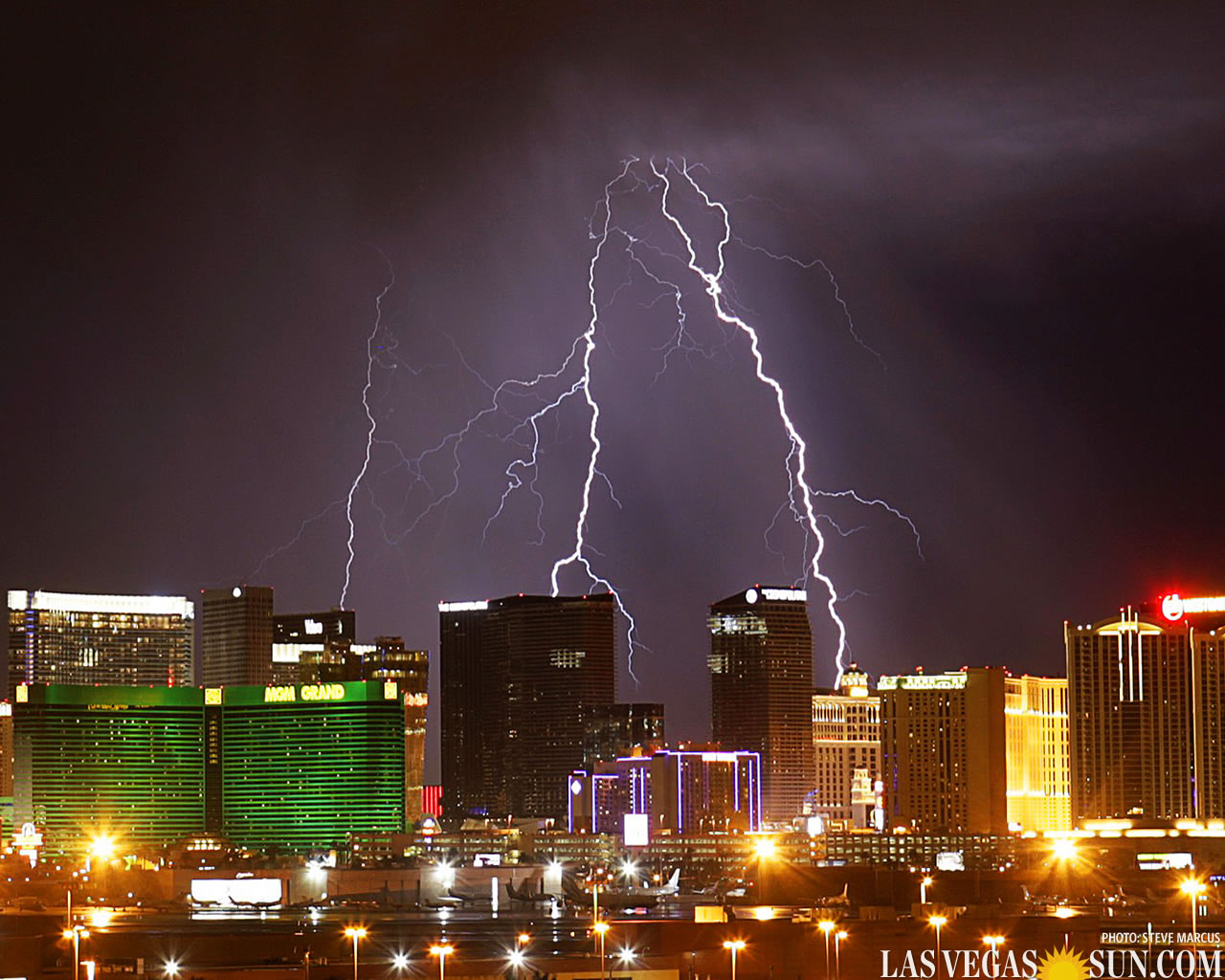
- Flash Floods: When it rains in Vegas, it doesn't just drizzle. It dumps. The ground is like concrete; it doesn't soak up water. Instead, the water rushes into "washes" (canals). Never, ever go near a wash during a storm. People have died being swept away in flash floods that started miles away in the mountains while it was perfectly sunny on the Strip.
August is the grind. It’s the month where locals stop going outside. We go from the air-conditioned house to the air-conditioned car to the air-conditioned office. If you're visiting now, stay in the pool. Seriously. Just stay in the water.
The Autumn Reset (September through November)
September is a lie.
People think Labor Day means fall. In Vegas, September is just "Summer Part 2." You will still see 100-degree days well into the middle of the month. It’s exhausting. You’re ready for hoodies, but the sun is still trying to melt your shoes.
October is the true hero. The "October Surprise" in Vegas is how quickly the temperature drops. One day it’s 95, and the next it’s a perfect 78. This is the best time for outdoor dining. The evenings are cool enough for a light jacket, but the days are still warm enough for a t-shirt.
By November, the transition to winter is complete. The high drops to about 66°F. The crowds thin out a bit. The desert colors in the surrounding mountains start to look sharper in the thin, dry air. It’s a quiet, beautiful time to be in the valley.
What Most People Get Wrong About Humidity
"It's a dry heat."
Everyone says it. And yeah, it’s true—100 degrees in Vegas feels better than 90 degrees in Orlando. But dry heat is sneaky. In high humidity, you sweat and it stays on your skin, so you know you're hot. In Vegas, your sweat evaporates instantly. You don't feel "sweaty," so you don't realize how much water you're losing.
Dehydration is the #1 reason tourists end up in the ER. You need to drink twice as much water as you think you do. If you’re drinking alcohol, make it three times. The Southern Nevada Health District constantly puts out warnings about this because the "dryness" masks the danger. Your skin will feel like parchment paper. Your nose might even bleed. It’s just the desert doing its thing.
Practical Steps for Dealing with Vegas Weather
Don't just look at the high temperature and call it a day. If you want to survive and actually enjoy the weather Las Vegas NV monthly swings, you need a strategy.
1. The Layering Rule
Regardless of the month, bring a light hoodie or denim jacket. The casinos keep their AC at "Arctic Tundra" levels. Going from 110°F outside to a 68°F casino floor is a shock to the system that can actually make you feel sick.
2. Watch the UV Index
The sun is stronger here because of the elevation and the lack of cloud cover. You can get a brutal sunburn in 15 minutes in June. Use SPF 50, and don't forget your scalp and the tops of your feet if you're wearing sandals.
3. Timing Your Activity
If you want to hike or do anything active during the months of May through September, you have to start at dawn. If you aren't off the trail by 10:00 AM, you’re asking for trouble. Locals hit the trails at 5:30 AM for a reason.
4. Check the "Wind Chill" (Even in Summer)
In the winter, a 50-degree day with a 20 mph wind feels like 35 degrees. In the summer, a hot wind feels like a giant hair dryer blowing in your face. It actually dehydrates you faster. If the wind is kicking up, move indoors.
5. Altitude Matters
If the heat is too much, drive 45 minutes to Mount Charleston. It is consistently 20 to 30 degrees cooler than the Strip. In the winter, you can go from looking at palm trees to skiing in under an hour. It’s the ultimate Vegas weather escape hatch.
The desert isn't trying to kill you, but it isn't trying to help you either. It's an extreme environment that requires a bit of respect. Whether you're chasing the 80-degree perfection of April or braving the 110-degree furnace of July, just remember that the "average" temperature is only half the story. The real Vegas experience is in the shifts, the shadows, and that first blast of AC when you walk through the casino doors.