Star Trek: The Next Generation had a rough start. We all know that. By the time the second season rolled around in 1989, the writers were still throwing spaghetti at the wall to see what stuck. Sometimes they hit gold. Other times, they produced Up the Long Ladder. Honestly, if you mention this episode to a group of Trek purists today, you’ll probably get a mix of eye-rolls and genuine historical curiosity. It’s a strange, clunky, and deeply problematic hour of television that somehow manages to tackle high-concept sci-fi themes like cloning and genetic drift while leaning into some of the most baffling Irish stereotypes ever broadcast on prime-time TV.
It’s a mess. But it’s a fascinating mess.
The plot kicks off when the Enterprise receives an old-style distress signal from the Fringer system. They find two lost colonies of Earth, both of which left during the "European Hegemony" period of the 22nd century. One group, the Bringloidi, are basically space-peasants living in a pre-industrial agrarian society. The other, the Mariposans, are a society of high-tech clones who have lost the ability to reproduce naturally. To survive, they need to merge.
The Bringloidi Problem and the Stereotype Trap
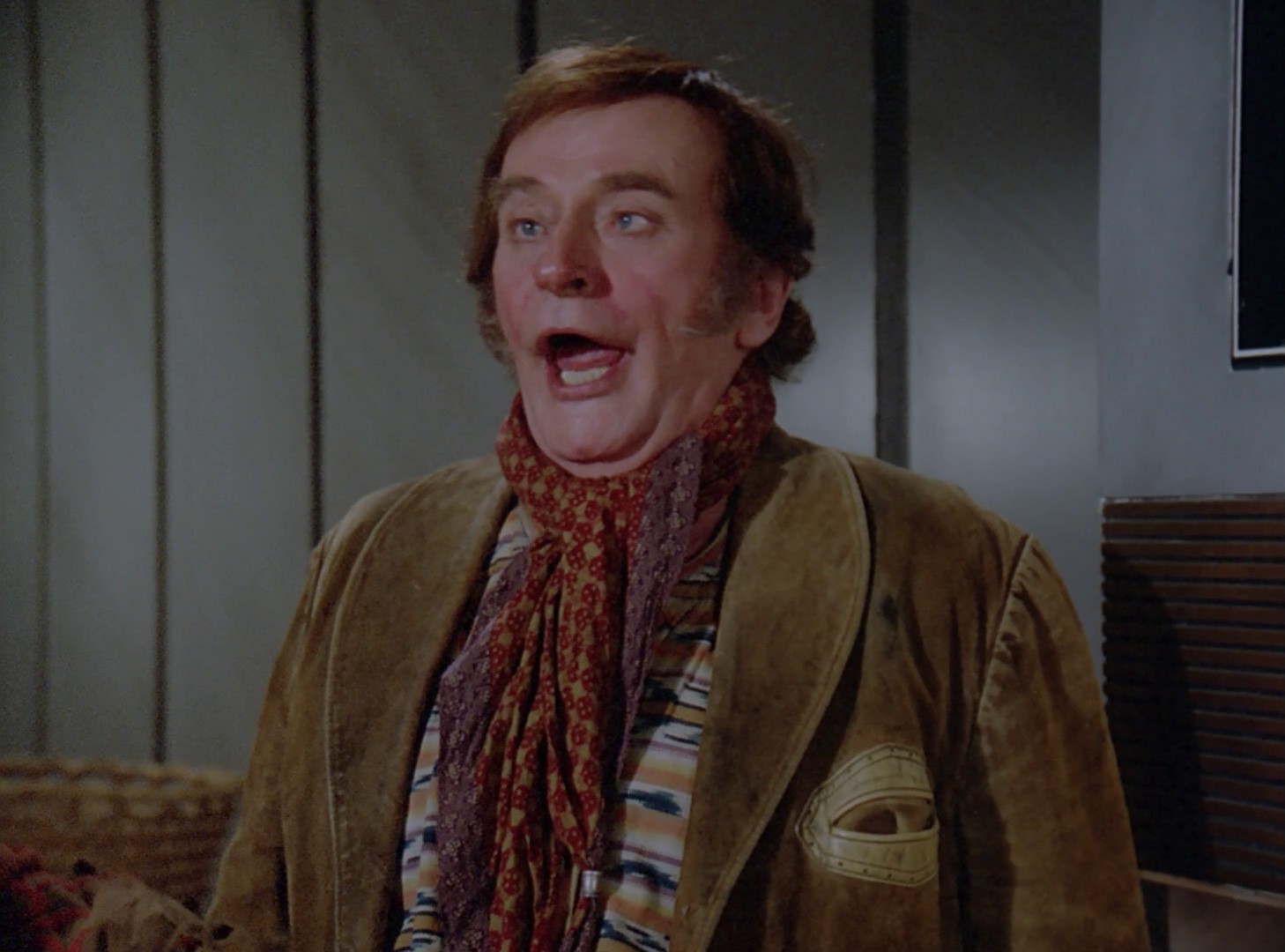
When the Enterprise rescues the Bringloidi from their doomed planet, the cargo bay is suddenly filled with hay, chickens, and people wearing wool vests carrying jugs of "distilled spirits." It's a lot. The leader, Danilo Odell, played by Barrie Ingham, is every "jolly Irishman" trope rolled into one character. He’s loud, he’s drinking, and he’s constantly hitting on the crew.
The controversy surrounding Up the Long Ladder isn’t just modern "woke" revisionism. Even back in 1989, people noticed. The episode was written by Melinda Snodgrass, who has since been quite vocal about how the script changed from her original vision. Snodgrass actually intended the episode to be a commentary on the anti-immigration sentiments prevalent in the 1980s. She wanted to show a sophisticated society (the Mariposans) being forced to accept "undesirables" (the Bringloidi) to survive.
However, the execution leaned so hard into the caricature of the Irish that it overshadowed the message. Think about it. We’re in the 24th century. We have warp drives and replicators. Yet, these people are characterized almost entirely by their love of booze and their simple, "earthy" ways. It feels out of place even for TNG's early, often-shaky world-building.
Cloning, Replicative Fading, and 80s Ethics
The other half of the story is where the actual "science" of science fiction tries to happen. The Mariposans are dying out. Because they’ve been cloning themselves for centuries from a small initial pool of five survivors, they are suffering from replicative fading.
In the real world, we talk about "genetic drift" or the "founder effect." If you have a tiny breeding population, harmful mutations pile up. In the episode, the Mariposans have solved the breeding part by just making copies of copies. But as any 90s kid who used a Xerox machine knows, a copy of a copy of a copy eventually turns into a blurry mess.
Why the Mariposans Failed
- Lack of Genetic Diversity: They relied on five original DNA sequences.
- Biological Stagnation: By removing the "messiness" of sexual reproduction, they removed the ability to adapt.
- The Ethics of Consent: This is the darkest part of the episode. When the Mariposans realize the Enterprise crew won't volunteer their DNA, they literally kidnap Riker and Pulaski to forcibly take tissue samples.
Riker’s reaction to finding his clone is... intense. He vaporizes it with a phaser. No trial. No debate. Just straight-up "get that thing away from me." It’s one of the few times we see Commander Riker genuinely lose his cool, and it highlights the Federation’s strict stance against cloning—a theme that would later be explored more deeply in Deep Space Nine and Star Trek: Picard.
Behind the Scenes: What Really Happened
Melinda Snodgrass was a lawyer before she was a screenwriter, and you can see that in her work. She’s the same writer who gave us the legendary "The Measure of a Man." So, why is Up the Long Ladder so tonally inconsistent?
Production on Season 2 was famously chaotic. There was a writer's strike, and the show was burning through scripts. Director Winrich Kolbe had to balance a story that was part broad comedy and part ethical thriller. The "Bringloidi" were named after the Welsh word brynglo, meaning "coal hill," but they were played as Irish because that was the shorthand for "rural and boisterous" in Hollywood at the time.
The episode also features a B-plot with Worf dealing with a "fainting" fit, which turns out to be Klingon measles (Klingon name: rok'aret). It’s a weirdly lighthearted way to handle a Klingon medical emergency, involving Dr. Pulaski performing a blood-bonding ritual to save Worf's dignity. It’s okay, but it adds to the cluttered feel of the hour.
Why Up the Long Ladder Still Matters Today
Despite its flaws, the episode is a time capsule. It shows Star Trek grappling with the "Post-Atomic Horror" history of Earth. We get a glimpse into how humans fled Earth during its darkest times. Some fled to the stars to build high-tech utopias; others just wanted to keep their sheep and their whiskey.
It also forces a conversation about bodily autonomy. When the Mariposans steal Riker’s DNA, they argue that their survival as a species outweighs his right to his own genetic material. Picard’s refusal to allow this is a core "Starfleet" moment. The solution—forcing the two groups to intermarry and have "three parents" to maximize genetic diversity—is classic Trek. It’s a bit forced, and the "shipping" of characters at the end is rushed, but it lands on the theme of "strength through diversity."
Actionable Insights for the Trek Fan
If you're revisiting this episode or introducing someone to TNG, don't skip it. Use it as a teaching moment. Here is how to actually digest this piece of TV history:
1. Contextualize the Stereotypes
Recognize that the Bringloidi are a product of 1980s television tropes. Compare this to later Trek depictions of cultures, like the Bajorans, who are far more nuanced. It’s a great example of how much the franchise's writing evolved.
2. Look at the Science of Cloning
Read up on the Founder Effect. The Mariposan dilemma is a real biological concept. If you’re interested in the ethics of genetics, this episode pairs perfectly with the Deep Space Nine episode "Statistical Probabilities" or the Strange New Worlds episode "Ad Astra per Aspera."
3. Watch the Character Dynamics
This is a peak Dr. Pulaski episode. Love her or hate her, she drives the plot here. Her willingness to engage with the Bringloidi and her firm stance on the Mariposan ethics show her as a formidable CMO who wasn't just a "Crusher clone."
4. Trace the "European Hegemony" Lore
For the lore nerds, this episode provides a rare name-drop of the European Hegemony, one of the precursor governments to the United Earth. It helps map out the messy timeline between our present and the birth of the Federation.
Up the Long Ladder isn’t anyone’s favorite episode. It’s not "The Inner Light" or "The Best of Both Worlds." But it is a weird, clunky reminder that even in the future, we’re still trying to figure out how to live with people who are different from us. It’s clumsy, sure. But its heart—the idea that we need each other’s "differences" to survive—is pure Star Trek. Just ignore the jugs of space-moonshine if you can.