Grasslands are often dismissed as the flyover country of the natural world. You've probably looked out a plane window at the vast, beige stretches of the Great Plains or the Mongolian Steppe and thought, "Yeah, that's a lot of nothing." But that's where you're wrong. These biomes are actually some of the most complex, high-stakes environments on Earth. They aren't just "fields." They are biological battlegrounds where the soil holds more secrets than the canopy of a rainforest.
Honestly, the term "temperate" is a bit of a lie. It implies something mild or middle-of-the-road. In reality, unique facts about temperate grasslands usually involve extremes that would kill most other plant life. We're talking about places where it can be 100°F in July and -40°F in January. There is no middle ground here.
The Upside-Down Forest
If you want to understand these places, you have to stop looking at the grass and start thinking about what’s underneath. Think of a temperate grassland as an upside-down forest. In a tropical rainforest, the majority of the biomass—the actual "living stuff"—is visible. It’s in the trees, the vines, and the leaves.
In the prairie, it’s the opposite.
Nearly 80% of a grass plant's biomass is hidden underground. These aren't just little weed roots. Species like the Big Bluestem (Andropogon gerardii) can send roots down ten feet into the earth. It’s a massive, tangled network of carbon storage. This is why the soil in places like the American Midwest or the Ukrainian Steppe is so famously dark and fertile. It’s literally thousands of years of decomposed "underground forest."
Fire is the heartbeat of this system. Without it, the grassland dies. People often get scared when they see a prairie fire, but for the grass, it’s a spa day. Because the growing points of the plants are tucked safely underground, the fire clears out the "thatch" (the dead stuff) and returns nutrients to the soil instantly. It also kills off invasive trees that try to sneak in. If you stop the fires, the grassland eventually turns into a scrubby forest, and the specialized ecosystem vanishes.
Why They Are the Most Endangered Biome
When we talk about conservation, everyone points to the Amazon. That makes sense; it's iconic. But if we’re looking at what’s actually at the highest risk of disappearing, it’s the temperate grassland.
It’s a victim of its own success.
Because the soil is so incredibly nutrient-dense, humans have plowed almost all of it up. In North America, less than 1% of the original tallgrass prairie remains. Let that sink in. It’s effectively a functional extinction of a landscape. When you drive through Iowa or Kansas, you aren't looking at a natural ecosystem; you're looking at a massive, monocultural outdoor factory for corn and soy.
The biodiversity loss is staggering. Animals like the Black-footed Ferret or the Greater Prairie-Chicken are hanging on by a thread because their specific "neighborhoods" have been turned into grid-patterned farmland.
The Grazing Paradox
There is a weird, counterintuitive fact about these regions: they actually need big animals eating them to stay healthy. This is known as the "grazing pulse."
- In North America, it was the Bison.
- In the Eurasian Steppe, it was the Saiga antelope.
- In the Pampas of South America, it’s the Guanaco.
When these animals graze, they don't just eat; they disturb the soil with their hooves, which helps seeds germinate. Their waste is a natural fertilizer injection. Modern regenerative agriculture experts, like Allan Savory, have argued for years that we can actually reverse desertification by mimicking these ancient migration patterns with livestock. It's a controversial take in some circles, but the data often shows that "rest" is actually bad for a grassland. It needs the chaos of the herd.
The Weather Is Actively Trying to Kill Everything
Let’s talk about the wind. Because there are no trees to break the flow, the wind in temperate grasslands is relentless. It shapes everything. It’s why you don’t see many tall, delicate plants. Everything is flexible. Everything bends.
The "Rain Shadow Effect" is the primary reason these places exist. Most temperate grasslands sit in the middle of continents, shielded by massive mountain ranges. As moist air from the ocean hits mountains (like the Rockies or the Andes), it’s forced upward, cools, and drops all its rain on the windward side. By the time the air gets over the top, it’s bone-dry.
This creates a semi-arid environment. It's enough water for grass, but not enough for a forest. It’s a delicate, precarious balance. If the rainfall drops just a few inches over a decade, you get a Dust Bowl. If it increases, the trees start to win.
Unique Facts About Temperate Grasslands and Carbon
Everyone talks about planting trees to save the planet. It’s a great sentiment, but in a warming world, grasslands might actually be a more reliable carbon sink than forests.
Why? Because of where they store the carbon.
When a forest burns—and with climate change, they are burning more often—all that carbon stored in the wood and leaves is belched back into the atmosphere immediately. But when a grassland burns, the carbon stays in the roots. It’s locked in the soil. It doesn't go anywhere. According to research from the University of California, Davis, grasslands are more resilient carbon sinks than forests in 21st-century conditions because they aren't as vulnerable to wildfires and droughts.
The Secret Language of the Steppe
The sheer scale of these places has shaped human history in ways we rarely credit. The Eurasian Steppe—a massive belt of grassland stretching from Hungary to China—was the "superhighway" of the ancient world.
It allowed the Mongols to create the largest contiguous land empire in history. Their entire culture was a biological byproduct of the grassland. They had no permanent cities because the grass dictated movement. If you lived on the Steppe, your wealth was literally the grass processed through the stomachs of your horses and sheep.
In the Pampas of Argentina, you see a similar culture with the Gauchos. These aren't just "cowboys." They are people whose entire linguistics, diet (lots of beef), and social structure were forged by the flat, endless horizon of the grassland.
Misconceptions You Should Stop Believing
- "It's a desert." No. Deserts get less than 10 inches of rain. Grasslands usually get between 10 and 35 inches. It's a "goldilocks" zone.
- "There's no water." There's actually a ton of water; it’s just underground. The Ogallala Aquifer sits beneath the Great Plains and is one of the largest underground water sources in the world.
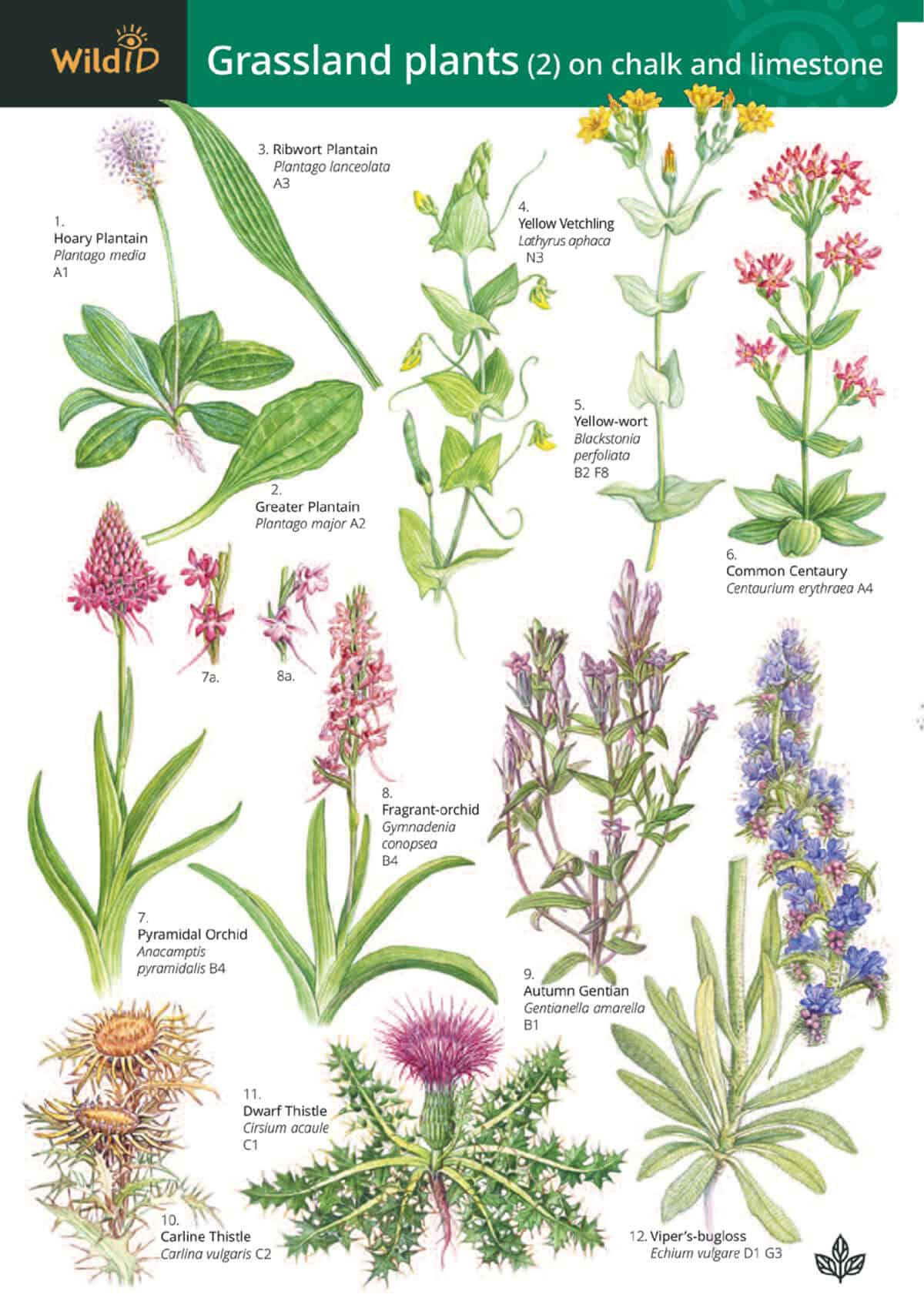
- "Grass is just grass." A single acre of virgin tallgrass prairie can contain over 200 species of wildflowers and grasses. It’s as diverse as a coral reef, just harder to see at 60 mph.
Actionable Steps for the Conscious Traveler or Environmentalist
If you're actually interested in seeing what a real, unplowed temperate grassland looks like, you have to be intentional. You can't just drive through the Midwest and think you've seen it.
Visit a Remnant Prairie
Check out the Tallgrass Prairie National Preserve in Kansas. It’s one of the few places where the ground has never been turned by a plow. You can feel the difference in the soil; it’s springy, almost like walking on a thick sponge.
Support Grass-Fed Systems
If you eat meat, look for "100% grass-fed and grass-finished." This supports ranching operations that keep the sod in the ground rather than tilling it up for corn feed. Tilling is the number one enemy of grassland health because it releases all that stored carbon and kills the fungal networks in the soil.
Plant Native "Keystone" Species
Even if you only have a backyard, you can help. Replace a patch of your lawn (which is a biological desert) with native grasses like Little Bluestem or Sideoats Grama. These plants have deep roots that help with local water filtration and provide "fuel" for native pollinators that are specifically evolved to live in these grassy corridors.
Advocate for Sodsaver Programs
Support legislation that provides incentives for farmers to keep original prairie intact. Once the "native sod" is broken, it takes centuries to regain its original complexity. We have to protect the patches that are left before they become another parking lot or a field of silage.
The temperate grassland is a landscape of subtlety. It doesn't scream for your attention like a mountain peak or a crashing wave. It whispers. But once you learn to hear it—once you realize that the real "forest" is beneath your boots—you’ll never look at a field of grass the same way again. It’s not empty space. It’s a massive, living machine that keeps our planet’s atmosphere in check.