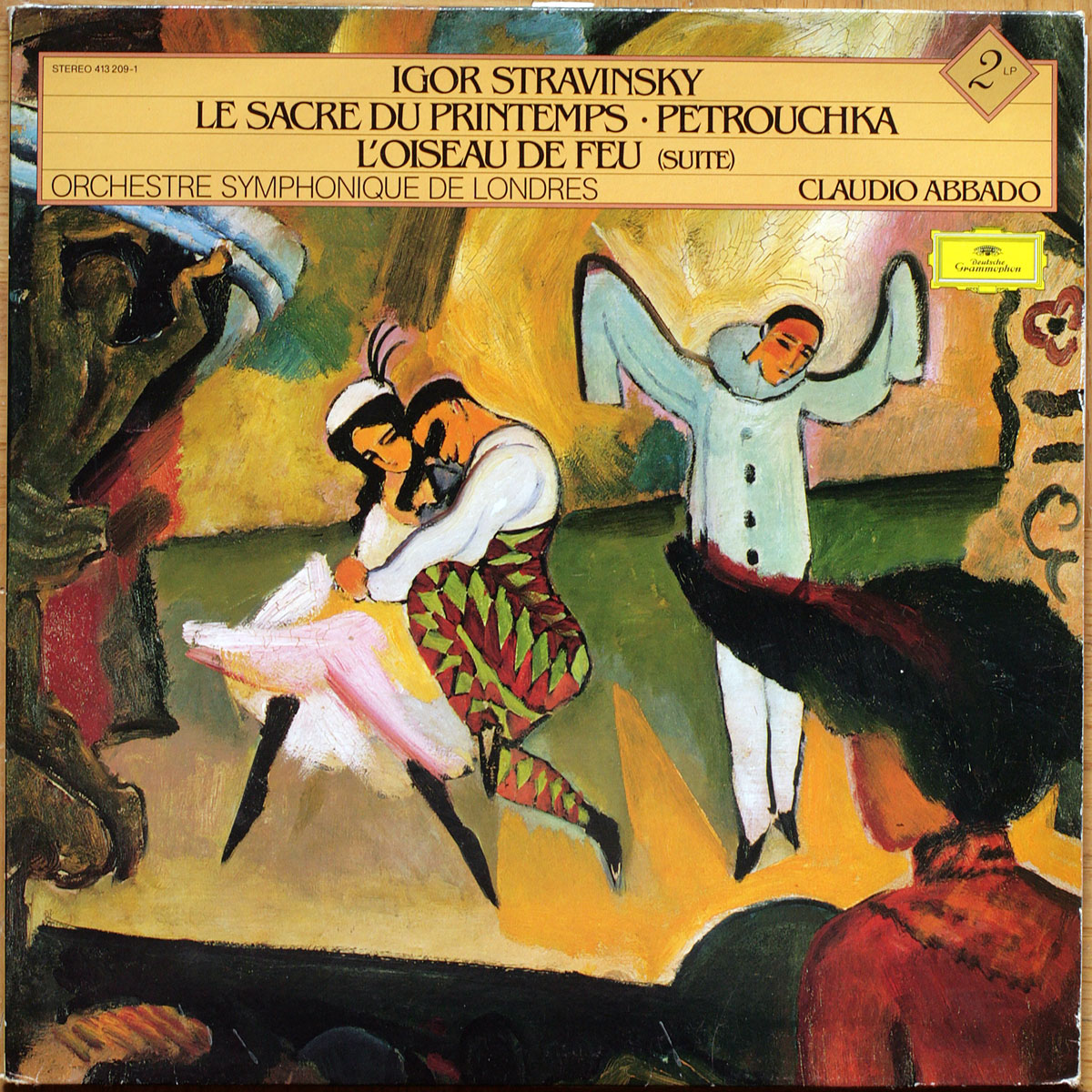
Imagine sitting in a plush velvet seat in Paris. It’s May 29, 1913. You’re at the Théâtre des Champs-Élysées. The lights go down, the curtain rises, and suddenly, you hear a bassoon. But it doesn't sound like a bassoon. It’s screeching at the very top of its register, sounding more like a strained human reed than a woodwind instrument.
Within minutes, the audience is screaming. Not cheering—screaming. People are punching each other in the face. Someone is reportedly challenged to a duel. The police are called. This wasn't a political protest or a bread riot. It was a ballet. Specifically, it was the premiere of Rite of Spring Stravinsky, a piece of music that effectively broke the brain of the 20th century.
Honestly, we talk about "disruption" in tech all the time, but Igor Stravinsky did it first, and he did it with a conductor’s baton and some really weird rhythms.
The Night the Music Died (and Was Reborn)
Most people think the "riot" at the premiere of Le Sacre du printemps (The Rite of Spring) was just about the music. It wasn't. It was a perfect storm of weirdness. You had Vaslav Nijinsky’s choreography, which featured dancers knocking their knees together and stamping their feet like uncoordinated toddlers. You had Nicholas Roerich’s costumes, which looked like burlap sacks from a pagan fever dream. And then, you had the sound.
Stravinsky didn't just write a "loud" piece. He wrote a piece that felt like a physical assault.
The "Augurs of Spring" section is basically one giant, pounding dissonance. He took two different chords—an E-major triad and an E-flat dominant seventh—and smashed them together. In music theory, we call this bitonality. In 1913 Paris, they called it "an insult to the ears."
The rhythm is what really did people in. Usually, classical music has a "pulse" you can tap your foot to. Stravinsky took that pulse and put it through a meat grinder. He used asymmetrical meters and accents that shifted every few seconds. You can’t tap your foot to it because the "downbeat" keeps moving. It feels unstable. Dangerous.
Why Was Everyone So Angry?
It’s hard for us to understand the rage today. We’ve heard heavy metal and experimental jazz. But back then, music was supposed to be beautiful. It was supposed to follow rules. Stravinsky basically walked into the Louvre and started spray-painting the Mona Lisa.
The audience was split. The "old guard" felt the tradition of Mozart and Beethoven was being desecrated. The "young radicals" loved the chaos.
Carl Van Vechten, a critic who was actually there, described a young man standing behind him who was so caught up in the excitement that he started beating rhythmically on Van Vechten's head with his fists. People weren't just listening; they were reacting with their whole bodies.
Pierre Monteux, the conductor, just kept going. He later said that the noise from the crowd was so loud he couldn't hear the orchestra. He just stared at the score and kept waving his arms, hoping the musicians were still with him.
The Pagan Reality of the Rite of Spring Stravinsky
Beyond the riot, the actual story of the ballet is pretty dark. Stravinsky had a "vision" while finishing The Firebird. He saw a young girl dancing herself to death in a sacrificial ritual to welcome the god of Spring.
It’s not a "flower-blooming-and-birds-chirping" kind of spring. It’s a "the-earth-is-frozen-and-we-need-to-kill-someone-so-the-crops-grow" kind of spring.
Roerich, who was an expert on ancient Slavic tribes, helped create the aesthetic. It was "primitive." At a time when Europe was peak "civilized," showing a bunch of pagans killing a virgin was a massive middle finger to polite society.
The Technical Wizardry (That We Still Use)
If you’re a fan of film scores, you’ve heard Rite of Spring Stravinsky a thousand times. John Williams? He’s basically Stravinsky’s biggest fan. Listen to the "Desert Chase" in Star Wars or parts of Jaws. That grinding, rhythmic drive is straight out of the Stravinsky playbook.
Here is what makes the composition objectively brilliant:
- Instrumentation: He used a massive orchestra. Five flutes, five oboes, five clarinets, eight horns, five trumpets... it was huge. He used them in ways nobody had before, like that opening bassoon solo.
- Ostinato: This is just a fancy word for a repeating pattern. Stravinsky uses these like a DJ uses a loop. He stacks different loops on top of each other until the sound is incredibly dense.
- Folk Melodies: Believe it or not, most of the "weird" tunes are actually old Lithuanian and Russian folk songs. He just distorted them, slowed them down, or sped them up until they were unrecognizable.
Interestingly, Stravinsky later tried to downplay the "meaning" of the music. He went through a "Neo-classical" phase and started claiming that music shouldn't express anything at all—that it was just notes. But nobody really believed him. You can’t write something as visceral as The Rite and then say, "Oh, it's just an exercise in counterpoint."
Common Misconceptions About the Riot
We love a good story, so the "riot" has become legendary. However, some historians, like Richard Taruskin, have pointed out that the audience might have been "primed" for a fight.
The Ballets Russes, led by Sergei Diaghilev, was known for being provocative. Some think Diaghilev actually encouraged the shouting to get free publicity. It worked. The next day, every paper in Paris was talking about it.
Also, it’s a myth that the music was hated by everyone. By the second or third performance, the audience was much calmer. Within a year, when it was performed as a concert piece without the "ugly" dancing, it was a massive hit. Stravinsky was carried out of the hall on people’s shoulders.
Talk about a vibe shift.
The Legacy: Why It Still Feels Fresh
You can listen to The Rite today and it still feels edgy. It hasn't "aged" into a museum piece.
When Walt Disney used it for the "evolution" segment of Fantasia in 1940, it introduced a whole generation of kids to avant-garde music. Apparently, Stravinsky hated the Fantasia arrangement (and the fact that Disney didn't pay him much), but it cemented the music's place in the cultural zeitgeist.
It remains the ultimate "test" for conductors and orchestras. If you can play Rite of Spring Stravinsky without the whole thing falling apart, you’ve made it. The complexity of the time signatures—shifting from 3/16 to 2/16 to 3/16—is a nightmare for even the best percussionists.
How to Actually Listen to It (Without Getting a Headache)
If you're new to the piece, don't try to follow a melody. There isn't really one "hook" like in a pop song.
Instead, listen to the textures. Think of it like an abstract painting. You aren't looking for a "tree"; you're looking at the way the colors clash.
Focus on the "Sacrificial Dance" at the very end. It’s the musical equivalent of a car crash in slow motion. It’s frantic, jagged, and terrifying. When the music finally stops on that last, sharp upward scale, it feels like a gasp for air.
Actionable Insights for Music Lovers
If this makes you want to explore the "wild side" of classical music, don't stop here. The Rite of Spring Stravinsky is just the gateway drug.
- Watch the 1987 Joffrey Ballet reconstruction. They spent years trying to recreate Nijinsky’s original, weird choreography. It’s on YouTube. It helps you understand why the 1913 audience lost their minds—it looks nothing like "Swan Lake."
- Compare recordings. Listen to Leonard Bernstein’s version with the New York Philharmonic (it’s legendary for its raw energy) and then listen to a more modern, precise recording like Esa-Pekka Salonen’s. You'll hear totally different things.
- Look for the "Easter Eggs." Try to spot the folk tunes. There’s a great book by Pieter van den Toorn called Stravinsky and The Rite of Spring that breaks down exactly where those melodies came from if you're a total music nerd.
- Listen in the dark. This isn't background music for studying or doing dishes. Turn off the lights, put on some good headphones, and let the sheer volume of the "Glorification of the Chosen One" hit you. It’s meant to be an experience, not just a song.
The Rite of Spring didn't just change music; it changed what we consider "art." it proved that art doesn't have to be pretty to be true. Sometimes, it needs to be loud, ugly, and a little bit violent to wake us up.