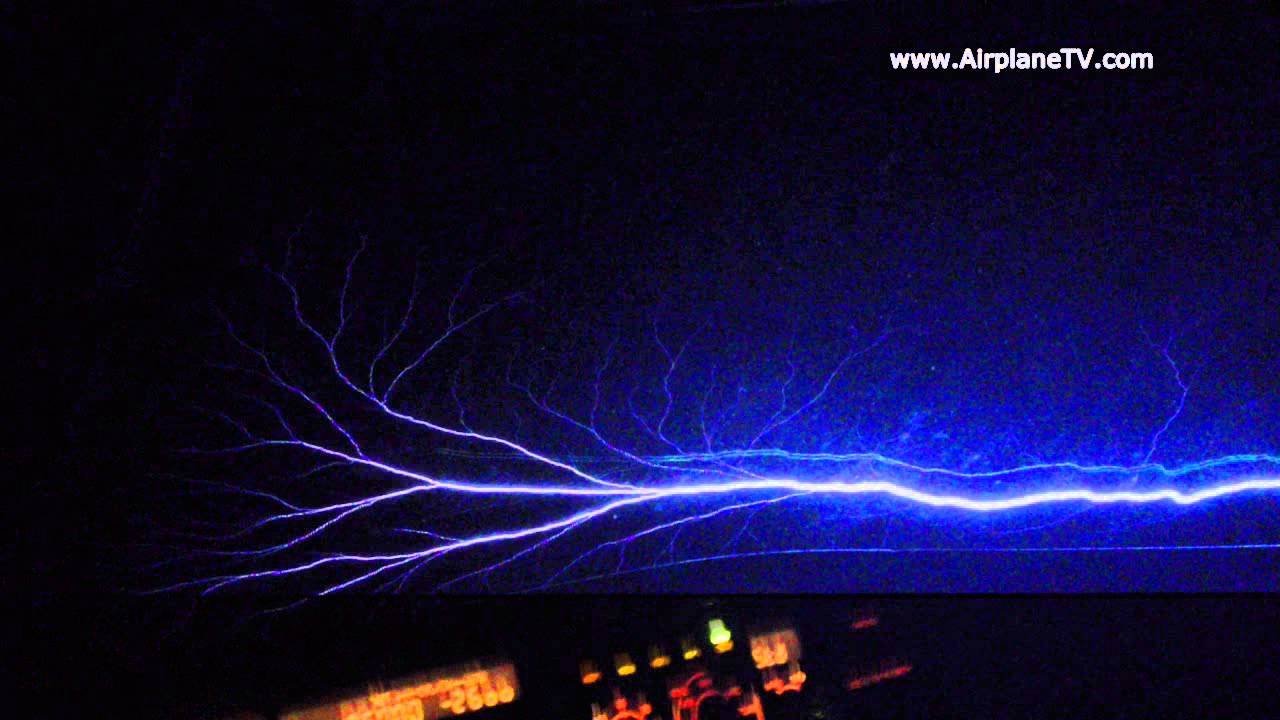
Imagine you are on a wooden ship in the middle of the Atlantic during the 1700s. The sky is a bruised purple, almost black. Thunder rolls in the distance. Suddenly, the tips of your masts start to glow with a ghostly, flickering blue light. It looks like spirit-fire dancing on the wood, but it doesn't burn. It doesn't consume the ship. It just sits there, hissing and humming like a swarm of angry bees.
That is the st elmo's fire meaning in its rawest, most terrifying form.
For centuries, sailors saw this and thought they were witnessing a miracle or a curse. It’s one of the most hauntingly beautiful phenomena in nature, yet it’s basically just physics doing something weird. Honestly, if you saw a glowing blue aura surrounding your airplane wing today, you’d probably freak out too. But back then? It was a sign from the heavens.
What is St Elmo's Fire, Really?
Basically, it's a weather phenomenon. People often mistake it for lightning, but it’s not. Not exactly. Lightning is a massive discharge of electricity that moves from point A to point B. St. Elmo’s Fire is more like a slow leak.
Scientifically, we call it a corona discharge.
When a strong electrical field—usually from a brewing thunderstorm—builds up in the atmosphere, the air around pointed objects like masts, church steeples, or even a hiker's ice axe becomes ionized. The air literally turns into plasma. This plasma glows blue or violet because of the specific mix of nitrogen and oxygen in our atmosphere. If we lived on a planet with a different gas mix, the fire might look neon green or hot pink.
It’s the same tech that makes a neon sign glow in a bar window. You’ve got a gas, you’ve got electricity, and you’ve got a glow.
Why the Name St. Elmo?
The name comes from St. Erasmus of Formia, whom people eventually started calling St. Elmo. He was the patron saint of sailors. According to legend, he once continued preaching even after a thunderbolt struck the ground right next to him. Sailors started seeing these blue glows during storms and figured Erasmus was looking out for them.
To a tired, terrified sailor, the glow meant the worst of the storm was over. It was a "good" sign. It meant the saint was protecting the vessel. Of course, the reality is a bit more nuanced. While the glow itself won't burn your ship down, it only appears when the air is super-charged with electricity. That means a lightning strike is actually more likely to happen nearby. It’s kinda like a warning light on a car dashboard. It’s not the problem itself, but it tells you the problem is coming.
The Science of the Blue Glow
To understand the st elmo's fire meaning from a technical perspective, we have to talk about "point discharge."
Electricity loves a sharp point.
If you have a big, flat surface, the electrical charge spreads out. But if you have a sharp needle or a masthead, the electrons crowd together at the tip. They get so cramped and energetic that they start knocking electrons off the air molecules around them. This creates that plasma state.
- The storm cloud creates a high voltage difference between the ground and the sky.
- Sharp objects on the ground (or sea) concentrate this electrical field.
- The air molecules "break down" and emit light.
It usually happens at the very end of a storm or right before a massive downpour.
Interestingly, it isn't hot. You could, in theory, touch it, though I wouldn't recommend it because you're basically standing on a giant lightning rod during a thunderstorm. Ben Franklin, the guy who loved flying kites in rainstorms, actually studied this. He called it "the fire of St. Helmes" and realized it was just the "fluid" of electricity escaping into the air.
Historic Accounts and Famous Sightings
Christopher Columbus saw it. In his journals, he noted "fire" on the masts of the Santa Maria. He and his crew were probably terrified, but they also took it as a divine omen that they would survive the crossing.
Charles Darwin saw it too. While he was on the HMS Beagle, he wrote about the ship being "luminous" and the masts looking like they were tipped with "brushes of light." Darwin, being Darwin, wasn't looking for saints; he was just fascinated by the sheer scale of the electrical display. He noted that everything in the sky seemed to be on fire, but nothing was actually burning.
Even during World War II, pilots saw it. They called it "foo fighters" sometimes (though that term covered a lot of weird aerial stuff), but often it was just St. Elmo's Fire dancing on the nose of the plane or the propellers. Imagine flying a B-17 through a cloud bank and suddenly your propellers turn into spinning halos of blue light. It’s enough to make even the toughest pilot swear off coffee.
The Great Misconception: Is it Ball Lightning?
People get these two confused all the time. They aren't the same.
Ball lightning is a rare, floating sphere of light that can drift through a room or explode. We still don't fully understand ball lightning. St. Elmo’s Fire, however, is stationary. It stays attached to an object. It hisses. It stays put as long as the electrical field is strong enough. If you see a glowing ball floating across your kitchen, that's not St. Elmo. That's something much weirder.
How Modern Travelers Experience It
You’re most likely to see this today if you’re a frequent flyer.
Commercial jets often fly near or through "convective activity"—big, angry storm clouds. Because airplanes are giant metal tubes flying at 500 mph, they build up a lot of static. When they fly through an area with a high electrical potential, the "st elmo's fire meaning" changes from a sailor's miracle to a pilot's Tuesday afternoon.
It usually shows up on the windshield. It looks like blue veins of lightning branching out across the glass. It’s beautiful, honestly. Pilots use it as a cue to get the heck out of that specific patch of air because it indicates "ice crystals" are nearby, which can mess with the engines.
Mountain climbers see it too.
There are stories of hikers on the Appalachian Trail or in the Alps where their hair starts standing on end. Then, their trekking poles start to hum. If it’s dark enough, the tips of the poles will start to glow. If this ever happens to you, run. Or rather, get low. It means the ground is primed for a massive lightning strike. The "glow" is the final warning.
Cultural Impact: From Religion to 80s Movies
We can't talk about this without mentioning the 1985 movie St. Elmo's Fire.
The movie has almost nothing to do with weather. It’s about a group of Georgetown grads dealing with "adulting." However, the title comes from a speech in the film about the phenomenon. They describe it as a light that sailors saw that wasn't real, but helped them keep going anyway. It’s a metaphor for the illusions we have in our twenties.
In literature, it pops up everywhere.
- Moby Dick: Herman Melville gives a whole chapter to it. Captain Ahab sees the glow on the masts and uses it to inspire (or terrify) his crew, claiming it’s a sign of his own power.
- Tintin: In Tintin in Tibet, the "fire" appears on an ice axe, adding to the eerie, mystical vibe of the mountains.
- The Rime of the Ancient Mariner: Coleridge definitely had these "death-fires" in mind when he wrote his haunting sea epic.
What to Do if You See It
If you are on a boat or a mountain and you see the blue glow, here is the reality: you are in a high-voltage zone.
- Get inside. If you're on a boat, get into the cabin.
- Drop metallic objects. If you're hiking, put your poles down and move away from them.
- Get low. Don't be the tallest thing around.
- Don't panic. It’s just plasma. It’s just the atmosphere being extra.
The phenomenon is a reminder that we live on a giant battery. The Earth is the ground, the ionosphere is the positive terminal, and sometimes, when a storm stirs the pot, we get to see the electricity "leaking" out of the world.
Actionable Insights for the Curious
If you want to witness the st elmo's fire meaning for yourself, you don't necessarily need to sail a schooner into a hurricane.
- Watch cockpit videos: Many pilots upload "St. Elmo's Fire" footage to YouTube. It’s the clearest way to see the "veining" effect on windshields.
- Static electricity experiments: You can actually replicate a tiny version of this with a Van de Graaff generator in a dark room. Bringing a pointed metal rod near the dome will produce a small, hissing corona discharge.
- High-altitude trekking: If you hike above the treeline during "monsoon season" in places like Colorado, keep an ear out for the "buzzing" or "fizzing" sound on your gear. It's the precursor to the glow.
While the ancients saw it as a ghost or a god, we see it as a spectacular display of physics. It’s a bridge between the mystical past and our scientific present. Whether you call it a corona discharge or the breath of St. Erasmus, it remains one of the most striking sights the natural world has to offer. Just remember: if your hair starts standing up and your keys start glowing, it's time to find cover.
The most important thing to remember is that St. Elmo's Fire is a warning, not a threat itself. It is a visual representation of invisible forces. By understanding the science behind the glow, you can appreciate the beauty of a storm while staying safe from its more dangerous cousin, the lightning bolt. Stay low, stay dry, and keep your eyes on the mastheads.