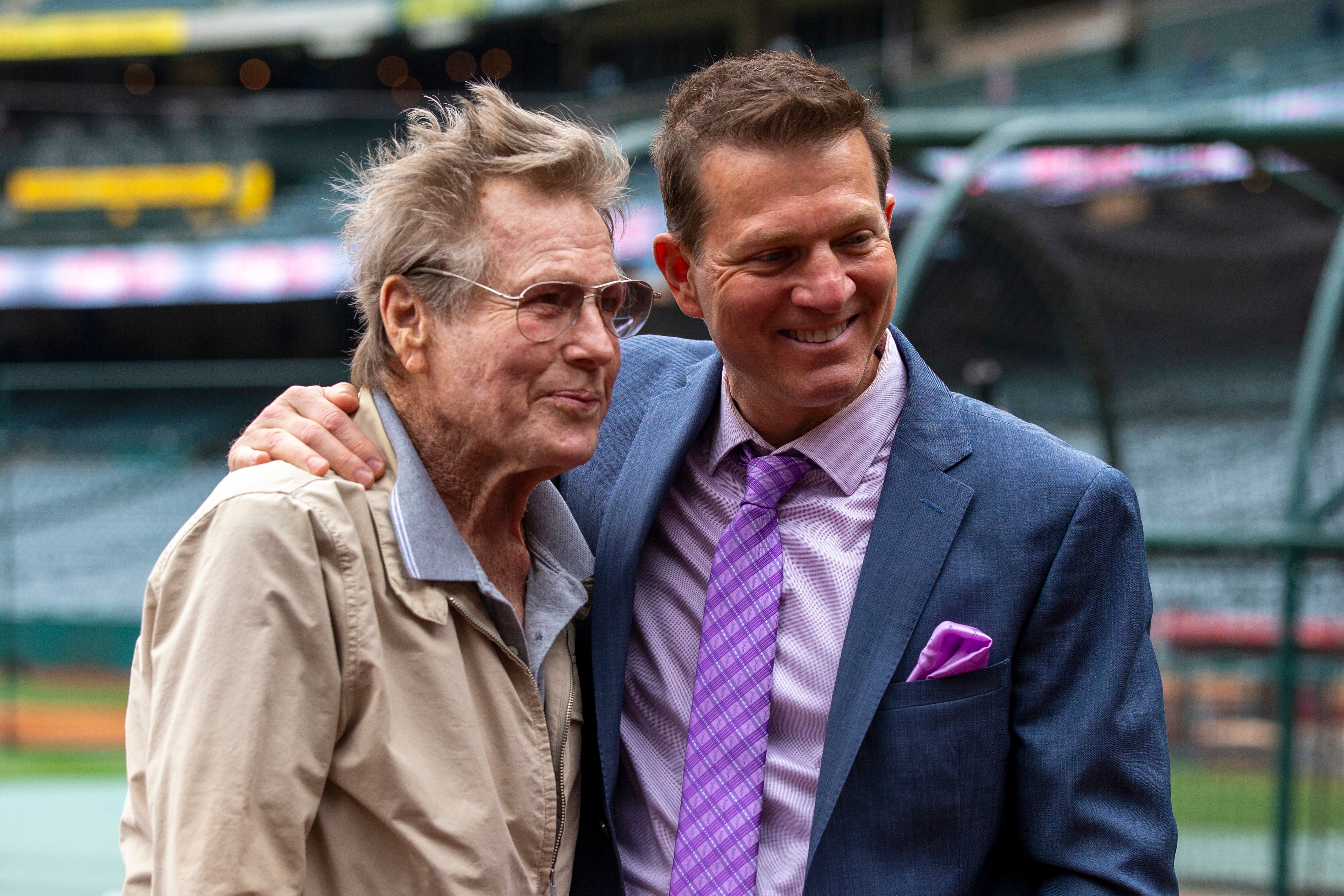
You’ve probably seen the name "Ryan" plastered all over Chicago. It’s on the football stadium at Northwestern. It’s on one of the most advanced rehabilitation hospitals in the world. It’s on academic buildings and theater programs. But who actually are Patrick and Shirley Ryan? Honestly, most people just assume they’re another pair of wealthy donors.
That is a massive understatement.
Pat Ryan didn’t just inherit a fortune; he basically invented the modern insurance brokerage industry from a card table. Shirley Ryan didn’t just write checks; she spent over thirty years running a clinic that changed how we treat children with disabilities. Together, they’ve become the ultimate power couple of the Midwest, blending ruthless business efficiency with a brand of philanthropy that is, quite frankly, obsessive about results.
The Scrapbook King Who Built Aon
Pat Ryan’s story sounds like a movie script. Born in 1937, he was the son of a Ford dealer in Milwaukee. He spent his college summers shoveling concrete on road crews. Hard work. Brutal heat.
While he was a student at Northwestern, he played football until he realized he could make more money elsewhere. He started selling personalized scrapbooks to his fellow students. It sounds like a small-time hustle, right? Wrong. He cleared $8,000 in his senior year alone. In 1959, that was a small fortune. It was enough to convince him that he didn't want a boss.
In 1964, at just 26 years old, he started Pat Ryan & Associates. His "big idea" was simple but revolutionary: sell insurance directly through car dealerships. Before Pat, if you bought a car, you had to find your own insurance later. He put the insurance guy right there in the showroom.
- 1971: He takes the company public.
- 1982: He pulls off a massive merger with W. Clement Stone’s Combined Insurance Company.
- 1987: The company is renamed Aon.
Aon became a global titan. By the time Pat retired as CEO in 2008, the company had 500 offices in 120 countries. He could have just played golf for the rest of his life. He didn't. Instead, he founded Ryan Specialty Group in 2010. By 2026, his net worth has climbed into the billions, and he’s still a dominant force in the insurance world.
Shirley Ryan and the "Ability" Revolution
While Pat was busy conquering the insurance world, Shirley Ryan was focused on a different kind of challenge. She has always been interested in what people can do, rather than what they can't. In 1985, she and Pat co-founded Pathways.org.
This wasn't just a side project. Shirley chaired the clinic for over three decades. Her mission was basically to make sure parents had the tools to spot motor and communication delays in infants as early as possible. We’re talking about an impact that reaches 50 million people a year through their digital resources.
The crown jewel of her legacy, though, is the Shirley Ryan AbilityLab.
Formerly known as the Rehabilitation Institute of Chicago (RIC), this place is incredible. It’s been ranked the #1 rehabilitation hospital in America for 35 years straight. In 2017, they opened a $550 million "translational" research hospital. This means the scientists and the doctors aren't in different buildings—they work in the same "legs and walking" or "brain" labs right alongside the patients.
It’s a weirdly beautiful concept. You have a researcher literally watching a patient use a bionic limb they just designed. That kind of feedback loop is why they’re the first to develop things like thought-controlled prosthetic arms.
The $480 Million Northwestern Connection
If you want to understand the scale of their influence, look at Northwestern University. In 2021, the Ryans made a $480 million gift. It was the largest in the school’s history.
Some people grumbled because a big chunk of it went to redeveloping Ryan Field, the football stadium. They wondered why that much money was going to sports. But look closer. The gift also funded the Ryan Institute at the Kellogg School of Management. It funded a new neuroscience institute. It funded digital health research.
The Ryans don't just give money to things they like; they give money to things they want to see win. Whether it's a Big Ten football team or a team of neuroscientists, they expect excellence.
Why Their Approach Is Different
Most billionaires give to "safe" bets. They give to big museums or established charities. The Ryans tend to bet on "disruption."
- They funded the first-ever "translational" hospital model.
- They created a "Ryan Family Chair Challenge" that matched other donors' gifts to create 25 new professorships.
- They focused on early-intervention pediatrics before it was a mainstream medical priority.
What Most People Get Wrong
A lot of folks think the Ryans are just "Chicago royalty" who live in a bubble. Honestly, they’ve stayed remarkably connected to the city's grit. Pat still talks about his days shoveling concrete. They’ve been married for over 60 years. In a world of high-profile divorces and corporate scandals, they’ve stayed strikingly quiet and scandal-free.
They’ve also faced setbacks. Pat led the charge to bring the 2016 Olympics to Chicago. He worked tirelessly on it. The city lost the bid to Rio de Janeiro. It was a massive, public defeat. But instead of retreating, he just pivoted back to business and doubled down on his work with Ryan Specialty.
Actionable Insights from the Ryan Playbook
You might not have a billion dollars, but the way Patrick and Shirley Ryan operate offers a blueprint for anyone trying to build something lasting.
Start with a Niche
Pat didn't try to be the world's biggest insurance broker on day one. He focused on car dealerships. He owned that space before moving to the next. Focus on one problem and solve it better than anyone else.
Don't Fear the Pivot
Pat retired and then immediately started a new company at age 73. Shirley transformed a traditional rehab institute into a "lab." If your current model is stale, don't be afraid to blow it up and start over.
Philanthropy is an Investment
Treat your giving like a business. Shirley didn't just want a clinic; she wanted 50 million parents to have access to data. Look for ways to scale your impact through technology and research, not just direct service.
Stay the Course
Thirty-five years at the top of the hospital rankings doesn't happen by accident. It requires a level of consistency that most people find boring. Build systems that can outlast your personal involvement.
If you’re in Chicago, take a walk through the Streeterville neighborhood or drive past the Evanston campus. You’ll see their names everywhere. But remember, those names aren't just about ego. They’re markers of a 60-year partnership that basically decided to rebuild a city's healthcare and academic infrastructure from the ground up.
To see the real-world impact of their work, you can visit the Shirley Ryan AbilityLab's website to learn about their adaptive sports programs or explore Pathways.org for free developmental milestones tools used by millions of parents worldwide.