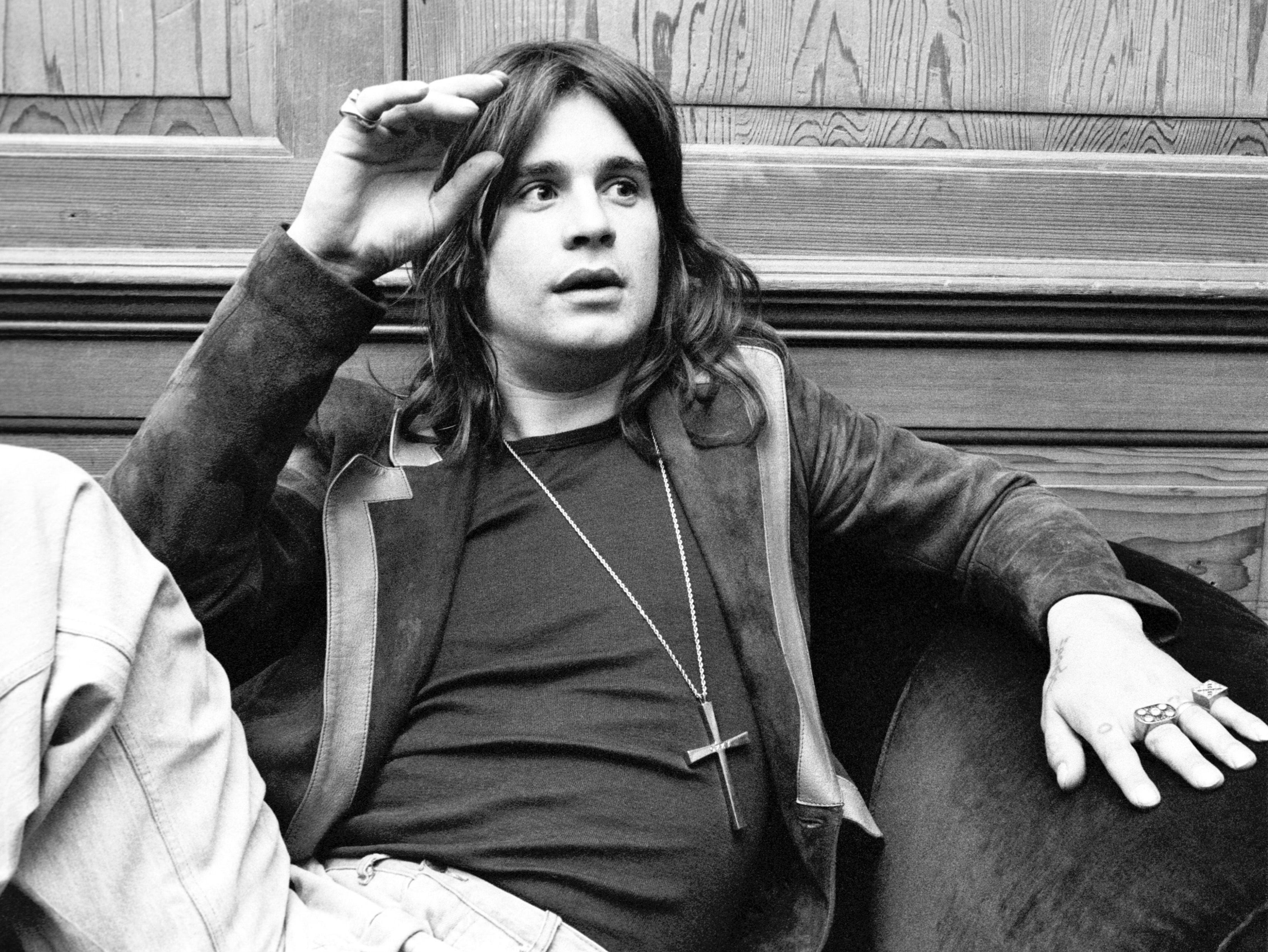
You probably know the caricature. The guy who mumbles on MTV, the "Prince of Darkness" biting the head off a bat, or the elder statesman of metal shuffling onto a stage in a black robe. But before the reality TV cameras and the legendary solo career, there was a skinny kid from the working-class streets of Birmingham who basically stumbled into inventing a whole genre of music. Honestly, looking back at Ozzy Osbourne in his 20s is like watching a slow-motion car crash that somehow produces a diamond.
He didn't start out as a rock star. Far from it.
John Michael Osbourne was born into a gray, post-war England that didn't have much room for dreamers. By the time he hit his early 20s, he had already been a car-horn tuner, a slaughterhouse worker, and a failed burglar. He spent six weeks in Winson Green Prison because his dad refused to pay a fine for him—it was a "lesson" that left Ozzy with those famous "O.Z.Z.Y." tattoos on his knuckles, which he poked into his skin using a sewing needle and grate polish.
The Birth of the Ozzman
The 1970s were the decade of the 20-something Ozzy. It’s wild to think that Black Sabbath, their self-titled debut album, was released when he was just 21 years old. Imagine being barely old enough to buy a drink in the States and suddenly you're the face of a band that sounds like the end of the world.
The band wasn't even called Black Sabbath at first. They were Polka Tulk Blues Band (named after a brand of talcum powder, of all things) and then Earth. They only changed the name because they got booked for a gig by mistake, being confused with another band called Earth. They settled on Black Sabbath after seeing a Boris Karloff movie across the street from their rehearsal space.
Geezer Butler, the bassist, noticed people paid money to be scared by horror movies. He thought, "Why don't we make scary music?"
It worked. Too well.
By 23, Ozzy was fronting the biggest heavy band on the planet. Paranoid was a massive hit. Master of Reality followed. But while the music was getting heavier, the lifestyle was getting darker. People often think the drug use started in the 80s with the solo career, but the 70s were where the foundation of his legendary "tolerance" was built.
In 1972, when Ozzy was 24, the band released Vol. 4. It’s often called "The Cocaine Album." They actually tried to thank the "Coke-Cola Company" in the liner notes, but the record label caught on and nixed it. They spent a fortune on drugs—legend has it they spent more on white powder than they did on the actual recording budget of the album.
Relationships and the First Marriage
While the band was touring the world and blowing their earnings on illicit substances, Ozzy was trying to maintain some semblance of a "normal" life. At 23, he married his first wife, Thelma Riley. They met at a nightclub called the Rum Runner in Birmingham.
He adopted her son, Elliott, and they had two biological children, Jessica and Louis.
But Ozzy was rarely home. He was a 20-something guy thrust into a world of endless touring and groupies. He later admitted he was a "terrible" husband during those years. He wasn't equipped for it. You’ve got a guy who struggled with undiagnosed dyslexia and a massive inferiority complex suddenly being treated like a deity.
It's a recipe for disaster.
The Sharon Introduction
Interestingly, he met Sharon Arden long before they became a couple. Her father, Don Arden, was managing Black Sabbath in the early 70s. Sharon was working as a receptionist in her father’s office when Ozzy first saw her.
He was 22. She was 18.
At the time, he thought she was beautiful but way out of his league. He also thought she probably thought he was a lunatic—which, to be fair, he mostly was. Their professional paths crossed for years before anything romantic happened, but the seeds of his "second act" were planted right there in the mid-70s.
The Spiraling Mid-20s
As the decade progressed, the "Sabbath Four" started to fracture. By 1975, when Ozzy was 26, the band was embroiled in legal battles with management. They were being ripped off by everyone.
They recorded Sabotage, an album fueled by pure anger and frustration.
If you listen to the vocals on that record, you can hear the strain. Ozzy was pushing his voice to the limit. But the camaraderie was gone. Tony Iommi was the "boss," and Ozzy was starting to check out. The drugs weren't fun anymore; they were a necessity.
He actually quit the band briefly in 1977 when he was 28. He wanted to do a solo project, but it didn't really go anywhere. He came back for one last album, Never Say Die!, in 1978.
It was a mess.
Reviewers at the time called their performances "tired." They were being upstaged by their opening act, a young, hungry band called Van Halen. Eddie Van Halen was doing things on guitar that Tony Iommi hadn't even dreamed of, and David Lee Roth was a hyperactive acrobat compared to Ozzy’s sullen, static stage presence.
The contrast was brutal.
The 1979 Breaking Point
The end of Ozzy Osbourne in his 20s coincided almost perfectly with his firing from Black Sabbath. He was 30 years old.
In April 1979, the band had finally had enough. His drug use was so "incessant" (as Iommi put it) that they couldn't get any work done. They were holed up in a house in Los Angeles trying to write a new album, and Ozzy was just... gone.
He was fired.
He spent the next three months locked in a room at the Le Parc Hotel in West Hollywood. He lived on pizza and beer. He kept the curtains closed. He was convinced his career was over and he was headed back to the dole queue in Birmingham.
That’s when Sharon stepped in.
She didn't just become his manager; she became his lifeline. She convinced him that he didn't need Black Sabbath to be a star. She helped him find Randy Rhoads, a guitar prodigy who would define the next era of his life.
Why the 20s Mattered
People often skip the 70s to get to the "crazy" 80s stories, but the 20s were when the actual talent was forged.
- He proved a "regular" guy with no formal training could front a revolution.
- He survived the "factory to fame" transition that broke so many others.
- He established the vocal style—melodic but haunting—that defined metal.
The misconceptions about this era usually involve people thinking he was always the "clown." He wasn't. In his 20s, Ozzy was a brooding, intense, and often very frightened young man who used volume and chemicals to drown out his own insecurities.
Moving Forward: Digging Deeper into the Catalog
If you want to understand the real Ozzy, you have to move past the "Greatest Hits." To see the raw energy of his 20s, you need to listen to the live recordings from the 1970–1975 era.
Next Steps for the Ozz-Curious:
- Listen to "Sabotage" (1975): This is the peak of his vocal ability in his 20s. Songs like "The Writ" show a level of raw emotion he rarely touched again.
- Watch the "California Jam" (1974) footage: You’ll see a 25-year-old Ozzy who is lean, energetic, and commanding a massive festival crowd without any of the gimmicks.
- Read Tony Iommi’s "Iron Man": It gives a perspective on just how chaotic those early years were from the guy who had to keep the ship from sinking.
The 20s weren't just about the parties. They were about a kid from the slums of Birmingham proving that "scary music" could change the world. He might have been a mess, but he was a mess that made history.