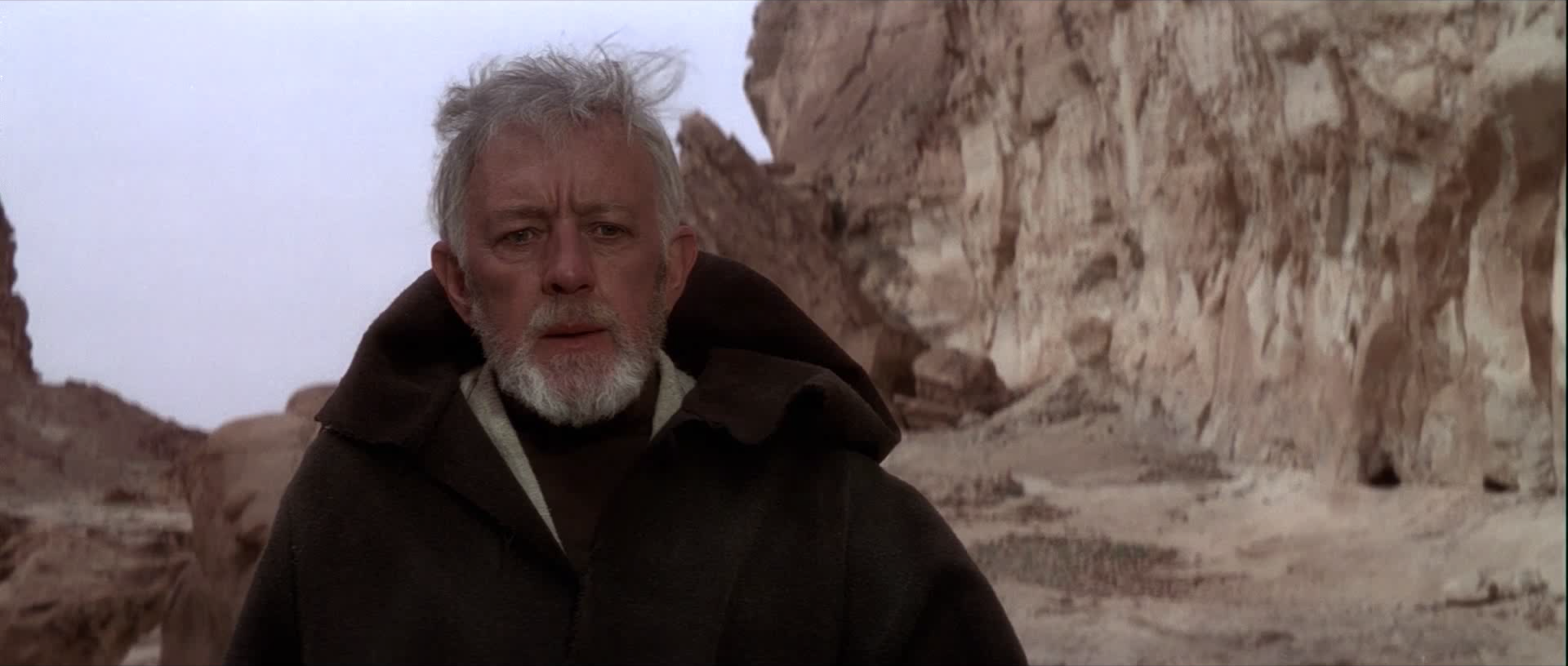
It’s 1977. You’re sitting in a darkened theater, smelling popcorn and stale air, and a bearded man on screen looks wistfully into the middle distance. "Obi-Wan Kenobi," he says. "Now that's a name I haven't heard in a long time. A long time."
Alec Guinness didn't know he was creating a permanent fixture of digital communication. He just thought he was doing a space fantasy movie. But here we are, decades later, and now that’s a name I haven’t heard has transcended the desert of Tatooine to become the ultimate internet shorthand for nostalgia, forgotten lore, and the sudden shock of a "dead" brand or person resurfacing in the news cycle. It’s a linguistic fossil that’s still very much alive.
The Weight of Ben Kenobi’s Memory
Why does this specific phrase stick? Honestly, it’s about the delivery. Sir Alec Guinness brought a level of Shakespearean gravity to a script that, let’s be real, George Lucas was still tinkering with until the last second. When Guinness says those words, you feel the decades of exile. You feel the weight of the Clone Wars—even though, back in '77, nobody actually knew what a Clone War was.
The line serves a mechanical purpose in the story. It bridges the gap between the "crazy old hermit" Ben Kenobi and the legendary Jedi Knight. But for us, the audience, it has become a template. We use it when a defunct soda brand gets a limited relaunch. We use it when a middle-school friend pops up in our "People You May Know" feed. It’s the verbal equivalent of blowing dust off an old book.
How the Internet Hijacked a Jedi
Memes are weird. They take something sincere and make it a tool for irony. The "Now that’s a name I haven’t heard" meme usually features a screen capture of Ben Kenobi, hooded and weary.
Sometimes it's used to mock how fast the internet moves. A celebrity could be trending on Tuesday, and by Friday, if someone mentions them, the Obi-Wan quote comes out. It’s a way of saying, "That feels like a lifetime ago," even if it was only four days. We see this a lot in gaming communities. A developer announces a sequel to a game from 2004, and the forums immediately fill with Kenobi’s face. It acknowledges the passage of time while making the speaker feel like a wise, grizzled veteran of the web.
There’s a psychological layer here, too. Using the quote establishes "in-group" status. If you use it, you’re signaling that you know the source material, you understand the irony, and you’re part of a shared cultural history. It's a shorthand for shared experience.
Breaking Down the Viral Longevity
What makes a quote stay relevant for 50 years?
It isn't just because Star Wars is big. Plenty of huge movies have forgotten dialogue. This line works because it’s adaptable. You can swap "name" for almost anything. "Now that's a flavor I haven't tasted in a long time." "Now that's a bug I haven't seen in a long time."
It’s a linguistic "snowclone." A snowclone is a type of formulaic cliché which uses a multi-word phrase that has a fixed part and a variable part. Because the structure is so sturdy, we can hang almost any context on it.
The Prequel Context: Making it Sadder
When the Prequel Trilogy and eventually the Obi-Wan Kenobi series on Disney+ came out, the line changed. It wasn’t just a cool introduction anymore. We saw the trauma. We saw the "long time" he was talking about.
Suddenly, the line felt heavier. In the 2022 series, we see Ewan McGregor’s version of the character struggling to even say the word "Jedi." By the time we get back to Guinness in the original film, the phrase now that’s a name I haven’t heard carries the weight of the Purge, the loss of Anakin, and years of lonely silence under the twin suns. Fans love this kind of "retroactive continuity" or retconning. It adds layers to a simple sentence.
Why We Can’t Stop Quoting the 70s
Let's look at the competition. The Godfather has "I'm gonna make him an offer he can't refuse." Jaws has "You're gonna need a bigger boat." These are great, but they are specific. They require a certain situation—a negotiation or a mounting threat.
Kenobi’s line is different. It’s about the passage of time itself. And if there is one thing every single human being experiences, it’s the feeling of something once-familiar becoming a distant memory.
The phrase pops up in business journalism when a legacy brand like Blockbuster or Toys "R" Us makes a tiny move. It shows up in sports when a retired player is mentioned for a coaching job. It’s become a way to process the "reboot culture" we live in. Everything old is new again, so we constantly need a way to acknowledge the "old" part before we embrace the "new."
Real-World Impact on Pop Culture Discourse
If you’re a content creator or a social media manager, you’ve probably used this or a variation of it. Why? Because it drives engagement. It’s a "pattern interrupt." When people see a familiar meme format, their brains stop scrolling for a millisecond.
However, there’s a risk of overexposure. Some purists argue that the memeification of Star Wars has stripped the original scenes of their gravitas. When you’ve seen Ben Kenobi’s face attached to a joke about a discontinued Taco Bell menu item 500 times, it’s hard to watch the original movie and feel the intended sadness. This is the "Seinfeld is Unfunny" trope—where the original is so influential and so copied that it starts to feel cliché to new viewers.
But honestly? I think Guinness would have found it funny. He had a famously prickly relationship with Star Wars fans, but he understood the power of a good line.
Beyond the Meme: The Power of Nostalgia
We live in an era of "Newstalgia." We want new things that feel like old things. The phrase now that’s a name I haven’t heard is the verbal mascot for this movement. It’s the bridge between the 1970s and the 2020s.
Think about the last time you saw a name from your past. Maybe it was an old software you used to use, like Winamp or Limewire. Or maybe it was a niche actor from a sitcom you watched as a kid. That little spark in your brain? That’s what this quote captures perfectly.
It’s not just a movie line. It’s a recognition of our own history. We are all Ben Kenobi, sitting in our own versions of a desert hut, waiting for someone to bring up a piece of our past so we can say the line.
How to Use the Power of Recognition in Your Own Content
If you want to tap into this kind of cultural staying power, you have to look for "universal specifics." These are moments that are highly specific to a story but represent a universal human feeling.
- Audit your "nostalgia triggers." What are the brands, names, or concepts in your niche that have been "gone" for 5-10 years? These are prime targets for engagement.
- Use the "Kenobi Frame." When introducing an old concept to a new audience, acknowledge its age. Don't just present it; frame it as a "long lost" treasure.
- Vary your references. While the Obi-Wan quote is a classic, the real value is in finding the next phrase that captures a feeling so perfectly it becomes a permanent part of the internet's vocabulary.
- Lean into the "Aged" Perspective. People trust experts who have been around long enough to remember the "names they haven't heard in a long time." Don't hide your experience; use it as a badge of authority.
The next time a piece of forgotten history crosses your desk or your feed, you know exactly what to say. It’s a bit of a cliché now, sure, but some clichés are earned. And this one was earned in a galaxy far, far away.