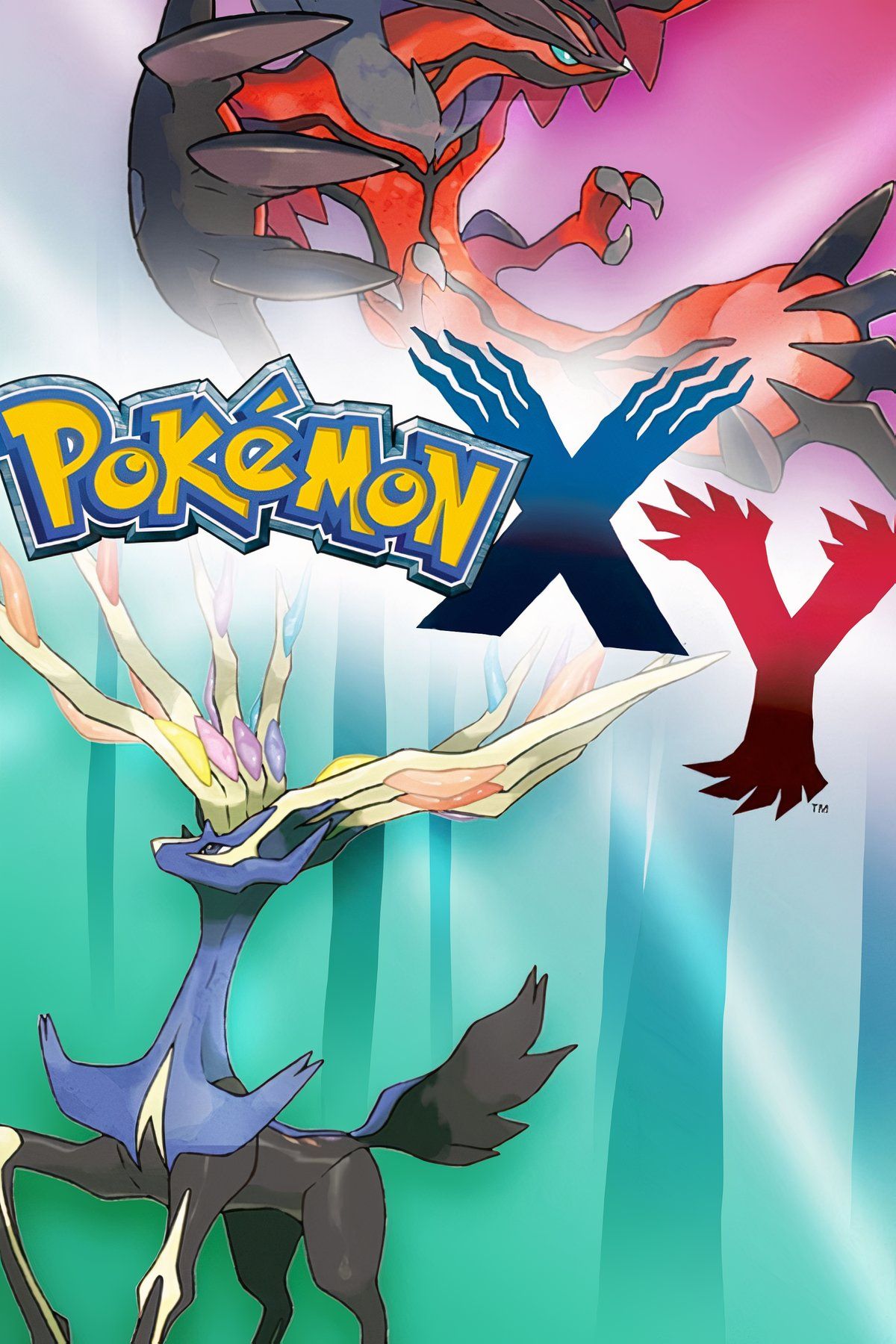
When people look back at the Kalos region, they usually get hung up on the fact that it felt "easy" or that the post-game was a bit thin. But honestly? If you look at the new Pokemon in X and Y, you start to realize this was the moment the entire franchise shifted gears. It wasn't just about adding more creatures to a list. It was about fundamentally changing how those creatures functioned in a competitive and casual space.
Back in 2013, we were coming off the back of Unova, which dropped a staggering 156 new faces on us. Then X and Y showed up with only 72. At first glance, that feels like a letdown. People were used to 100+ new entries per generation. But the Kalos dex was about quality over quantity—and more importantly, it was about mechanics that made the old guard feel new again.
The 72 Newcomers That Changed Everything
Quality over quantity is a tired cliché, but here it actually fits. Because Game Freak only introduced 72 new Pokemon in X and Y, they had the breathing room to make them distinct. We got the first-ever 3D models for the entire roster. That’s a huge deal. Moving away from sprites meant every new design had to look good from every angle.
Think about Aegislash. It’s basically the poster child for Gen 6 ingenuity. Its "Stance Change" ability wasn't just a gimmick; it was a high-stakes guessing game. You’re in Shield Forme, you’re tanky, and then—boom—you swap to Blade Forme to sweep. If you mispredict? You're dead. This kind of dynamic play was exactly what the series needed.
And then there’s the Starters.
- Chespin (Grass)
- Fennekin (Fire)
- Froakie (Water)
Everyone remembers where they were when they saw Greninja for the first time. It didn’t just become a fan favorite; it became a global icon, eventually making its way into Smash Bros. and winning "Pokemon of the Year" polls repeatedly. Its Protean ability was a nightmare to play against because it changed its type to match whatever move it was using. It was basically the ultimate chameleon.
The Fairy Type Revolution
You can't talk about new Pokemon in X and Y without mentioning the introduction of the Fairy type. This was the first new type since Steel and Dark in Gen 2. It was a targeted strike against the Dragon types that had been bullying the competitive scene for years.
Suddenly, your Garchomp wasn't the king of the hill anymore. Sylveon, the new Eeveelution, became the face of this revolution. It was cute, it was pink, and it would absolutely wreck your Hydreigon without breaking a sweat. It was a much-needed rebalancing of the scales.
Other newcomers like Flabébé (the tiniest thing ever) and Klefki (literally a set of keys) fleshed out this new typing. Klefki, in particular, became a bit of a meme because of how annoying it was to fight. Prankster-boosted Thunder Wave and Swagger? It was pure chaos. People hated that keychain, but man, was it effective.
Mega Evolution: The Elephant in the Room
Here’s where things get a bit complicated. While there were only 72 brand-new species, X and Y introduced 28 Mega Evolutions at launch. These weren't "new" Pokemon in the traditional sense, but they functioned like them. They gave legendary-tier power to old favorites like Mawile, Kangaskhan, and Charizard.
It’s a bit of a weird distinction. Does Mega Lucario count as a new Pokemon? Technically, no. But in terms of the meta, it absolutely was a new entity. This was the era where "Power Creep" became a very real, very loud conversation in the community. If you weren't running a Mega, you were basically playing at a disadvantage.
The Fossil Duo and the Power of Choice
One of the cooler moments in X and Y was the choice at Glittering Cave. You had to pick between the Jaw Fossil and the Sail Fossil.
- Tyrunt/Tyrantrum: Finally, a T-Rex. It’s Rock/Dragon, and it looks exactly how a fossil Pokemon should.
- Amaura/Aurorus: A beautiful Rock/Ice sauropod. It’s notoriously fragile because of that Ice typing, but its design is top-tier.
Choosing between them felt like a real stake in your journey. Most people went for the T-Rex, obviously. Because... well, it’s a T-Rex.
The Legendaries: X, Y, and Z
Xerneas and Yveltal are probably some of the most striking box legendaries we've ever seen. Xerneas, the Life Pokemon, brought the Fairy type to the legendary tier with its signature move, Geomancy. If you let a Xerneas get off a Power Herb-boosted Geomancy, the game was over.
Yveltal was the edgy counterpart—the Destruction Pokemon. Its Dark Aura ability made its Knock Off and Oblivion Wing hits like a truck. And then you had Zygarde, tucked away in the bottom of Terminus Cave. It felt like a mystery that was never fully solved until the Gen 7 anime and games, which is still a bit of a sore spot for Kalos fans.
Why Kalos Still Matters
Despite the small number of additions, the new Pokemon in X and Y set the stage for how the modern games look and feel. We got the first "pseudo-legendary" that wasn't just a big scary dragon—Goodra was a gooey, friendly-looking tank. We got Hawlucha, which is still one of the most unique dual-types (Fighting/Flying) with its Flying Press move.
If you’re looking to dive back into Kalos or maybe you're playing for the first time on an old 3DS, here’s how to make the most of the roster:
- Don't ignore the "weak" designs: Diggersby looks goofy, but with the Huge Power ability, it’s a physical monster.
- Experiment with the Fairy type: Grab a Florges or a Sylveon early. They make the late-game Dragon encounters a breeze.
- Watch out for version exclusives: If you want Clauncher, you need X. If you want Skrelp, you need Y. Plan your team accordingly.
Kalos was the bridge between the old-school sprite era and the high-definition future we have now. It might have been a small step in terms of the Pokedex count, but it was a giant leap for the franchise's identity.
Next Steps for Your Kalos Journey:
If you want to experience these Pokemon at their peak, try a "Kalos-only" run. This means you only use the 72 new species introduced in this generation. It forces you to appreciate the nuance of designs like Heliolisk or Barbaracle, which often get overshadowed by the Kanto pandering that was admittedly quite heavy in X and Y. You'll find that while the list is short, the variety in playstyles is surprisingly deep.