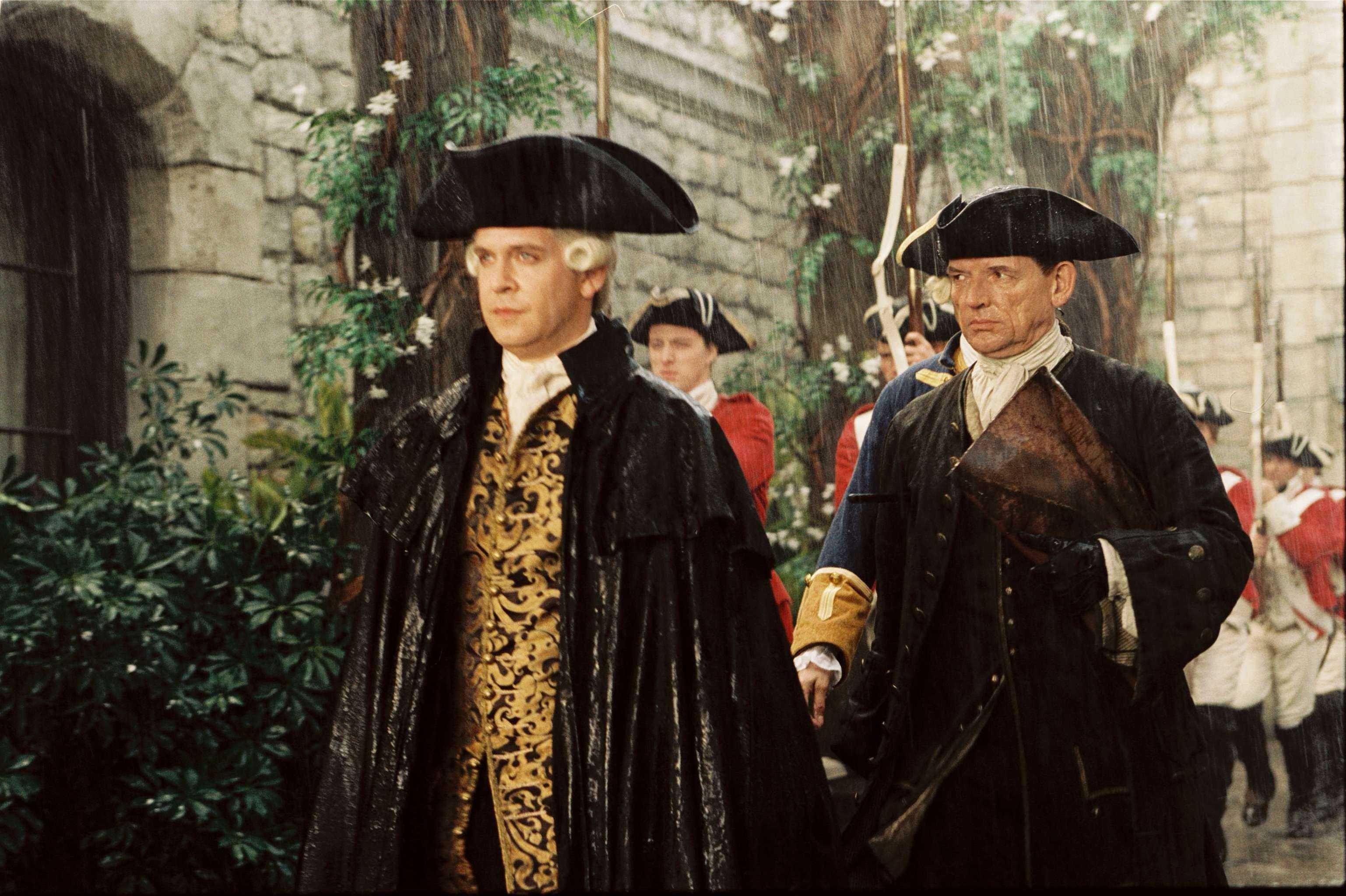
He doesn't have a kraken. He doesn't have a cursed chest of Aztec gold, and he definitely doesn't have a beard made of squirming tentacles. Yet, for many fans, Lord Cutler Beckett remains the most terrifying antagonist in the Pirates of the Caribbean franchise.
It's just good business.
That catchphrase defines the man. While Davy Jones was a tragic figure driven by a broken heart, Beckett was something much more modern and, frankly, much more chilling. He represented the cold, calculating march of progress. He was the corporate machine personified. If you revisit Dead Man’s Chest and At World’s End, you’ll notice that Beckett doesn't care about the romance of the sea. He wants to map it, own it, and eventually, clear it of anything that doesn't turn a profit for the East India Trading Company.
The Bureaucrat Who Conquered the Ocean
Most villains in fantasy epics want to rule the world through dark magic or sheer brute force. Beckett is different. He wants to rule through trade routes and ledgers. When we first meet him, he isn't brandishing a sword; he’s arresting a bride and groom on their wedding day. It’s a power move. It tells us immediately that the law—his law—is more powerful than love or tradition.
The historical context here is actually pretty fascinating. The East India Trading Company (EITC) wasn't just a group of merchants. They had their own army, their own navy, and essentially their own sovereign power. In the films, Beckett acts as the Chairman of the EITC, but he carries the "Letter of Marque" like a weapon.
Think about his office. It’s always perfectly ordered. He has that massive floor map he’s constantly painting. It’s a literal representation of his desire to "fill in the blanks" of the world. To Beckett, a pirate isn't just a criminal; they are an inefficiency. They are a "clutter" in the gears of global commerce.
That Complicated History with Jack Sparrow
One of the best things the writers did was hint at a deep, messy backstory between Beckett and Jack. It’s not just that they don’t like each other. There’s a specific grudge.
According to the expanded lore—specifically the books by A.C. Crispin—Jack actually worked for the East India Trading Company once. Beckett gave Jack a ship called the Wicked Wench. The job? Transporting "cargo." When Jack realized the cargo was human beings—slaves—he set them free.
In retaliation, Beckett branded Jack with the "P" for pirate and ordered the Wicked Wench burned and sunk. That ship eventually became the Black Pearl after Jack made his deal with Davy Jones. Knowing this changes every scene they have together. When Beckett looks at Jack, he doesn't just see a nuisance; he sees a failed investment. He sees a man who dared to have a moral compass in a world where Beckett believes only the financial compass matters.
It’s personal. It’s always been personal.
The Power of the Heart
How do you control the literal god of the ocean? You don't use magic. You use a contract and a threat.
Beckett’s acquisition of Davy Jones’ heart is the ultimate corporate takeover. He takes the most chaotic, emotional, and powerful force on the Seven Seas and turns it into a glorified guard dog. The scenes aboard the Flying Dutchman in At World’s End are uncomfortable to watch because you see the mighty Davy Jones reduced to a middle-manager taking orders from a man in a powdered wig.
Beckett understands leverage. He knows that everyone, even a supernatural entity, has something they can't afford to lose.
"The world is shrinking. The blank spaces on the map are being filled in. Jack must find his place in the new world or perish." — Lord Cutler Beckett
This quote is basically his mission statement. He isn't just hunting pirates; he's killing the very idea of freedom. He represents the end of the "Golden Age."
Why He Lost (And That Epic Death Scene)
People often debate why Beckett froze at the end. You know the scene. The Black Pearl and the Endeavour flank his flagship. The cannons start ripping his world apart. He just walks down the stairs in slow motion while everything explodes around him.
Some say he had a mental breakdown. Others think he realized his "perfect" logic had finally failed him.
Honestly? It's probably both. Beckett relied on the idea that men are predictable. He assumed that because he held the cards, the pirates would scatter. He didn't account for the fact that people—when backed into a corner—will do the most illogical, courageous things imaginable. He couldn't calculate the "Will Turner" factor or the "Elizabeth Swann" factor.
The destruction of the Endeavour is symbolic. The ship's name literally means "to try or to venture." His venture failed. The wooden splinters flying past his face as he descends the stairs are the ledgers of his life being shredded.
Was He Actually Right?
This is a hot take, but from a purely historical standpoint, Beckett represented the future. The era of piracy was ending. The world was becoming more connected and regulated.
Obviously, his methods were monstrous. He used child labor, engaged in the slave trade (as hinted in the lore), and bypassed every moral check and balance to achieve his goals. But if you look at the Caribbean after the events of the films, the "freedom" the pirates fought for was essentially the freedom to be thieves.
Beckett’s tragedy is that he was a man of the future born with a soul that was already dead. He had the vision to see where the world was going, but he didn't have the humanity to make that world worth living in.
Understanding the Legacy of the EITC
If you want to dive deeper into the real-world parallels that inspired Lord Cutler Beckett's character, there are a few things you should look into. The East India Company was, at one point, the most powerful corporation to ever exist.
- Read up on the real EITC: Look into the history of the British East India Company between 1750 and 1850. You’ll find that the "company man" villainy isn't just a movie trope; it's based on very real colonial history.
- Re-watch the "Sing It Out" scene: Pay attention to the hanging scene at the start of At World’s End. It’s one of the darkest moments in Disney history and perfectly encapsulates the "Beckett Doctrine."
- Check out the "Price of Freedom" novel: If you want the full story of why Jack and Beckett hate each other, find the book by A.C. Crispin. It’s widely considered the definitive backstory.
Beckett remains a masterclass in how to write a villain who is terrifying not because of what he can do, but because of what he represents: the cold, unfeeling bureaucracy that eventually comes for us all.
To really grasp the weight of his character, compare his final moments to the rest of the villains. Barbossa died with a smile, Davy Jones died screaming for his lost love, but Beckett died in total, stunned silence. He had nothing left to say because he had no more moves to make. The business was closed.