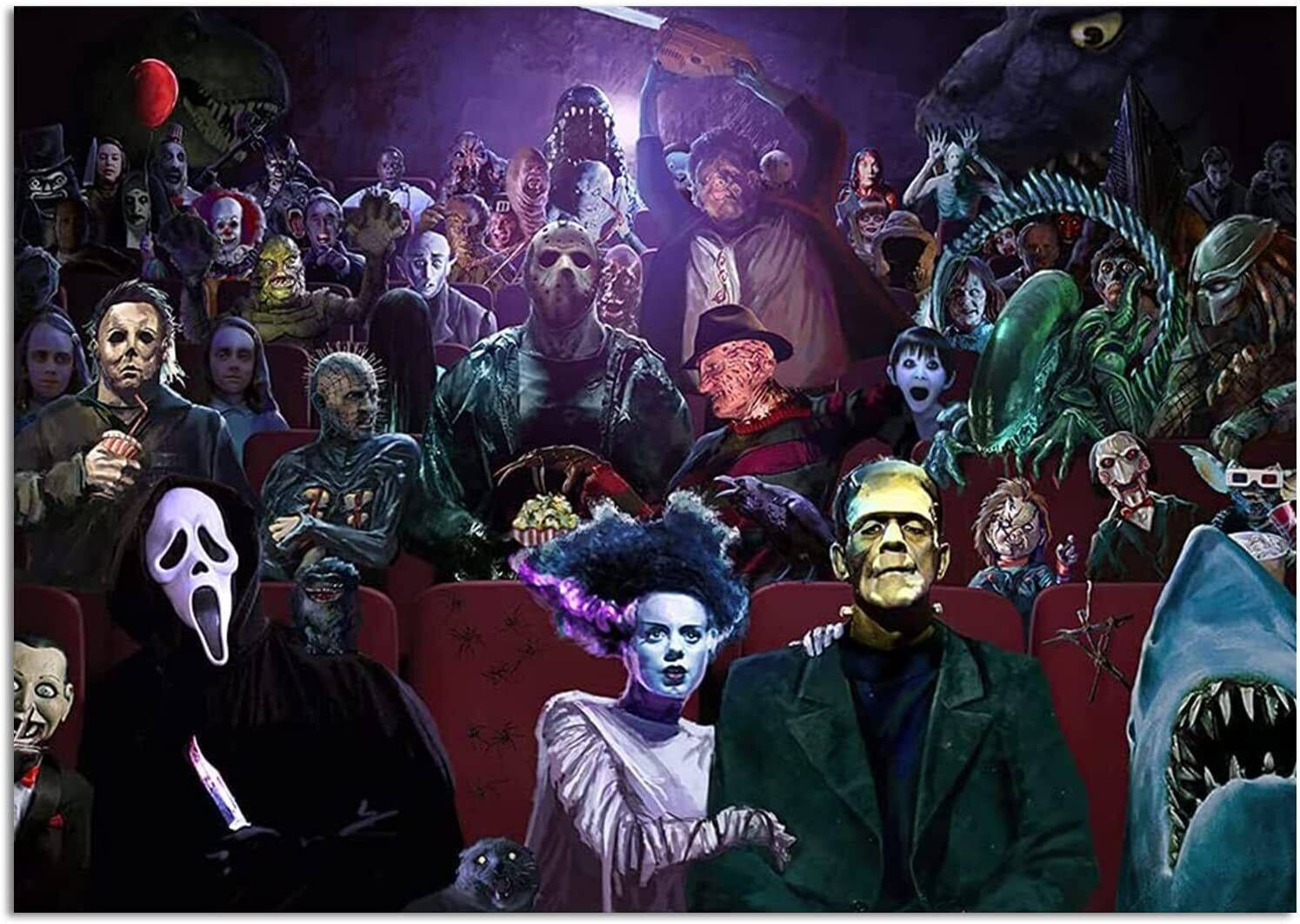
Fear is weird. You're sitting in a dark room, heart hammering against your ribs, palms slick with sweat, and yet, you paid for the privilege. Why? Mostly because of the faces staring back from the screen. Whether it’s the silent, Shatner-masked void of Michael Myers or the pun-heavy nightmare fuel of Freddy Krueger, iconic horror movie characters are the primary reason the genre survives and thrives decades after the original credits roll. They aren't just villains. They’re cultural landmarks.
It’s easy to dismiss them as simple "bad guys," but that’s a mistake. These characters tap into specific, primal anxieties that change based on when the movie was made. Take the 1970s. People were terrified of the breakdown of the nuclear family and the encroaching "stranger danger," which is exactly why Leatherface and Michael Myers felt so visceral. They weren't monsters from outer space; they were the terrifying reality of what might be living in the house next door or down a dirt road in Texas.
The Logic of the Slasher: Michael, Jason, and the Mask
There is something deeply unsettling about a lack of expression. When John Carpenter and Debra Hill were dreaming up Halloween in 1978, they didn't have a massive budget. They had a spray-painted Captain Kirk mask and a vision. By stripping away Michael Myers’ humanity—literally hiding his eyes—they created a "Shape." He isn't a man. He’s a force of nature. If you look at the work of film scholar Carol J. Clover, specifically her book Men, Women, and Chain Saws, she notes that the slasher is often a reflection of repressed societal fears.
Michael Myers never runs. Have you noticed that? He walks. He’s methodical. This pacing creates a specific type of dread that differs wildly from the kinetic energy of Jason Voorhees. Jason didn't even get his trademark hockey mask until Friday the 13th Part III. Before that, he was a sack-headed killer or just a tragic backstory. The mask changed everything. It turned a grieving, vengeful son into an immortal juggernaut. It’s a bit ironic, honestly, that the most recognizable face in horror is a piece of sports equipment.
Freddy Krueger and the Death of Safety
While Michael and Jason are the "silent types," Freddy Krueger broke the mold. Wes Craven, the mind behind A Nightmare on Elm Street, based Freddy on several real-life traumas. The name came from a childhood bully. The look was inspired by a disfigured man Craven saw through a window as a kid. But the real kicker was the concept: you aren't safe in your sleep.
Freddy is one of the few iconic horror movie characters who actually talks back. In the early films, he was grim and terrifying. By the time The Dream Child rolled around, he was basically a stand-up comedian with a glove made of knives. This shift is fascinating because it shows how horror icons evolve to survive. When a character becomes too scary for the general public to handle, the industry often leans into the "camp" factor to keep the merch selling. Robert Englund, the actor who donned the burns for decades, has often talked about how Freddy represents the "sins of the parents" visited upon the children. It’s heavy stuff for a guy who once used a power glove to kill a teenager in a video game.
The Psychology of the "Final Girl"
You can’t talk about the monsters without talking about the people who survive them. The "Final Girl" trope is the backbone of the slasher subgenre. Laurie Strode (Jamie Lee Curtis) isn't just a victim; she’s the audience surrogate who earns her survival through vigilance.
- Laurie Strode: The archetype of the "watchful" survivor.
- Nancy Thompson: The survivor who fights back using the monster's own rules (traps, dream-logic).
- Sidney Prescott: The deconstruction of the trope, knowing the "rules" of horror and breaking them.
Ghostface and the Meta-Horror Revolution
In 1996, Scream changed the trajectory of iconic horror movie characters by making them self-aware. Ghostface isn't one person. That’s the genius of it. It’s a costume that anyone can put on. While Jason is a supernatural entity and Michael is an "it," Ghostface is usually just a couple of bored, radicalized teenagers or resentful family members.
Kevin Williamson’s script tapped into a very specific 90s cynicism. The characters in the movie had seen Halloween. They knew not to say "I'll be right back." This "meta" approach forced the audience to engage with the genre on a deeper level. It wasn't just about the jumpscare; it was about the mechanics of the jumpscare. The Fun World mask used for Ghostface was actually found by producer Marianne Maddalena while scouting locations. It wasn't designed for the movie, which makes its massive cultural impact even more of a fluke.
Why the "Universal Monsters" Still Matter
Long before the slasher boom of the 80s, we had the OGs: Dracula, Frankenstein’s Monster, The Wolf Man, and The Mummy. These characters from the 1930s and 40s established the visual language of horror. Bela Lugosi’s Cape and Boris Karloff’s flat-head makeup (designed by the legendary Jack Pierce) are still what people think of when you say the word "monster."
The difference here is pathos. You kind of feel bad for Frankenstein's monster. He didn't ask to be born. He’s a tragic figure made of graveyard scraps. This is a far cry from the pure evil of someone like Pinhead from Hellraiser. Pinhead, or "The Lead Cenobite," isn't technically a villain in the traditional sense—he’s an explorer of the further regions of experience. "Demons to some, angels to others," as he famously says. Clive Barker’s creation brought a BDSM-influenced, gothic sophistication to horror that felt worlds away from the summer camp killings of Crystal Lake.
The Modern Icon: Art the Clown and the Return of Extremity
Lately, people have been saying horror is getting "too soft." Then came Art the Clown. The Terrifier franchise has proven that there is still a massive appetite for iconic horror movie characters who are unapologetically mean. Art doesn't have a complex backstory or a sympathetic motive. He’s a mime who likes to mutilate people.
What makes Art an icon is the physical performance by David Howard Thornton. Like Doug Jones (who played the Pale Man in Pan's Labyrinth), Thornton uses his body to convey horror without saying a single word. In an era of CGI-heavy jump scares, the practical effects and "old school" feel of Art the Clown have resonated with a core group of horror fans who miss the practical gore of the 80s. It’s a reminder that a good character design—black and white suit, hooked nose, trash bag full of tools—can go a long way.
Chucky and the Fear of the Mundane
Don Mancini’s Child's Play tapped into "automatonophobia"—the fear of humanoid figures like dolls or mannequins. Chucky is brilliant because he subverts the innocence of childhood. Brad Dourif’s voice acting gave the doll a personality that was both foul-mouthed and genuinely menacing.
The franchise has survived by being incredibly flexible. It went from straight horror to meta-comedy (Bride of Chucky) to a serialized TV show. Chucky is perhaps the most resilient of all iconic horror movie characters because he can adapt to the tone of the decade without losing his edge. He's also one of the few icons who has a consistent "soul" (literally, the soul of Charles Lee Ray) across decades of sequels, unlike the constantly rebooted timelines of Halloween or Texas Chainsaw Massacre.
Misconceptions About Horror Icons
People get things wrong about these characters all the time. For example:
- Jason Voorhees didn't use a chainsaw. That’s Leatherface. Jason uses a machete.
- Michael Myers isn't immortal (technically). Depending on which timeline you follow, he's either a cursed cult pawn, a supernatural force, or just a very sturdy man who won't die.
- The mask in Scream isn't unique. As mentioned, it’s a mass-produced "Peanut-Eyed Ghost" mask.
Understanding these nuances helps you appreciate the craft behind the scares. These characters aren't just tropes; they are the result of specific directorial choices, lighting, sound design, and acting. When you watch The Exorcist, the horror of Regan MacNeil isn't just the makeup—it's the guttural voice of Mercedes McCambridge and the jarring, rhythmic movements.
Actionable Ways to Explore Horror History
If you want to dive deeper into why these characters work, don't just watch the movies. Look at the context.
- Watch "The Movies That Made Us" on Netflix: The episode on Halloween or Nightmare on Elm Street gives great behind-the-scenes info on how these icons were built on shoestring budgets.
- Read "Danse Macabre" by Stephen King: He breaks down the archetypes of horror in a way that is incredibly accessible.
- Visit a Horror Convention: Seeing the actors like Kane Hodder (Jason) or Bonnie Aarons (The Nun) in person helps you realize the physicality required to play these roles.
- Track the Evolution: Watch the original Texas Chain Saw Massacre (1974) and then the most recent reboot. Notice how the character of Leatherface changes from a terrified, "controlled" family member to a generic slasher villain.
The staying power of iconic horror movie characters lies in their ability to haunt us long after the screen goes black. They represent the parts of the human experience we try to suppress—our rage, our trauma, and our mortality. We don't just watch them to be scared; we watch them to see if we, like the Final Girl, can survive the night. Keep an eye on the shadows. You never know who might be standing there, mask on, waiting for their cue.