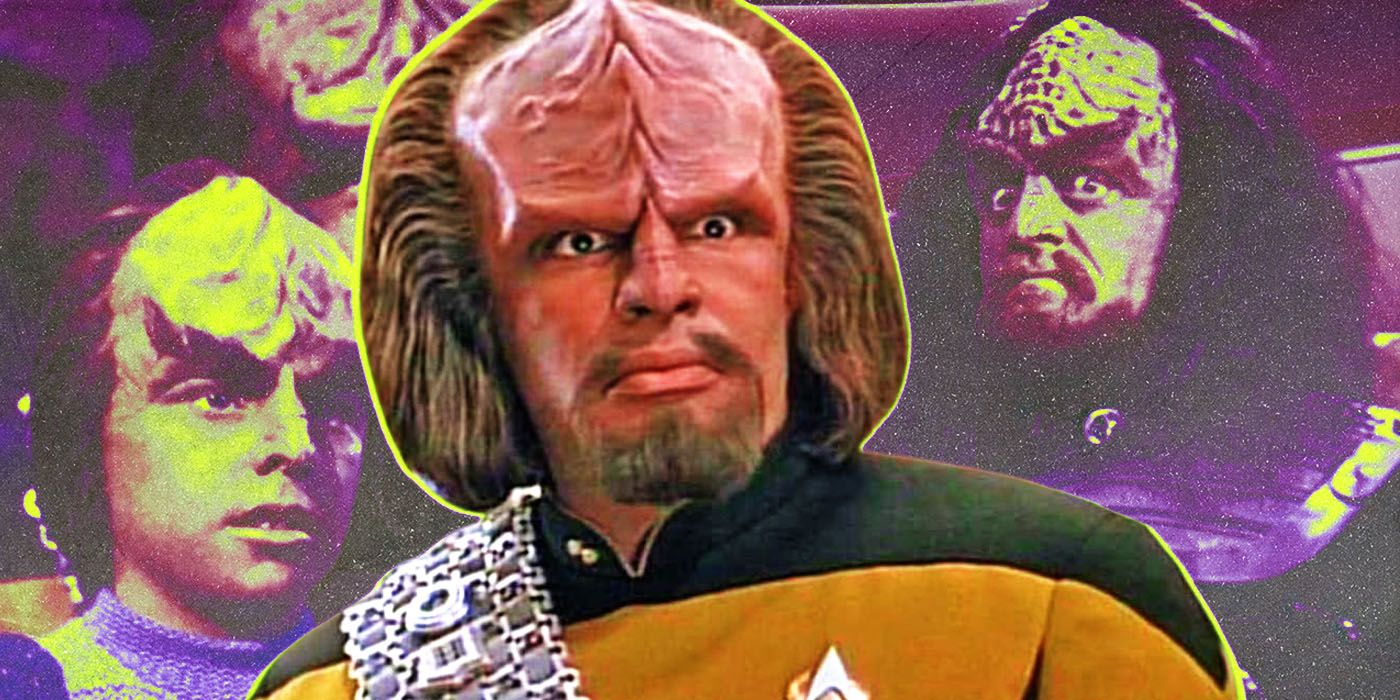
Worf wasn't supposed to be there. Seriously. When Gene Roddenberry was first pulling the pieces together for a new series in the late 80s, the "no-aliens-from-the-original-series" rule was basically set in stone. He wanted fresh faces. He wanted new villains. But then someone realized that having a Star Trek: The Next Generation Klingon on the bridge of the Enterprise would be the ultimate visual shorthand for how much the galaxy had changed. It worked. It worked so well that it fundamentally broke and then rebuilt the entire mythology of the Klingon Empire.
If you grew up on the Original Series, Klingons were basically space Mongols with flat foreheads and a penchant for sneaky sabotage. They were the Cold War stand-ins. But The Next Generation (TNG) took that thin archetype and shoved it through a meat grinder of Shakespearean drama, ritualistic violence, and a very specific kind of space-opera feudalism.
The Forehead Evolution That Actually Mattered
Everyone jokes about the ridges. The jump from the smooth-headed Kor in the 60s to the prosthetic-heavy look of the 80s and 90s is the most famous makeup glow-up in sci-fi history. But the TNG era did something more important than just adding latex. It gave the ridges a cultural weight. Michael Westmore, the legendary makeup supervisor, didn't just want them to look scary; he wanted them to look like individuals.
Look at Worf. Then look at Gowron. Then look at the Duras sisters. They aren't a monolith.
The ridges became a canvas for status. While the show eventually tried to explain the physical change through a virus plotline in Enterprise years later, during the actual run of TNG, the shift was purely about presence. The Klingons became physically imposing in a way the Federation wasn't. They were taller, broader, and louder. They smelled like "old leather and sweat," according to some of the production notes. They felt real.
Why the Honor Code is Kinda a Lie
We always hear about "Honor." It’s the word uttered every five minutes by a Star Trek: The Next Generation Klingon warrior. But if you actually watch the show—honestly, really watch it—you realize that the Klingon Empire in the TNG era is incredibly corrupt. This is the nuance that people miss.
Ronald D. Moore, the writer who basically became the "Klingon guy" on the writing staff, understood something brilliant: a society that talks the most about honor is usually the one struggling with it the most.
Take the "Redemption" two-parter. It isn't just a space battle. It’s a political thriller about a civil war where "honorable" houses are taking secret bribes from Romulans. It’s messy. You have characters like Kurn (played with incredible intensity by Tony Todd) who are trying to live by the old ways, while the High Council is basically a shark tank. The TNG Klingons weren't just warriors; they were politicians with knives.
This tension is why Worf is such a tragic character. He grew up on Earth, reading the "manual" on what a Klingon should be. He’s more Klingon than the guys living on Qo'noS because he believes in the ideal, whereas the actual citizens of the Empire are just trying to survive the political whims of the Chancellor.
Rituals, Pain Sticks, and Blood Wine
TNG gave us the texture of Klingon life. Think about the Rite of Ascension. You have a young Klingon walking through a gauntlet of warriors poking him with "pain sticks" while he recites poetry. It’s brutal. It’s weird. It’s perfect.
Before TNG, we didn't know how they ate or how they mourned. Remember the death howl? When a Klingon dies, they don't treat the body as sacred. It's just an empty shell. They look into the sky and howl to warn the afterlife that a warrior is coming. That’s a massive departure from the "human-but-with-different-politics" vibe of the 1960s.
Then there’s the food. Gagh. Heart of Targ. Blood wine (which, let’s be honest, looks like lukewarm cranberry juice but is treated like the finest whiskey). By showing us the visceral, gross, and loud parts of their culture, TNG made the Klingons the most "lived-in" species in the franchise. You can almost smell the bird-of-prey bridges—oily, hot, and crowded.
The Power Dynamics of the High Council
The Klingon High Council is where the show really flexed its world-building muscles. This wasn't a democracy. It wasn't a simple dictatorship either. It was a collection of Great Houses constantly vying for power.
- Chancellor K'mpec: The long-lived leader who realized the Empire was rotting from the inside.
- Gowron: The outsider with the crazy eyes who actually ended up being a fairly competent, if paranoid, leader.
- The House of Duras: The perennial villains who proved that Klingons could be just as conniving as any Romulan.
The introduction of the "Arbiter of Succession" role—which Jean-Luc Picard had to fill—was a stroke of genius. It forced the Federation’s values (logic, law, patience) to clash directly with the Klingon values (strength, lineage, immediate action). It showed that the alliance between the two powers wasn't some magical friendship. It was a fragile, high-stakes diplomatic tightrope.
The Women of the Empire
We can't talk about TNG Klingons without mentioning Lursa and B'Etor. Or K'Ehleyr.
K'Ehleyr was a revelation. As a half-human, half-Klingon woman, she poked fun at the stuffiness of the Empire. She was cynical. She was brilliant. Her death remains one of the most gut-wrenching moments in the series because it forced Worf to choose between Federation law and the Klingon right of vengeance.
Then you have the Duras sisters. They weren't just "female versions" of the male warriors. They were master manipulators. In a society that supposedly barred women from sitting on the High Council, they ran the show from the shadows. They used the "Honor Code" as a weapon against their enemies while ignoring it whenever it suited them. It added a layer of gender politics to the Empire that was far ahead of its time for late-80s television.
Fact-Checking the Klingon Mythos
There are a few things fans often get mixed up about this era. First, the bat'leth wasn't there from day one. It didn't appear until the season 4 episode "Reunion." Before that, they mostly used disruptors or standard knives. The iconic "Sword of Honor" was a relatively late addition that became the symbol of the entire species.
Second, the Klingon language (tlhIngan Hol) was developed by Marc Okrand. While it started in the movies, TNG was where it was used to create actual depth. When Worf growls a command, he isn't just making noise. He’s speaking a language with actual grammar and syntax. This level of detail is what moved them from "bad guys of the week" to a legitimate civilization.
What Most People Get Wrong About Worf
There's this idea that Worf is the "definitive" Klingon. But the irony of TNG is that Worf is actually an outcast. He’s an outsider looking in. Most "real" Klingons in the show think he’s a bit of a stick-in-the-mud. He’s too serious. He’s too obsessed with the rules.
The TNG Klingons we meet on other ships are often laughing, drinking, and being generally rowdy. Worf is a man of two worlds who doesn't quite fit in either. That’s the emotional core of the Klingon story in TNG. It’s a story of displacement.
Actionable Insights for the Modern Fan
If you're looking to revisit the best of the Star Trek: The Next Generation Klingon episodes, don't just watch them in order. Watch them as a political arc.
- "Sins of the Father" (Season 3): This is the turning point. It’s where we realize the Klingon government is fundamentally broken.
- "Reunion" (Season 4): The introduction of the bat'leth and the death of K'Ehleyr. It changes Worf forever.
- "Redemption" I & II (Season 4/5): The scale of the Klingon Civil War is massive and shows the Romulan influence.
- "Rightful Heir" (Season 6): A deep look at Klingon religion and the return (sorta) of Kahless the Unforgettable.
The legacy of the TNG Klingons is how they turned a caricature into a culture. They took the "other" and made them relatable, not by making them more like us, but by showing us the internal logic of their own alien world.
To truly understand the Klingons of this era, you have to look past the makeup and the shouting. Look at the way they handle grief. Look at the way they fear dishonor more than death. Look at the way they struggle to maintain an empire in a galaxy that is rapidly moving toward the kind of peace they aren't built for. That tension—the warrior in a time of peace—is what makes them the most compelling part of the Star Trek mythos.
Stop viewing them as just the "warrior race." Start viewing them as a crumbling aristocracy trying to find their soul. When you do that, every growl and every swing of a bat'leth carries a lot more weight. The Empire didn't just survive the transition from the 60s to the 90s; it became the beating, blood-red heart of the franchise.