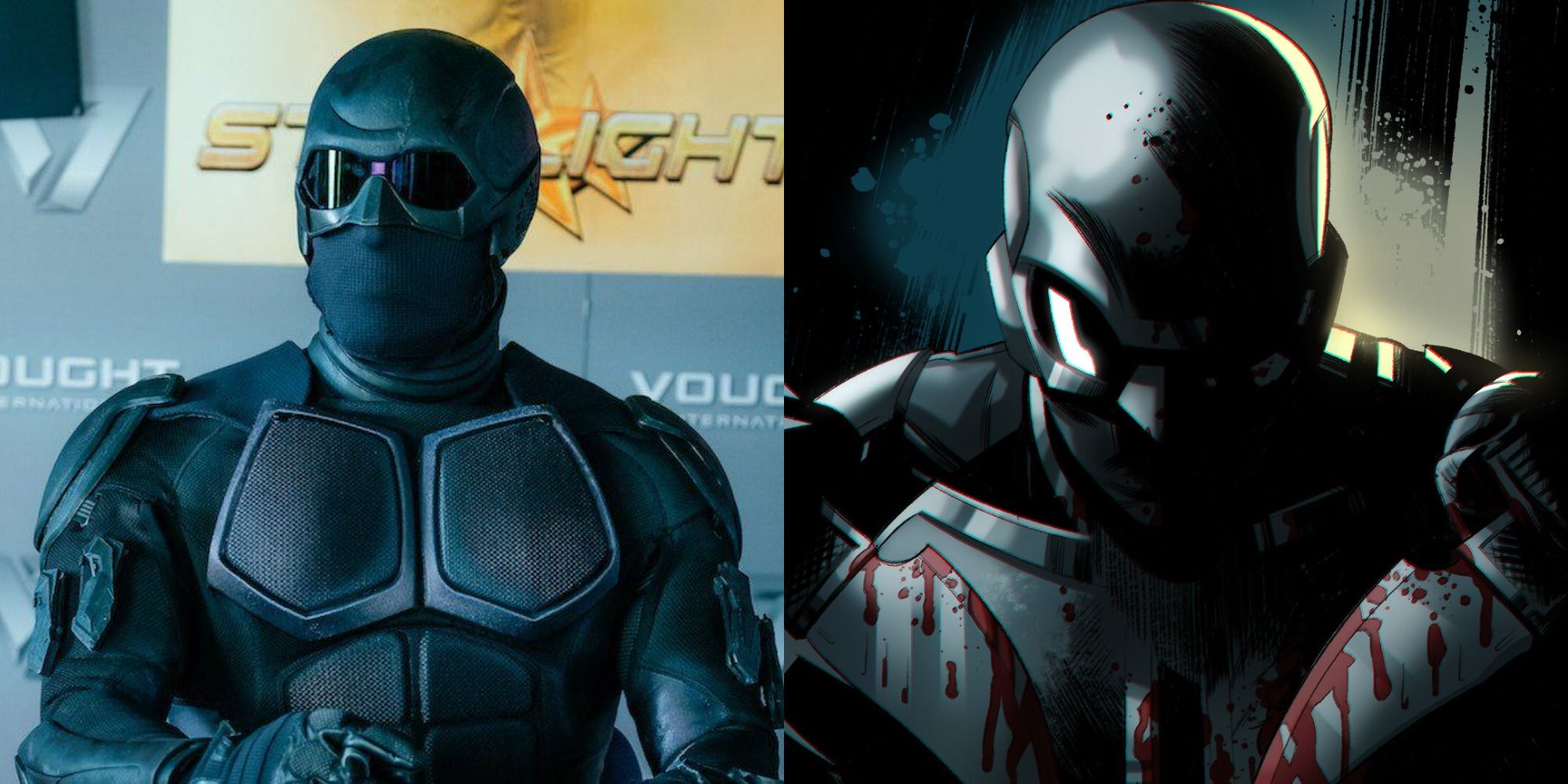
He doesn't talk. He doesn't show his face. He just guts people with a pair of combat knives while wearing what looks like a tactical gimp suit. For three seasons, Black Noir in The Boys was the show's most terrifying enigma. Fans of the Garth Ennis comic books thought they knew exactly where his story was heading. They expected the clone. They expected the psychopathic double of Homelander. But Eric Kripke and the writing team at Amazon pulled the rug out from everyone, and honestly, it was the smartest move they could have made for the TV adaptation.
Black Noir is basically the silent heartbeat of Vought's Seven. While Homelander is screaming about milk and A-Train is busy being a PR nightmare, Noir just... exists. He’s the loyal soldier. The corporate hitman. But underneath that carbon-fiber mask is a history of trauma that stretches back to the 1980s, specifically to a botched mission in Nicaragua that changed the trajectory of the entire series.
The Nicaragua Incident and the Death of Earving
Most viewers didn't realize that the man inside the suit for the first few seasons was Earving, played by Nathan Mitchell. Earving was a young, aspiring Black superhero in a time when Vought was even more overtly racist than it is now. He wanted to be a star. He wanted to show his face. But Stan Edgar, played by the perpetually cold Giancarlo Esposito, made it clear: the mask stays on.
During the flashback in Season 3, we finally see what broke him. It wasn't just a physical injury. It was a betrayal. Payback—the precursor to The Seven—was a mess of egos. Soldier Boy was a bully. He wasn't the "greatest generation" hero he claimed to be; he was a violent, insecure jerk who beat Earving within an inch of his life just for wanting to move into movies.
When the team finally turned on Soldier Boy in Nicaragua, the fallout was catastrophic. A piece of shrapnel took out a chunk of Earving's brain. His face was melted. He lost his ability to speak. This wasn't some grand cosmic origin story. It was a workplace accident caused by a toxic boss. It’s gritty. It’s sad. It makes Noir a victim rather than just a villain. This pivot away from the comics allowed the show to explore the cost of Vought’s greed on a human level.
Why the Comic Book Clone Twist Had to Die
If you haven't read the comics, you should know that the original Black Noir The Boys storyline is way darker and, frankly, a bit more convoluted. In the books, Noir is a clone of Homelander created by Vought as a "fail-safe." His only job was to kill Homelander if the Supe ever went rogue. But because he was a clone with all that power and no outlet, Noir went insane. He started committing horrific crimes while dressed as Homelander—including the assault on Becca Butcher—just to gaslight Homelander into thinking he was losing his mind.
It was a massive shock in the comics. It was the "gotcha" moment.
But for the TV show? It would have been a disaster. If Noir was just a Homelander clone, it would have robbed Homelander of his agency as a villain. It would have meant that the show’s main antagonist wasn't actually responsible for his worst impulses. By making Black Noir his own person—a damaged, silent soldier—the show kept the focus on the actual characters rather than just a plot device.
Also, let’s be real. Antony Starr is doing the heavy lifting of the century as Homelander. Having a second Antony Starr running around in a mask would have felt like a gimmick. It would have cheapened the rivalry between Butcher and Homelander. Instead, the show gave us a tragic figure who hallucinated cartoon animals from Buster Beaver's Pizza Pals.
The Hallucinations and the Internal World of Noir
Season 3 gave us one of the most bizarre and heartbreaking sequences in superhero TV history. We got to see inside Noir's head. It wasn't dark or gritty. It was a colorful, animated world filled with singing forest creatures.
These "friends" were his coping mechanism. They helped him process the guilt of betraying Soldier Boy and the fear of his return. It showed that despite the body count, there was a childlike innocence left in Earving. He was stuck in the trauma of 1984. He was a man who never got to grow up because Vought literally broke his brain.
When Homelander finally killed him—punching a hole right through his stomach because Noir "kept secrets" about Soldier Boy—it felt like a genuine loss. It wasn't just a side character dying. It was the death of a man who had been a puppet for forty years.
Black Noir II: The New Guy in the Suit
Vought is nothing if not a branding machine. You can't just let a valuable IP like Black Noir die. So, in Season 4, they did what any soulless corporation would do: they hired an actor to fill the suit.
This new Black Noir is a completely different beast. He's a narcoleptic actor who actually talks. He’s confused. He’s trying to "find his motivation." It’s a brilliant meta-commentary on how Hollywood treats roles. The suit is the character; the man inside doesn't matter.
This version of Black Noir in The Boys provides a much-needed comedic relief that the original lacked. Watching him try to navigate the psychopathic tendencies of The Seven while worrying about his "craft" is hilarious. But it also serves a narrative purpose. It shows that the "hero" is just a product. The myth of Black Noir lives on, even though the man who built that myth is buried in an unmarked grave.
The Physicality of the Performance
We have to talk about Nathan Mitchell. He played the original Noir for three seasons without ever saying a word or showing his face (except for the scarred version in flashbacks). That is insanely difficult. You have to convey everything through a tilt of the head or the way you sharpen a blade.
Mitchell actually has a nut allergy in real life, which the show famously worked into the plot when Queen Maeve used an Almond Joy to take him down. That’s the kind of meta-writing that makes this show stand out. Even the replacement Noir in Season 4 is played by Mitchell, which is a great nod to the actor's talent. He went from a silent killer to a chatty, confused theater kid without missing a beat.
What Most People Get Wrong About Noir’s Power Level
Is he as strong as Homelander? No. Not even close.
In the comics, he was the only one who could take Homelander down. In the show, he’s more of a high-tier brawler. He has super strength, enhanced durability, and a ridiculous healing factor. He took a massive explosion to the face in Season 1 and walked away. He survived having his brains scrambled in the 80s.
But he’s not invincible. He’s a ninja. His power comes from stealth and brutality. If he gets into a fair fight with someone like Soldier Boy or Homelander, he loses. That’s why his death was so quick. One punch. That was all it took for the "Big Bad" to end him. It reinforced the pecking order in Vought. There is Homelander, and then there is everyone else.
Key Takeaways for Fans
If you're trying to keep the lore straight, here's what you actually need to know:
- The Identity Swap: The first Noir (Earving) is dead. The current Noir is a nameless actor hired to keep the brand alive.
- The Comic Difference: Forget the clone theory. The show has officially abandoned the idea that Noir is a Homelander double.
- The Brain Injury: The original Noir’s silence wasn't a choice; it was the result of a traumatic brain injury caused by Soldier Boy and Payback.
- The Motivations: Original Noir was motivated by fear and loyalty to Stan Edgar. New Noir is motivated by his "acting career" and not getting murdered by Homelander.
How to Follow the Black Noir Storyline
To get the full picture of this character, you really have to watch the "The Only Man in the Sky" and "The Instant White-Hot Wild" episodes carefully. They hold all the clues to his past. Also, pay attention to the background details in Vought Tower. The way the new Noir interacts with the furniture and the other Supe's tells you everything you need to know about how the "legend" is being dismantled.
Don't expect the new Noir to be a hero. He's a guy doing a job. He’s arguably more dangerous because he’s unpredictable and has no real loyalty to the "code" Earving followed. If you're looking for deep lore, check out the Diabolical animated series, specifically the episode "One Plus One Equals Two," which shows a bit more of the early dynamic between Noir and a young Homelander. It paints a picture of a mentor-protege relationship that makes the eventual betrayal in Season 3 even more stinging.
The legacy of Black Noir in The Boys is one of the best examples of how to adapt a comic book. It took a one-dimensional "evil twin" trope and turned it into a multi-layered story about race, corporate exploitation, and the loss of identity. Whether he’s a silent assassin or a bumbling actor, the man in the black suit remains the most interesting thing in the room.
If you want to understand the current state of the Seven, look at the suit. It’s empty of the man who made it famous, but the shadow it casts is just as long. Keep an eye on his interactions with Sage in the coming episodes; there’s a sense that the "new guy" might be more than just a comedic puppet if he lives long enough to find his footing.
Practical Next Steps for Fans:
- Rewatch Season 3, Episode 7: This is where the Buster Beaver hallucinations occur. It provides the essential backstory for Earving.
- Compare the Costumes: Look closely at the Season 4 suit versus the earlier seasons. There are subtle tactical upgrades that reflect Vought's "New Era" branding.
- Follow Nathan Mitchell: The actor often shares behind-the-scenes insights into how he developed two distinct "body languages" for the two different versions of the character.
- Read the Comics (With Caution): If you decide to read the Garth Ennis run, do it to see the "what could have been," but recognize that the show is now its own distinct entity.