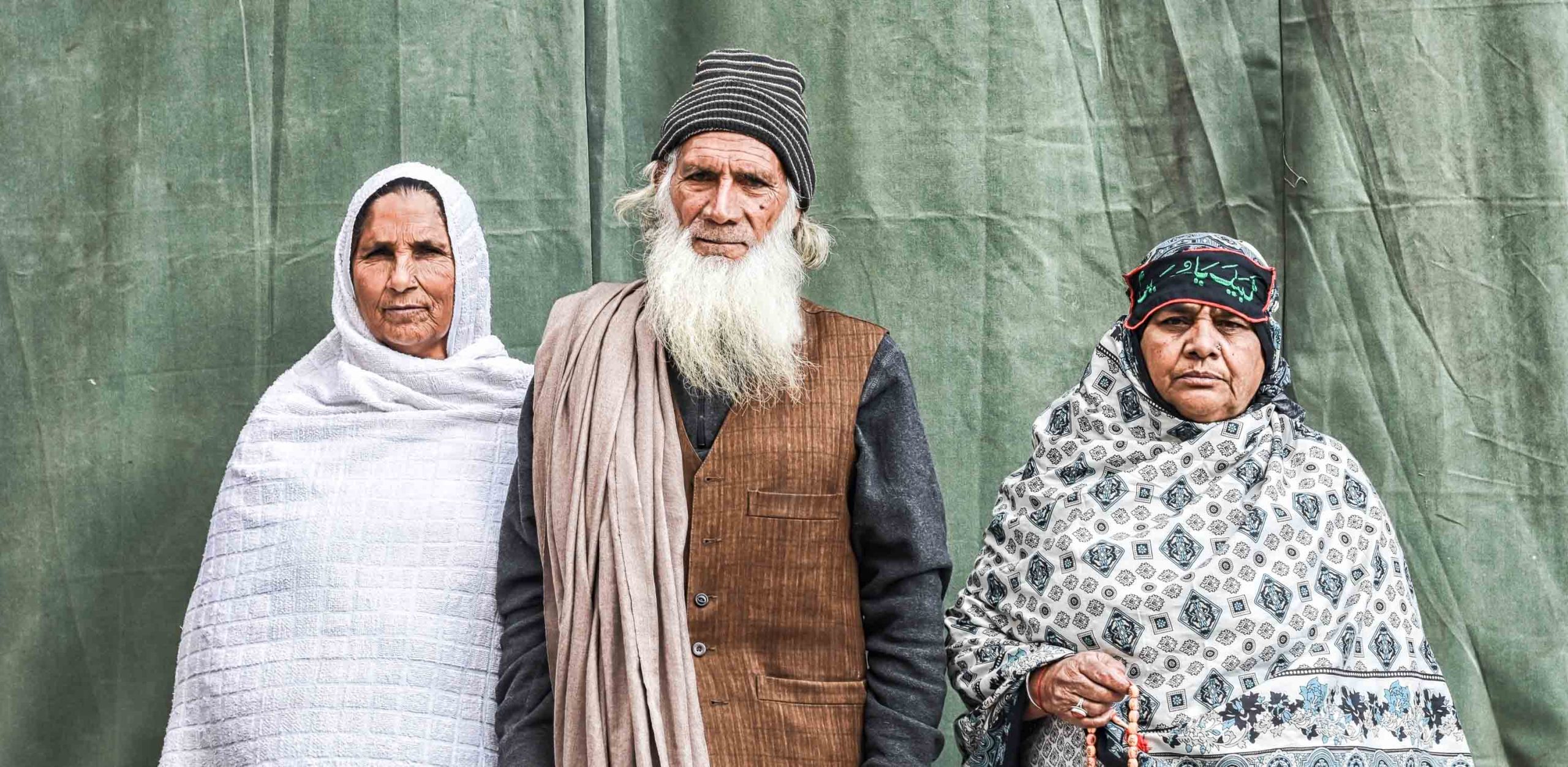
Walk through the bustling bazaars of Bandar Abbas or the narrow, wind-towered alleys of Qeshm Island, and you’ll see something that breaks the western stereotype of what an Iranian looks like. You’ll see Black Iranians. It’s not a "new" thing, either. We’re talking about a community that has been part of the Persian Gulf fabric for centuries, yet somehow, when people talk about Iran, they usually picture the high-altitude streets of Tehran or the turquoise tiles of Isfahan. They don't picture the Bandari culture of the south.
Honestly, the history of black people in iran is complicated. It’s a mix of forced migration through the Indian Ocean slave trade and voluntary movement of sailors and merchants. It’s a story of resilience, cultural blending, and a unique identity that is both deeply Persian and distinctly African.
Where did the Afro-Iranian community come from?
Most people assume that every Black person in the Middle East is there because of the slave trade. While the Indian Ocean trade was a massive factor—bringing people from the Zanj coast (modern-day Tanzania, Kenya, and Zanzibar) and Ethiopia to the shores of the Persian Gulf—it isn't the whole story.
Some came as soldiers. Others were sailors who stayed.
The Qajar dynasty, which ruled Iran until the early 1900s, saw a significant number of enslaved Africans in domestic roles. In fact, many were concentrated in the royal court or wealthy households in Shiraz and Tehran. But the heart of the community has always been the Hormozgan, Sistan and Baluchestan, and Khuzestan provinces. Down south, the climate is brutal and the sea is everything. That’s where the Afro-Iranian identity really solidified.
It wasn't until 1928 that Iran officially abolished slavery. 1928. That's relatively recent in the grand scheme of history. After manumission, many families stayed in the coastal regions, integrating into the local economy through fishing and agriculture.
The Sound of the South: Zar and Music
If you want to understand the soul of the community, you have to look at the music. It’s heavy on the percussion. The damam (a double-headed drum) and the pipa are central. It sounds nothing like the classical radif music of the north. It’s rhythmic, trance-inducing, and deeply connected to African roots.
Then there’s the Zar.
The Zar is a healing ritual practiced across the Persian Gulf, and it’s essentially the most visible African cultural remnant in Iran today. The belief is that certain "winds" (baba or mama zar) can possess a person and cause illness. To cure them, a ceremony is held with specific rhythms and chants to appease the spirit. It’s fascinating because it exists alongside Shia Islam. People see no contradiction. You go to the mosque, but if the "wind" catches you, you call the Baba Zar.
Gholam-Hossein Sa'edi, a famous Iranian writer, actually wrote a book about this called Ahl-e Hava (People of the Air) in the 1960s. He documented these rituals with the eye of a physician and a sociologist. It's one of the few pieces of literature that treats the Afro-Iranian experience with clinical yet respectful detail.
Why don't we hear about Black people in Iran more often?
Visibility is a weird thing in Iran. On one hand, you have Haji Firuz.
You've probably seen him if you’ve ever been around for Nowruz (Persian New Year). He’s the character in bright red clothes with a face covered in black soot. He dances and sings to announce the coming of spring. For many Iranians, he’s a harmless folk figure. But for the Afro-Iranian community and many modern scholars, Haji Firuz is a painful reminder of domestic slavery. The "blackface" element is controversial, to say the least. While some argue the black soot represents fire or rebirth, the historical link to enslaved "troubadours" is hard to ignore.
Actually, Dr. Behnaz Mirzai is probably the leading expert on this. She’s a historian at Brock University who has spent years tracking the origins and lives of black people in iran. Her work, including the documentary Afro-Iranian Lives, is pretty much the gold standard if you want to move past surface-level observations. She points out that for a long time, the Iranian national identity was built on "Aryanism"—a push to see Iran as purely Indo-European. This narrowed the window for recognizing the African, Arab, and Turkic influences that actually make the country what it is.
The Reality of Modern Life
Is there racism in Iran? Yeah, of course. It’s often subtle, sometimes overt, and usually takes the form of "othering." Because the community is concentrated in the south, which is economically marginalized compared to Tehran, there’s a double layer of struggle.
But there’s also deep integration.
Intermarriage is very common in the southern provinces. You’ll meet families where one sibling has dark skin and kinky hair while the other looks typically "Middle Eastern." The Bandari identity—a mix of Persian, Arab, and African—is so strong that it often supersedes racial categorization. They speak Farsi with a distinct southern accent, peppered with loanwords from Swahili and Arabic.
Breaking Down the Numbers
Nobody knows exactly how many Afro-Iranians there are. The Iranian census doesn’t track ethnicity or race in that way. Estimates vary wildly, but we’re looking at a population that likely numbers in the hundreds of thousands if you include everyone with partial African ancestry.
They are:
- Fishermen and port workers in Bandar Abbas.
- Famous musicians like Saeid Shanbehzadeh, who has brought southern Iranian music to the global stage.
- Professional athletes and local leaders.
- Grandmothers in Minab who still wear the borqa (the colorful metallic masks) and tell stories of the sea.
Key Misconceptions to Toss Out
- They are all "recent" immigrants. Nope. Most families have been there for several generations, some dating back to the 16th or 17th century when the Portuguese held territory in the Gulf.
- The culture is identical to the rest of Iran. Not even close. The food is spicier (think Indian and African influence), the clothes are brighter, and the social norms are slightly more relaxed than in the conservative heartland.
- They only live in the south. While the coast is the hub, the 20th-century migration for oil jobs took many Afro-Iranians to Abadan and later to Tehran.
The Legacy of the Indian Ocean
The Indian Ocean was like a liquid highway. It moved spices, silks, and unfortunately, people. But it also moved ideas. When you look at the architecture in southern Iran, the way houses are built to catch the breeze—that's a shared technology across the African coast and the Gulf.
The story of black people in iran isn't just a "minority report." It's a lens through which we can see the entire history of global trade. Iran isn't a monolith. It never has been. It’s a crossroads.
Actionable Steps for Understanding
If you really want to dive deeper into this, don't just rely on a quick search. The history is buried in layers of language and geography.
- Watch the documentaries: Seek out Afro-Iranian Lives by Behnaz Mirzai. It’s the most authentic visual record of the community’s daily life and history.
- Listen to the music: Look up the Shanbehzadeh Ensemble. Saeid Shanbehzadeh is an incredible bagpipe (ney-anban) player who explains the African roots of his music during his performances.
- Read the scholarship: Look for "The African Diaspora in the Indian Ocean World" or specific papers by Dr. Mirzai.
- Travel (if you can): If you ever find yourself in Iran, skip the standard "Golden Triangle" tour for a few days. Head to Qeshm Island or Hormuz. Talk to the locals. Eat the spicy fish stews.
The history of black people in iran is a living history. It's in the rhythm of the drums at a wedding in Bushehr and in the stories of the elders who remember the old "winds." Understanding this community doesn't just teach you about Black history—it teaches you the true, complex, and multicultural reality of Iran itself.